An inherently adverse environment
 Earlier this year, I wrote a short story/provocation for the recent book 22 Ideas About the Future. My story imagined a future in which the British central government had undermined local authorities by allowing local communities to opt out and contract for their own services. One of the consequences was to carve London up into tiny neighborhoods, each with its own rules and sponsorships, making it difficult to plot a joined-up route across town. Like an idiot, I entirely overlooked the role facial recognition would play in such a scenario. Community blocs like these, some openly set up to exclude unwanted diversity, would absolutely grab at facial recognition to repel - or charge - unwelcome outsiders.
Most discussion of facial recognition to date has focused on privacy: that it becomes impossible to move around public spaces without being identified and tracked. We haven't thought enough about the potential use of facial recognition to underpin a braad permission-based society in which our presence in any space can be detected and terminated at any time. In such a society, we are all migrants.
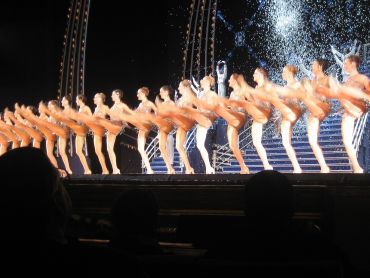
That particular unwanted dystopian future is upon us. This week, we learned that a New Jersey lawyer was blocked from attending the Radio City Music Hall Christmas show with her daughter because the venue's facial recognition system identified her as a member of a law firm involved in litigation against Radio City's owner, MSG Entertainment. Security denied her entry, despite her protests that she was not involved in the litigation. Whether she was or wasn't shouldn't really matter; she had committed no crime, she was causing no disturbance, she was granted no due process, and she had no opportunity for redress.
Soon after she told her story a second instance emerged, a male lawyer who was blocked from attending a New York Knicks basketball game at Madison Square Garden. Then, quickly, a third: a woman and her husband were removed from their seats at a Brandi Carlile concert, also at Madison Square Garden.
MSG later explained that litigation creates "an inherently adverse environment". I read that this way: the company has chosen to use developing technology in an abusive display of power. In other words, MSG is treating its venues as if they were the new-style airports Edward Hasbrouck has detailed, also covered here a few weeks back. In its original context, airport thinking is bad enough; expanded to the world's many privately-owned public venues, the potential is terrifying.
Early adopters of sharing data to exclude bad people talked about barring known shoplifters from chains of pubs or supermarkets, or catching and punishing criminals much more quickly. The MSG story means the mission has crept from "terrorist" to "don't like their employer" at unprecedented speed.
The right to navigate the world without interference is one privileged folks have taken for granted. With some exceptions: in England, the right to ramble all parts of the countryside took more than a century to codify into law.To an American, exclusion from a public venue *feels* like it should be a Constitutional issue - but of course it's not, since the affected venues are owned by a private company. In the reactions I've seen to the MSG stories, people have called for a ban on live facial recognition. By itself that's probably not going to be enough, now that this compost heap of worms has been opened; we are going to need legislation to underpin the right to assemble in privately-owned public spaces. Such a right sort of exists already in the conditions baked into many relevant local licensing laws that require venue operators to be the real-world equivalent of common carriers in telecommunications, who are not allowed to pick and choose whose data they will carry.
In a fourth MSG incident, a lawyer who is suing Madision Square Garden for barring him from entering, tricked the cameras at the MSG-owned Beacon Theater by disguising himself with a beard and a baseball cap. He didn't exactly need to, as his company had won a restraining order requiring MSG to let its lawyers into its venues (the case continues).
In that case, MSG's lawyer told the court barring opposition lawyers was essential to protect the company: "It's not feasible for any entertainment venue to operate any other way,"
Since when? At the New York Times, Kashmir Hill explains that the company adopted this policy last summer and depends on the photos displayed on law firms' websites to feed into its facial recognition to look for matches. But really the answer can only be: since the technology became available to enforce such a ban. It is a clear case where the availability of a technology leads to worse behavior on the part of its owner.
In 1996, the software engineer turned essayist and novelist Ellen Ujllman wrote about exactly this with respect to databases: they infect their owners with the desire to use their new capabilities. In one of her examples, a man suddenly realized he could monitor what his long-trusted secretary did all day. In another, a system to help ensure AIDS patients were getting all the benefits they were entitled to slowly morphed into a system for checking entitlement. In the case of facial recognition, its availability infinitely extends the British Tories' concept of the hostile environment.
Illustrations: The Rockettes performing in 2008 (via skividal at Wikimedia).
Wendy M. Grossman is the 2013 winner of the Enigma Award. Her Web site has an extensive archive of her books, articles, and music, and an archive of earlier columns in this series. Stories about the border wars between cyberspace and real life are posted occasionally during the week at the net.wars Pinboard - or follow on Twitter.
 The early months of 2020 were a time of radical uncertainty - that is, decisions had to be made that affected the lives of whole populations where little guidance was available. As
 In the spring of 2020, as country after country instituted lockdowns, mandated
  Bad ideas never die.
 A couple of months on from Amazon's
  All national constitutions are written to a threat model that is clearly visible if you compare what they say to how they are put into practice. Ireland, for example, has the same right to freedom of religion embedded in its constitution as the US bill of rights does. Both were reactions to English abuse, yet they chose different remedies. The nascent US's threat model was a power-abusing king, and that focus coupled freedom of religion with a bar on the establishment of a state religion. Although the Founding Fathers were themselves Protestants and likely imagined a US filled with people in their likeness, their threat model was not other beliefs or non-belief but the creation of a supreme superpower derived from merging state and church. In Ireland, for decades, "freedom of religion" meant "freedom to be Catholic". Campaigners for the separation of church and state in 1980s Ireland, when I lived there, advocated fortifying the constitutional guarantee with laws that would make it true in practice for everyone from atheists to evangelical Christians.
 It's only an accident of covid that this year's
  A few weeks ago,






 I may be reaching the "get off my lawn!" stage of life, except the things I'm yelling at are not harmless children but new technologies, many of which, as

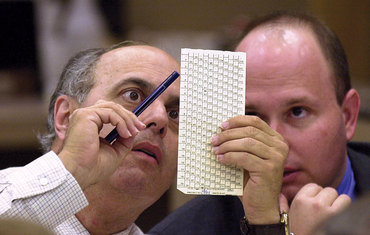 The clowder of legislation to restrict voting access that's popping up across the US is casting the last 20 years of debate over online voting in a new light.
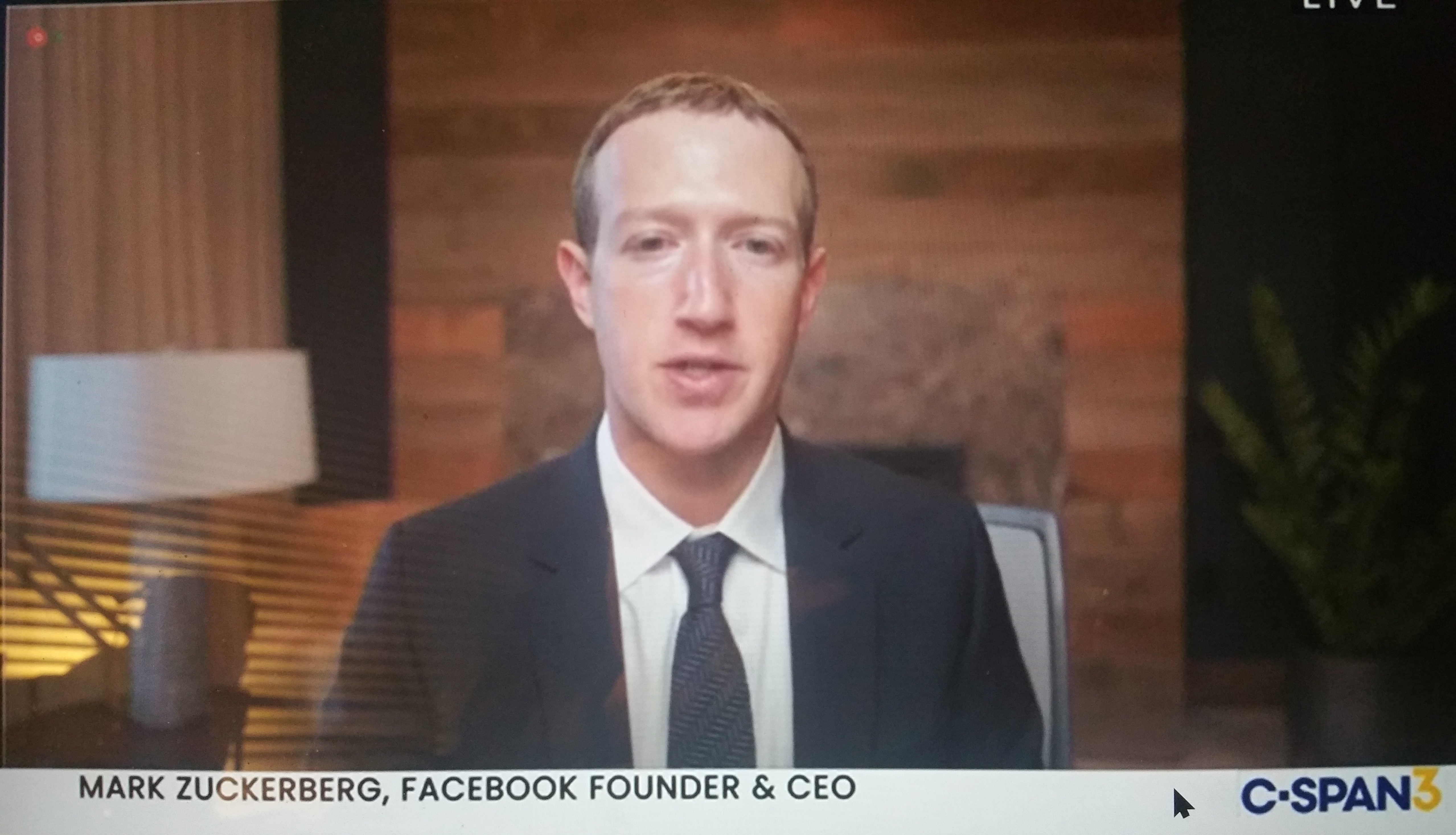
-thumb-200x300-915.jpg) As the year gets going, two conflicts look like setting precedents for Internet regulation: Australia's push to require platforms to pay license fees for linking to their articles; and Facebook's pending decision whether to make former president Donald Trump's ban permanent, as Twitter already has.
As the year gets going, two conflicts look like setting precedents for Internet regulation: Australia's push to require platforms to pay license fees for linking to their articles; and Facebook's pending decision whether to make former president Donald Trump's ban permanent, as Twitter already has. In many ways, this 1,000th net.wars column is much like the first (the count is somewhat artificial, since net.wars began as a 1998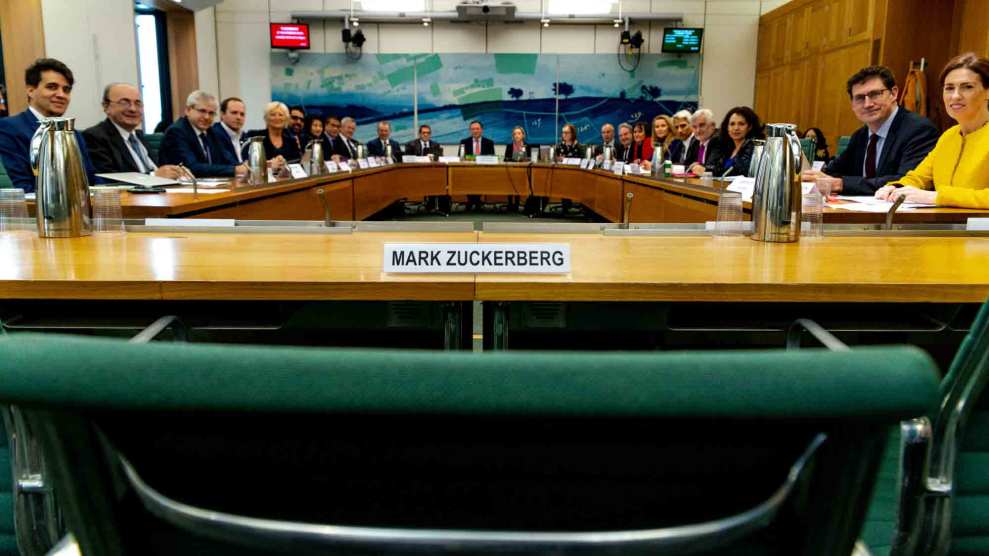
-thumb-370x388-113.jpg) A tax on small businesses," a disgusted techie called data protection, circa 1993. The Data Protection Directive became EU law in 1995, and came into force in the UK in 1998.
A tax on small businesses," a disgusted techie called data protection, circa 1993. The Data Protection Directive became EU law in 1995, and came into force in the UK in 1998.




 "Can you keep a record of every key someone enters?"
.jpg)
.jpg)


.jpg)


.jpg%3E)


