Main

October 31, 2008

Machine dreams

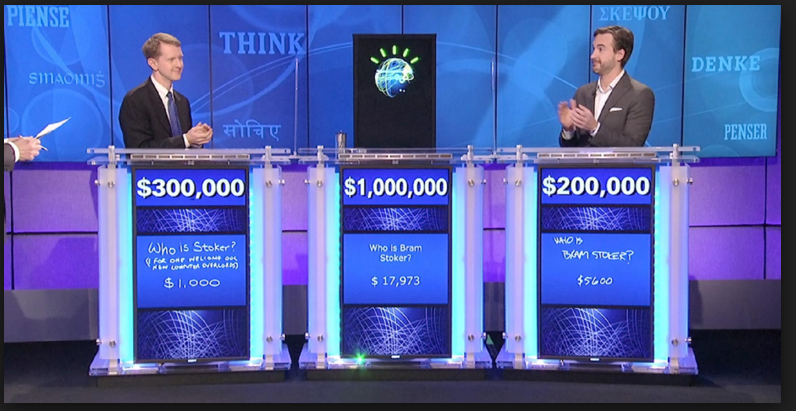
Just how smart are humans anyway? Last week's Singularity Summit spent a lot of time talking about the exact point at which computer processing power would match that of the human brain, but that's only the first step. There's the software to make the hardware do stuff, and then there's the whole question of consciousness. At that point, you've strayed from computer science into philosophy and you might as well be arguing about angels on the heads of pins. Of course everyone hopes they'll be alive to see these questions settled, but in the meantime all we have is speculation and the snide observation that it's typical that a roomful of smart people would think that all problems can be solved by more intelligence.

So I've been trying to come up with benchmarks for what constitutes artificial intelligence, and the first thing I think is that the Turing test is probably too limited. In it, a judge has to determine which of two typing correspondents is the machine and which the human, That's fine as far as it goes, but one of the consistent threads that un through all this is a noticeable disdain for human bodies.

While our brain power is largely centralized, it still seems to me likely that both its grey matter and the rest of our bodies are an important part of the substrate. How we move through space, how our bodies react and feed our brains is part and parcel of how our minds work, however much we may wish to transcend biology. The fact that we can watch films of bonobos and chimpanzees and recognise our own behaviour in their interactions should show us that we're a lot closer to most animal species than we think - and a lot further from most machines.

For that sort of reason, the Turing test seems limited. A computer passes that test if, when paired against a human, the judge can't tell which is which. At the moment, it seems clear the winner is going to be spambots - some spam messages are already devised cleverly enough to fool even Net-savvy individuals into opening them sometimes. But they're hardly smart - they're just programmed that way. And a lot depends on the capability of the judge - some people even find Eliza convincing, though it's incredibly easy to send off-course into responses that are clearly those of a machine. Find a judge who wants to believe and you're into the sort of game that self-styled psychics like to play.

Nor can we judge a superhuman intelligence by the intractable problems it solves. One of the more evangelist speakers last weekend talked about being able to instantly create tall buildings via nanotechnology. (I was, I'm afraid, irresistibly reminded of that Bugs Bunny cartoon where Marvin pours water on beans to produce instant Martians to get rid of Bugs.) This is clearly just silly: you're talking about building a gigantic building out of molecules. I don't care how many billions of nanobots you have, the sheer scale means it's going to take time. And, as Kevin Kelly has written, no matter how smart a machine is, figuring out how to cure cancer or roll back aging won't be immediate either because you can't really speed up the necessary experiments. Biology takes time.

Instead, one indicator might be variability of response; that is, that feeding several machines the same input - or giving the same machine the same input at different times - produces different, equally valid interpretations. If, for example, you give a 10th grade class Jane Austen's Pride and Prejudice to read and report on, different students might with equal legitimacy describe it as a historical account of the economic forces affecting 18th century women, a love story, the template for romantic comedy, or even the story of the plain sister in a large family whose talents were consistently overlooked until her sisters got married.

In The Singularity Is Near, Ray Kurzweil laments that each human must read a text separately and that knowledge can't be quickly transferred from one to another the way a speech recognition program can be loaded into a new machine in seconds - but that's the point. Our strength is that our intelligences are all different, and we aren't empty vessels into which information is poured but stews in which new information causes varying chemical reactions.

You might argue that search engines can already do this, in that you don't get the same list of hits if you type the same keywords into Google versus Yahoo! versus Ask.com, and if you come back tomorrow you may get a different response from any one of them. That's true. It isn't the kind of input I had in mind, but fair enough.

The other benchmark that's occurred to me so far is that machines will be getting really smart when they get bored.

ZDNet UK editor Rupert Goodwins has a variant on this from when he worked at Sinclair Research. "If it went out one evening, drank too much, said the next morning, 'never again' and repeated the exercise immediately. Truly human." But see? There again: a definition of human intelligence that requires a body.

Wendy M. Grossman's Web site has an extensive archive of her books, articles, and music, and an archive of all the earlier columns in this series. Readers are welcome to post here, at net.wars home, at her personal blog, or by email to netwars@skeptic.demon.co.uk (but please turn off HTML).

October 17, 2008

Mind the gap

"Everyone in my office is either 50 or 25," said my neighbor, who is clearly not 25. "We call them 'knowledge-free'. I blame the Internet."

Well, the Internet is a handy thing to blame; it's there and today's generation of 20-somethings grew up with the Web - if you're 25 today you were 12 when Netscape went public. My parents, who were born in 1906 and 1913, would have blamed comic books; my older siblings, born between 1938 and 1943, might blame TV.

What are they "knowledge-free" about? The way she tells it, pretty much everything. They have grown up in a world where indoor temperature is the same year-round. Where bananas and peaches are native, year-round fruit that grows on supermarket shelves. Where World War II might as well be World of Warcraft II. Where dryers know when the clothes are dry, and anything worth seeing on TV will show up as a handily edited clip on YouTube. And where probably the biggest association with books is waiting for JK Rowling's next installment of Harry Potter.

Of course, every 50-something generation is always convinced that the day's 20-somethings are inadequate; it's a way of denying you were ever that empty-headed yourself. My generation - today's 50-somethings - and the decade or so ahead of us absolutely terrified our parents: let those dope-smoking, draft-dodging, "Never trust anyone over 30", free-lovers run things?

It's also true that she seems to know a different class of 20-somethings than I do; my 20-plus friends are all smart, funny, thoughtful, well educated, and interested in everything, even if they are curiously lacking in detailed knowledge of early 1970s movies. They read history books. They study science. They worry about the economy. They think about their carbon production and how much fossil fuels they consume. Whereas, the 20-odds in her office write and think about climate change and energy use apparently without ever connecting those global topics with the actual individual fact that they personally expect to wear the same clothes year-round in an indoor environment controlled to a constant temperature.

Just as computers helped facilitate but didn't cause the current financial crisis, the Internet has notthe problem - if anything it ought to be the antidote. What causes this kind of disconnect is simply what happens when you grow up in a certain way; you think the conditions you grew up with are normal. When you're 25, 50 years is an impossibly long time to think about. When you're 55, centuries become graspable notions. All of which has something to do with the way the current economic crisis has developed.

If you compare - as the Washington Post and the Financial Times have - the current mess to the Great Depression, there's a certain logic to thinking that 80 years is just about exactly the right length of time for a given culture to recreate its past mistakes. That's four generations. The first lived through the original crisis; the second heard their parents talk about it; the third heard their grandparents talk about it; the fourth has no memory and hubris sets in.

In this case, part of the hubris that set in was the idea that the Glass-Steagall Act, enacted in 1933 to control the banks after the Great Depression, was no longer needed. The banking industry had of course been trying to get rid of the separation of deposit-taking banks and investment banks for years, and they finally succeeded in 1999. Clinton had no choice but to sign it into law in 1999; the margin by which it passed both Houses was too large. There is no point in blaming only him, as Republicans trying to get McCain into office seem bent on doing.

That year was of course the year of maximum hubris anyway. The Internet bubble was at its height and so was the level of denial in the financial markets that it was a bubble. You can go on to blame the housing bubble brought about by easier access to mortgage money, cheap credit, credit default swaps, and all the other hideous weapons of financial mass destruction, but for me the repeal of Glass-Steagall is where it started. It was a clear sign that the foxes had won the chance to wreck the henhouse again. And fox - or human - or scorpion - nature being what it is, it was quite right to think that they would take it. As Benjamin Graham observed many years ago in The Intelligent Investor, bright young men have offered to work miracles - usually with other people's money - since time immemorial.

At that, maybe we're lucky if the 20-somethings in my neighbor's office are unconscious. Imagine if they were conscious. They would look at today's 50- and 60-somethings and say: you wrecked the environment, you will leave me no energy sources, social security, or health insurance in my old age, you have bankrupted the economy so I will never be able to own a house, and you got to have sex without worrying about dying from it. They'd be like the baby boomers were in the 1960s: mad as hell.


Wendy M. Grossman's Web site has an extensive archive of her books, articles, and music, and an archive of all the earlier columns in this series. Readers are welcome to post here, at net.wars home, at her personal blog, or by email to netwars@skeptic.demon.co.uk (but please turn off HTML).

August 22, 2008

Intimate exchanges

A couple of years ago I did an interview with Ed Iacobucci CEO and founder of Dayjet, a new kind of airline. Dayjet has no published timetable; instead, prospective passengers (mostly company CEOs and other business types with little time to spare for driving between ill-served smaller cities in the American south) specify their departure point, their destination, and a window of time for Dayjet to get them there. Dayjet responds with a price based on the number of full seats in the plane. The airline, said Iacobucci, is software expressed as a service. And - and this is the key point here - constructing an intellectual property business in such a way meant he didn't have to worry about copying.

Cut to: the current battles over P2P. Danny O'Brien observed recently that with terabyte disk drives becoming luggable and the back catalogue of recorded music being "only" 4Tb, in the medium term the big threat to the music companies isn't P2P but file-swapping between directly connected hard drives, no Internet needed; no detection possible.

Cut to: the amazing career of Alan Ayckbourn and the Stephen Joseph Theatre in Scarborough, North Yorkshire.

Ayckbourn is often thought of as Britain's answer to Neil Simon, but the comparison is unfair to Ayckbourn. Simon is of course a highly skilled playwright and jokesmith, but his characters are in nothing like the despair that Ayckbourn's are, and he has none of the stagecraft. Partly, that may be because Ayckbourn has his own theatre to play with. Since 1959, when his first play was produced, Ayckbourn has written 71 plays (and still counting), and just about all of them were guaranteed production in advance at the Stephen Joseph Theatre, where Ayckbourn has been artistic director since 1974.

Many of them play with space and time. In How the Other Half Loves two dinners share stage space and two characters though they occur on different nights in different living rooms. In Communicating Doors characters shift through the same hotel room over four decades. In Taking Steps three stories of a house are squashed flat into a single stage set. He also has several sets of complementary plays, such as The Norman Conquests, a trilogy which sets each of the plays - the story of a weekend house party - in a different room.

It was in 1985, during a period of obsession with the plays Intimate Exchanges that I decided that at some point I really had to see Alan Ayckbourn's work in its native habitat. Partly, this was due to the marvellous skill with which Lavinia Bertram and Robin Herford shifted among four roles each. Intimate Exchanges is scored for just two actors, and the plays' conceit is that they chronicle, via a series of two-person scenes, 16 variant consequences of a series of escalating choices. Bertram and Herford were the original cast, imported into London from Scarborough. So my thought was: if this is the kind of acting they have up there, one must go. (As bizarre as it seems to go from London to anywhere to go to the theater.)

This year, reading that Ayckbourn is about to retire as artistic director, it seemed like now or never. It's worth the trip: although many of Ayckbourn's plays work perfectly well on a traditional proscenium stage and he's had a lot of success in London's West End and on Broadway (and in fact around the world; he's the most performed playwright who isn't Shakespeare), the theatre-in-the-round adds intimacy. That's particularly true in this summer's trio of ghost plays: Haunting Julia (1994, a story of the aftermath of a suicide)), Snake in the Grass (2002, a story of inheritance and blackmail), and Life and Beth (2008, a story of survival and widowhood). In all these stories, the closer you can get to the characters the better, and the compared to the proscenium stage SJT's round theatre is the equivalent of the cinematic close-up.

That intimacy may be a partial explanation of why so little of Ayckbourn's work has been adapted to movies - and when it has, the results have been so disappointing. Generally, they're either shallow caricatures (such as A Chorus of Disapproval) or wistful and humorless rather than robust and funny (like Alain Resnais' attempts, including Intimate Exchanges). There have been some good TV productions (The Norman Conquests, Season's Greetings (set in a hall surrounded by bits of a living room and dining room)), but these are mysteriously not available commercially.

That being the case, it's hard to understand the severity of the official Ayckbourn Web site's warning about bootleg copies. Given that they know the demand is there, and given the amount those 71 plays are making in royalties and licensing fees, why not buy up the rights to those productions and release them, or begin a project of recording current SJT productions and revivals with a view to commercial release? The SJT shop sells scripts. Why not DVDs?

Asking that risks missing the essential nature of theater, which, along with storytelling, is probably one of the earliest forms of intellectual property expressed as a service. A film is infinitely copiable; every live performance is different, if only subtly, because audience feedback varies. I still wish they'd do it, though.

Wendy M. Grossman's Web site has an extensive archive of her books, articles, and music, and an archive of all the earlier columns in this series. Readers are welcome to post here, at net.wars home, at her personal blog, or by email to netwars@skeptic.demon.co.uk (but please turn off HTML).

June 6, 2008

The Digital Revolution turns 15

"CIX will change your life," someone said to me in 1991 when I got a commission to review a bunch of online systems and got my first modem. At the time, I was spending most or all of every day sitting alone in my house putting words in a row for money.

The Net, Louis Rossetto predicted in 1993, when he founded Wired, would change everybody's lives. He compared it to a Bengali typhoon. And that was modest compared to others of the day, who compared it favorably to the discovery of fire.

Today, I spend most or all of every day sitting alone in my house putting words in a row for money.

But yes: my profession is under threat, on the one hand from shrinkage of the revenues necessary to support newspapers and magazines - which is indeed partly fuelled by competition from the Internet - and on the other hand from megacorporate publishers who routinely demand ownership of the copyrights freelances used to resell for additional income - a practice that the Internet was likely to largely kill off anyway. Few have ever gotten rich from journalism, but freelance rates haven't budged in years; staff journalists get very modest raises and for those they are required to work more hours a week and produce more words.

That embarrassingly solipsistic view aside, more broadly, we're seeing the Internet begin to reshape the entertainment, telecommunications, retail, and software industries. We're seeing it provide new ways for people to organize politically and challenge the control of information. And we're seeing it and natural laziness kill off our history: writers and students alike rely on online resources at the expense of offline archives.

Wired was, of course, founded to chronicle the grandly capitalized Digital Revolution, and this month, 15 years on, Rossetto looked back to assess the magazine's successes and failures.

Rossetto listed three failures and three successes. The three failures: history has not ended; Old Media are not dead (yet); and governments and politics still thrive. The three successful predictions: the long boom; the One Machine, a man/machine planetary consciousness; that technology would change the way we relate to each other and cause us to reinvent social institutions.

I had expected to see the long boom in the list of failures, and not just because it was so widely laughed at when it was published. Rossetto is fair to say that the original 1997 feature was not invalidated by the 2000 stock market bust. It wasn't about that (although one couldn't resist snickering about it as the NASDAQ tanked). Instead, what the piece predicted was a global economic boom covering the period 1980 to 2020.

Wrote Peter Schwartz and Peter Leyden, "We are riding the early waves of a 25-year run of a greatly expanding economy that will do much to solve seemingly intractable problems like poverty and to ease tensions throughout the world. And we'll do it without blowing the lid off the environment."

Rossetto, assessing it now, says, " There's a lot of noise in the media about how the world is going to hell. Remember, the truth is out there, and it's not necessarily what the politicians, priests, or pundits are telling you."

I think: 1) the time to assess the accuracy of an article outlining the future to 2020 is probably around 2050; 2) the writers themselves called it a scenario that might guide people through traumatic upheavals to a genuinely better world rather than a prediction; 3) that nonetheless, it's clear that the US economy, which they saw as leading the way has suffered badly in the 2000s with the spiralling deficit and rising consumer debt; 4) that media alarm about the environment, consumer debt, government deficits, and poverty is hardly a conspiracy to tell us lies; and 5) that they signally underestimated the extent to which existing institutions would adapt to cyberspace (the underlying flaw in Rossetto's assumption that governments would be disbanding by now).

For example, while timing technologies is about as futile as timing the stock market, it's worth noting that they expected electronic cash to gain acceptance in 1998 and to be the key technology to enable electronic commerce, which they guessed would hit $10 billion by 2000. Last year it was close to $200 billion. Writing around the same time, I predicted (here) that ecommerce would plateau at about 10 percent of retail; I assumed this was wrong, but it seems that it hasn't even reached 4 perecent yet, though it's obvious that, particularly in the copyright industries, the influence of online commerce is punching well above its statistical weight.

No one ever writes modestly about the future. What sells - and gets people talking - are extravagant predictions, whether optimistic or pessimistic. Fifteen years is a tiny portion even of human history, itself a blip on the planet. Tom Standage, writing in his 1998 book The Victorian Internet, noted that the telegraph was a far more radically profound change for the society of its day than the Internet is for ours. A century from now, the Internet may be just as obsolete. Rossetto, like the rest of us, will have to wait until he's dead to find out if his ideas have lasting value.

Wendy M. Grossman's Web site has an extensive archive of her books, articles, and music, and an archive of all the earlier columns in this series. Readers are welcome to post here, at net.wars home, at her personal blog, or by email to netwars@skeptic.demon.co.uk (but please turn off HTML).

April 25, 2008

The shape of the mushroom


The digital universe is big. Really big. You just can't believe how mind-bogglingly big... Oh, never mind.

There's nothing like a good the-sky-is-falling scenario to get a one-day conference awake, and today at the LSE was no exception.

"It's a catastrophe waiting to happen," said Leslie Willcocks, the head of the Information Systems and Innovation Group at the LSE, putting up a chart. What it showed: the typical data center's use of energy and processing power. Only 1.5 percent of the total energy usage powers processing; 80 percent of CPU is idle. Well. They weren't built to be efficient. They were built to be reliable.

But Willcocks wasn't gearing up to save the planet. Instead, his point was that all this wastage reflects a fetish for connectedness: "The assumption is you have to have reliable information on tap at all times." (Cue Humphrey Appleby: "I need to know everything. How else can I judge whether I need to know it?") Technology design, he argued, is being driven by the explosion in data. The US's 28 million servers today represent 2.5 percent of the US's electricity needs; in 2010 that will be 43 million. This massively inefficient use of energy is trying to fix what he called a far bigger problem: the "data explosion". And, concurrently, the inability to manage same.

In 2007, John Gantz, chief research officer at IDC, said, for the first time in human history the amount of information being created was larger than the amount of storage available. That sounds alarming at first, like the moment you contemplate the mortgage you're thinking of taking out to buy a house and realize that it is larger than the sum of all your financial assets. At second glance, the situation isn't quite so bad.

For one thing, a lot of information is transient. We aren't required to keep a copy of every TV signal - otherwise, imagine the number of copies we'd add every Christmas just for rebroadcasts of It's a Wonderful Life. But once you've added in the impact of regulatory compliance and legal requirements, along with good IT practice, consider the digital footprint of a single email message with a 1Mb attachment. By the time it's done being backed up, sent to four recipients, backed up, and sent to tape at both sending and receiving organizations it's consuming over 51.5Mb of storage.
And things are only going to get exponentially worse between now and 2011. The digital universe will grow by an order of magnitude in five years, from about 177EB in 2006 to 1,773EB in 2011. More than 90 percent of it is unstructured information. Even more alarming for businesses is that while individual consumers account for about 70 percent of the information created, enterprises have responsibility or liability for about 85 percent of it. Think Google buying YouTube and taking on its copyright liability, or NASA's problem with its astronauts' email.

"The information bomb has already happened," said Gantz. "I'm just describing the shape of the mushroom."
To be sure, video amps up the data flows. But it's not the most important issue. Take, for example, the electronification of the NHS. Discarding paper in favor of electronics saves one kind of space - there's a hospital in Bangkok that claims to have been able to open a whole new pediatric wing in the space saved by digitizing its radiography department - but consumes another. All those electronic patient records will have to be stored, backed up and stored and backed up again in each new location they're sent to. Say it all over again with MP3s, electronic patient records, digital radio, VOIP, games, telematics, toys...

No wonder we're all so tired.

And the problem the NHS is solving with barcoding - that people cannot find what they already have - is not so easily solved with information.

Azeem Azhar, seven months away from a job as head of innovation at Reuters, said that one thing he'd learned was that every good idea he had - had already been had by someone else in the organization at some point. As social networks enable people to focus less on documents than on expertise, he suggested, we may finally find a way around that problem.

The great thing about a conference like this is that for every solution someone can find a problem. The British Library, for example, is full of people who ought to know what to keep; that's what librarians do. But the British Library has its roots in an era when it could arrogantly assume it had the resources to keep everything. Ha. Though you sympathized with the trouble they have explaining stuff when an audience member asked why, given that the British Library has made digital copies, it should bother to keep the original, physical Magna Carta.

That question indicates a kind of data madness; the information we derive from studying the physical Magna Carta can't all be digitized. If looking at the digital simulacrum evokes wonder, it's precisely because we know that it is an image - a digital shadow - of the real thing. If the real thing ceases to exist, the shadow grows less meaningful.


Wendy M. Grossman's Web site has an extensive archive of her books, articles, and music, and an archive of all the earlier columns in this series. Readers are welcome to post here, at net.wars home, at her | | Comments (0) | TrackBacks (0)

October 26, 2007

Tomorrow's world

"It's like 1994," Richard Bartle, the longest-serving virtual world creator, said this week. We were at the Virtual Worlds Forum. Sure enough: most of the panels were about how businesses could make money! in virtual worlds! Substitute Web! and Bartle was right.

"Virtual worlds are poised to revolutionize today's Web ecommerce," one speaker said enthusiastically. "They will restore to ecommerce the social and recreational aspect of shopping, the central element in the real world, which was stripped away when retailers went online."

There's gold in them thar cartoon hills.

But which hills? Second Life is, to be sure, the virtual world du jour, and it provides the most obviously exploitable platform for businesses. But in 1994 so did CompuServe. It was only three years later – ten years ago last month – that it had shrunk sufficiently for AOL to buy it as revenge. In turn, AOL is itself shrinking – its subscription revenues for the quarter ending June 30, 2007 were half those in the same quarter in 2006.

If there is one thing we know about Internet communities it's that they keep reforming in new technologies, often with many of the same people. Today's kids bop from world to world in groups, every few months. The people I've known on CIX or the WELL turn up on IRC, LiveJournal, Facebook, and IM. Sometimes you flee, as Corey Bridges said of social networks, because your friends list has become "crufted" up with people you don't like. You take your real friends somewhere else until mutatis mutandem. In the older text-based conferencing systems, same pattern: public conferences filled with too many annoying people joined sent old-timers to gated communities like mailing lists or closed conferences. And so it goes.

In a post pointed at by the VWF blog Metaversed's Nick Wilson defines social virtual worlds and concludes that there are only eight of them – the rest are not yet available to the general public, children's worlds, or simply development platforms. "The virtual worlds space," he concludes, "is not as large as many people think."

Probably anyone who's tried to come to grips with Second Life, number one on Wilson's list, without the benefit of friends to go there with knows that. Many parts of SL are resoundingly empty much of the time, and it seems inarguable that most of SL's millions of registered users try it out a few times and then leave their avatars as records in the database. Nonetheless, companies keep experimenting and find the results valuable. A batch of Italian IBMers even used the world to stage a strike last month. Naturally it crashed IBM's SL Business Center: the 1,850 strikers were spread around seven IBM locations, but you can only put about 50 avatars on an island before server lag starts to get you. Strikes: the original denial-of-service attacks.

But questioning whether there's a whole lot of there there is a nice reminder that in another sense, it's 1999. Perfect World, a Chinese virtual world, went public at the end of July, and is currently valued at $1.6 billion. It is, of course, losing money. Meanwhile Microsoft has invested $240 million of the change rattling around the back of its sofas in Facebook to become its exclusive "advertising partner", giving that company an overall value of $515 billion. That should do nicely to ensure that Google or Yahoo! doesn't buy it outright, anyway. Rupert Murdoch bought MySpace only two years ago for $580 million – which sounds like a steal by comparison if it weren't for the fact that Murdoch has made many online plays and they've all so far been wrong.

Two big issues seem to be dominating discussions about "the virtual world space". One: how to make money. Two: how and whether to make world interoperable, so when you get tired of one you can pick up your avatar and reputation and take them somewhere new. It was in discussing this latter point that Bridges made the comment noted above: after a while in a particular world shedding that world's character might be the one thing you really want to do. In real life, wherever you go, there you are. Freely exploring your possible selves is what Richard Bartle had in mind when he wrote the first MUD.

The first of those is, of course, the pesky thing only a venture capitalist or a journalist would ask. So far, in general game worlds make their money on subscriptions, and social worlds make their money selling non-existent items like land and maintenance fees thereupon (actually, says Linden Labs, "server resources"). But Asia seems already to be moving toward free play with the real money coming from in-game item sales: 80 million Koreans are buying products in and from Cyworld.

But the two questions are related. If your avatar only functions in a single world, the argument goes, that makes virtual worlds closed environments like the ones CompuServe and AOL failed with. That is of course true – but only after someone comes up with an open platform everyone can use. Unlike the Internet at large, though, it's hard to see who would benefit enough from building one to actually do it.

Wendy M. Grossman’s Web site has an extensive archive of her books, articles, and music, and an archive of all the earlier columns in this series. Readers are welcome to post here, at net.wars home, at her personal blog, or by email to netwars@skeptic.demon.co.uk (but please turn off HTML).

August 24, 2007

Game gods

Virtual worlds have been with us for a long time. Depending who you listen to, they began in 1979, or 1982, or it may have been the shadows on the walls of Plato's cave. We'll go with the University of Essex MUD, on the grounds that its co-writer Richard Bartle can trace its direct influence on today's worlds.

At State of Play this week, it was clear that just as the issues surrounding the Internet in general have changed very little since about 1988, neither have the issues surrounding virtual worlds.

True, the stakes are higher now and, as Professor Yee Fen Lim noted, when real money starts to be involved people become protective.

Level 70 warrior accounts on World of Warcraft go for as little as $10 (though your level number cannot disguise your complete newbieness), but the unique magic sword you won in a quest may go for much more. The best-known pending case is Bragg versus Second Life over virtual property the world's owners confiscated when they realized that Bragg was taking advantage of a loophole in their system to buy "land" at exceptionally cheap prices. Lim had an interesting take on the Bragg case: as a legal concept, she argued, property is right of control, even though Linden Labs itself defines its virtual property as rental of a processor. As computer science that's fine, but it's not law. Otherwise, she said, "Property is mere illusion."

Ultimately, the issues all come down to this: who owns the user experience? In subscription gaming worlds, the owners tend to keep very tight control of everything – they claim ownership in all intellectual property in the world, limit users' ability to create their own content, and block the sale of cheats as much as possible. In a free-form world like Second Life which may host games but is itself a platform rather than a game, users are much freer to do what they want but the EULAs or Terms of Service may be just as unfair.

Ultimately, no matter what the agreement says, today's privately owned virtual worlds all function under the same reality: the game gods can pull the plug at any time. They own and control the servers. Possession is nine-tenths of the law, and all that. Until someone implements open source world software on a P2P platform, this will always be the way. Linden Labs says, for what it's worth, that its long-term intention is to open-source its platform so that anyone may set up a world. This, too, has been done before, with The Palace.

One consequence of this is that there is no such thing as virtual privacy, a topic that everyone is aware of but no one's talking about. The piecemeal nature of the Net means that your friend's IRC channel doesn't know anything about your Web use, and Amazon.com doesn't track what you do on eBay. But virtual worlds log everything. If you buy a new shirt at a shop and then fly to a distant island to have sex with it, all that is logged. (Just try to ensure the shirt doesn't look like a child's shirt and you don't get into litigation over who owns the island…)

There are, as scholars say, legitimate reasons. Logging everything that happens is important in helping game developers pinpoint the source of crashes and eliminate bugs. Logs help settle disputes over who did what to whose magic sword. And in a court case, they may be important evidence (although how you can ensure that the logs haven't been adjusted to suit the virtual world provider, who is usually one of the parties to the litigation, I don't know).

As long as you think of virtual worlds as games, maybe this isn't that big a problem. After all, no one is forced to spend half their waking hours killing enough monsters in World of Warcraft to join a guild for a six-hour quest.

But something like Second Life aspires to be a lot more than that. The world is adding voice communication, which will be interesting: if you have to use your real voice, the relative anonymity conferred by the synthetic world are gone. Quite apart from bandwidth demands (lag is the bane of every SLer's existence), exploring what virtual life is like in the opposite gender isn't going to work. They're going to need voice synthesizers.

Much of the law in this area is coming out of Asia, where massively multi-player online games took off so early with such ferocity that, according to Judge Unggi Yoon, in a recent case a member of a losing team in one such game ran to the café where the winning team was playing and physically battered one of its members. Yoon, who explained some of the new laws, is an experienced online gamer, all the way back to playing Ultima Online in middle school. In his country, a law has recently come into force taxing virtual world transactions (it works like a VAT threshold – under $100 a month you don't owe anything). For Westerners, who are used to the idea that we make laws and export them rather than the other way around, this is quite a reality shift.

Wendy M. Grossman’s Web site has an extensive archive of her books, articles, and music, and an archive of all the earlier columns in this series. Readers are welcome to post here, at net.wars home, at her personal blog, or by email to netwars@skeptic.demon.co.uk (but please turn off HTML).

April 27, 2007

My so-called second life

It's a passing fad. It's all hype. They've got good PR. Only sad, pathetic people with no real lives would be interested.
All things that were said about the Internet 12 years ago. All things being said now about Second Life today. Wrong about the Internet. Wrong, too, about Second Life.

Hanging around a virtual world dressed as a cartoon character isn't normally my idea of a good time, but last weekend Wired News asked me to attend the virtual technology exposition going on inworld, and so I finally fired up Gwyndred Wuyts, who I'd created some weeks back.

Second Life is of course a logical continuation of the virtual worlds that went before it. The vending machines, avatars, attachments (props such as fancy items of clothing, laptops, or, I am given to understand, quite detailed, anatomically correct genitals), and money all have direct ancestors in previous virtual worlds such as Worlds Away (Fujitsu), The Palace, and Habitat (Lucasfilm). In fact, though, the prior art Second Life echoed most at first was CompuServe, which in 1990 had no graphics except ASCII art and little sense of humor – but was home to technology companies of all sizes, who spoke glowingly of the wonders of having direct contact with their customers. In 1990 every techie had a CompuServe ID.

Along came the Web, and those same companies gratefully retreated to the Web, where they could publish their view of the world and their support documents and edit out the abuse and backtalk. Now, in Second Life, the pendulum is swinging back it's flattened hierarchies all over again.

"You have to treat everyone equally because you can't tell who anyone is. They could be the CEO of a big company," Odin Liam Wright (SL: Liam Kanno) told me this week. " In SL, he says, what you see is "more the psyche than the economic class or vocation or stature."

Having to take people as they present themselves without the advantage of familiar cues and networked references was a theme frequently exploited by Agatha Christie. Britain was then newly mobile, and someone moving to a village no longer came endorsed by letters from mutual friends. People could be anybody, her characters frequently complain.

Americans are raised to love this kind of social mobility. But its downside was on display yesterday in a panel on professionalism at the Information Security conference, where several speakers complained that the informal networks they used to use to check out their prospective security hires no longer exist. International mobility has made it worse: how do you assess a CV when both the credentials and the organizations issuing them are unknown to you?

Well, great: if the information security professionals don't know whom to trust, what hope is there for the rest of us?

Nonetheless, the speaker was wrong. The informal networks exist, just not where he's looking for them. When informal networks get overrun by the mainstream, they move elsewhere. In the late 1980s, Usenet was such a haven; by 1994, when September stopped ending and AOL moved in, everyone had retreated to gated communities (private forums, mailing lists, and so on). Right now, some of those informal networks are on Second Life, and the window is closing as the mainstream becomes more aware of the potential of the virtual world as a platform.

Previous world were popular and still died. But Second Life is different, first and foremost because of timing. People have broadband. They have computers powerful enough to handle the graphics and multiple applications. Their movement around the virtual world is limited only by their manual dexterity and the capacity of the servers to handle so many interacting simulations at once.

Second: experimentation. At this week's show, I picked up a (beta) headset that plugs Skype into Second Life (Second Talk). People (Cattle Puppy Productions) are providing inworld TV displays (and extracted video clips for the rest of us). Reallusion, one of the show's main sponsors, does facial animation it hopes will transform Second Life from a world of text-typing avatars into one of talking characters. You can pick up a portable office including virtual laptop, unpack it in a park, and write and post real blog entries. Why would you do this when you already have blogging software on your desktop? Because Second Life has the potential to roll everything – all the different forms of communication open on your desktop today – into a single platform. And if you grew up with computer games, it's a more familiar platform than the desktop metaphor generations of office workers required.

Third: advertising. The virtual show looked empty compared to a real-world show; it had 6,000-plus visitors over three days. The emptiness was by design to allow more visitors while minimizing lag. Nonetheless, Dell was there with a virtual configurator on which you could specify your new laptop. Elsewhere inworld, you can drive your new Toyota or Pontiac and read your Reuters news. Moving into Second Life is a way for old, apparently stuffy companies to reinvent their image for the notoriously hard-to-reach younger crowd who are media-savvy and ad-cynical. There is real gold in them thar virtual hills.

Finally, a real reason to upgrade my desktop.

Wendy M. Grossman’s Web site has an extensive archive of her books, articles, and music, and an archive of all the earlier columns in this series. Readers are welcome to post here, at net.wars home, at her personal blog, or by email to netwars@skeptic.demon.co.uk (but please turn off HTML).

March 30, 2007

Re-emerging technologies

Along about the third day of this year's email software that works offline; the display looked just like Ameol,an offline mail and news reader I've used for 14 years. (The similarity is only partial, though; Zimbra does synching with mobile devices and a bunch of other things that Ameol doesn't – but that Lotus Notes probably did).

"Reverse pioneering", Tim O'Reilly said the first day, while describing a San Francisco group who build things – including a beer-hauling railway car and carnival rides – out of old bicycle parts.

At some point, also, O'Reilly editor Dale Dougherty gave a talk on the publisher's two relatively new magazines Make and Craft. He illustrated it with pictures of: log cabin quilts, Jacquard looms, the Babbage Differential Calculator, Hollerith tabulating machines, punch cards, and an ancient Singer treadle sewing machine. And oh look! Sewing patterns! And, I heard someone say quite seriously, what about tatting? Do you know anyone who does it who could teach me?

A day later, in Boston, I hear that knitting is taking East Coast geeks by storm. Apparently geek gatherings now produce as many baby hats as the average nursing home.

Not that I'm making fun of all this. After all, recovering old knowledge is a lot of what we do on the folk scene, and I have no doubt that today's geek culture will plunder these past technologies and, very like the Society for Creative Anachronism, which has a large geek (and also folk music community) crossover, mutate them into something newer and stranger. I'd guess that we're about two years away from a quilting bee in the lobby. Of course, the quilting thread will be conductive, and the quilt will glow in the dark with beaded LEDs so you can read under the covers, and version 2.0 will incorporate miniature solar panels (like those little mirrors in the Eastern stuff you used to get in the 1970s) that release heat at night like an electric blanket…and it will be all black.

Of course, this isn't really new even in geek terms. A dozen years ago, the MIT Media Lab held a fashion show to display its latest ideas for embroidering functional keyboards onto networked but otherwise standard Levi's denim jackets and dresses made of conductive fabrics. We don't seem to have come very far toward the future they were predicting then, in which we'd all be wearing T-shirts with sensors that measured our body heat and controlled the room thermostat accordingly (another idea for that quilt).
Instead, geeks, like everyone else, adopted the mobile phone, which has the advantage that you don't have to worry about how to cope with that important conference when your personal area network is in the dirty laundry.

But this is Generation C, as Matt Webb, from the two-man design consultancy Schulze and Webb told us. Generation C likes complexity, connection, and control. GenC is not satisfied with technologies that expect us to respond as passive consumers. We ought to despise mobile phones, especially in the US: they are locked down, controlled by the manufacturers and network operators. Everything should come with an open applications programming interface and…and…a serial port. Hack your washing machine so it only shows the settings you use; hack your luggage so it phones home its GPS coordinates when it's lost.

The conference speaker who drew the most enthusiastic response was Danah Boyd, who had a simple message: people outside of Silicon Valley are different. Don't assume all your users are like you. They have different life stages. This seems so basic and obvious it's shocking to hear people cheer it.
It was during a talk on building technology to selectively jam RFID chips that I had a simple thought: every technology breeds its opposite. Radar to trap speeders begets radar scanners. Cryptography breeds cryptanalysis. Email breeds spam, which breeds spam filtering, which breeds spam smart enough to pass the Turing test.
The same is true of every social trend and phenomenon. John Perry Barlow used to say that years of living in the virtual world had made him appreciate the physical world far more. It's not much of a jump from that to all sorts of traditional crafts.

Don't get me wrong. I'm glad geeks want to knit, sew, and build wooden telescopes. Sewing used to be a relatively mainstream activity, and over the last couple of decades it's been progressively dumbed down. The patterns you buy today are far simpler (and less interesting) to construct than the ones you used to get in the 1970s. It would be terrific if geeks brought some complexity back to it.

But jeez, guys, you need to get out more. Not only is there an entire universe of people who are different from Silicon Valley, there's an entire industry of magazines and books about fabric arts. Next, you get to reinvent colors.

I blogged more serious stuff from etech at Blindside.

Wendy M. Grossman’s Web site has an extensive archive of her books, articles, and music, and an archive of all the earlier columns in this series. Readers are welcome to post here, at net.wars home, at her | | Comments (0) | TrackBacks (0)

February 9, 2007

Getting out the vote

Voter-verified paper audit trails won't save us. That was the single clearest bit of news to come out of this week's electronic voting events.

This is rather depressing, because for the last 15 years it's looked as though VVPAT (as they are euphoniously calling it) might be something everyone could compromise on.: OK, we'll let you have your electronic voting machines as long as we can have a paper backup that can be recounted in case of dispute. But no. According to Rebecca Mercuri in London this week (and others who have been following this stuff on the ground in the US), what we thought a paper trail meant is definitely not what we're getting. This is why several prominent activist organisations have come out against the Holt bill HR811, introduced into Congress this week, despite its apparent endorsement of paper trails.

I don't know about you, but when I imagined a VVPAT, what I saw in my mind's eye was something like an IBM punch card dropping individually into some kind of display where a voter would press a key to accept or reject. Instead, vendors (who hate paper trails) are providing cheap, flimsy, thermal paper in a long roll with no obvious divisions to show where individual ballots are. The paper is easily damaged, it's not clear whether it will survive the 22 months it's supposed to be stored, and the mess is not designed to ease manual recounts. Basically, this is paper that can't quite aspire to the lofty quality of a supermarket receipt.

The upshot is that yesterday you got a programme full of computer scientists saying they want to vote with pencils and paper. Joseoph Kiniry, from University College, Dublin, talked about using formal methods to create a secure system – and says he wants to vote on paper. Anne-Marie Ostveen told the story of the Dutch hacker group who bought up a couple of Nedap machines to experiment on and wound up publicly playing chess on them – and exposing their woeful insecurity – and concluded, "I want my pencil back." And so on.

The story is the same in every country. Electronic voting machines – or, more correctly, electronic ballot boxes – are proposed and brought in without public debate. Vendors promise the machines will be accurate, reliable, secure, and cheaper than existing systems. Why does anyone believe this? How can a voting computer possibly be cheaper than a piece of paper and a pencil? In fact, Jason Kitcat, a longtime activist in this area, noted that according to the Electoral Commission the cost of the 2003 pilots were astounding – in Sheffield £55 per electronic vote, and that's with suppliers waiving some charges they didn't expect either. Bear in mind, also, that the machines have an estimated life of only ten years.

Also the same: governments lack internal expertise on IT, basically because anyone who understand IT can make a lot more money in industry than in either government or the civil service.

And: everywhere vendors are secretive about the inner workings of their computers. You do not have to be a conspiracy theorist to see that privatizing democracy has serious risks.

On Tuesday, Southport LibDem MP John Pugh spoke of the present UK government's enchantment with IT. "The procurers who commission IT have a starry-eyed view of what it can do," he said. "They feel it's a very 'modern' thing." Vendors, also, can be very persuasive (I'd like to see tests on what they put in the ink in those brochures, personally). If, he said, Bill Gates were selling voting machines and came up against Tony Blair, "We would have a bill now."

Politicians are, probably, also the only class of people to whom quick counts appeal. The media, for example, ought to love slow counts that keep people glued to their TV sets, hitting the refresh button on their Web browsers, and buying newspapers throughout. Florida 2000 was a media bonanza. But it's got to be hard on the guys who can't sleep until they know whether they have a job next month.

I would propose the following principles to govern the choice of balloting systems:

- The mechanisms by which votes are counted should be transparent. Voters should be able to see that the vote they cast is the vote they intended to cast,

- Vendors should be contractually prohibited from claiming the right to keep secret their source code, the workings of their machines, or their testing procedures, and they should not be allowed to control the circumstances or personnel under which or by whom their machines are tested. (That's like letting the psychic set the controls of the million-dollar test.)

- It should always be possible to conduct a public recount of individual ballots.

Pugh made one other excellent point: paper-based voting systems are mature. "The old system was never perfect," he said, but over time "we've evolved a way of dealing with almost every conceivable problem." Agents have the right to visit every polling station and watch the count, recounts can consider every single spoiled ballot. By contrast, electronic voting presumes everything will go right.

Guys, it's a computer. Next!

Wendy M. Grossman’s Web site has an extensive archive of her books, articles, and music, and an archive of all the earlier columns in this series. Readers are welcome to post here, at net.wars home, at her personal blog, or by email to netwars@skeptic.demon.co.uk (but please turn off HTML).

January 26, 2007

Vote early, vote often...

It is a truth that ought to be universally acknowledged that the more you know about computer security the less you are in favor of electronic voting. We thought – optimists that we are – that the UK had abandoned the idea after all the reports of glitches from the US and the rather indeterminate results of a couple of small pilots a few years ago. But no: there are plans for further trials for the local elections in May.

It's good news, therefore, that London is to play host to two upcoming events to point out all the reasons why we should be cautious. The first, February 6, is a screening of the HBO movie Hacking Democracy, a sort of documentary thriller. The second, February 8, is a conference bringing together experts from several countries, most prominently Rebecca Mercuri, who was practically the first person to get seriously interested in the security problems surrounding electronic voting. Both events are being sponsored by the Open Rights Group and the Foundation for Information Policy Research, and will be held at University College London. Here is further information and links to reserve seats. Go, if you can. It's free.

Hacking Democracy (a popular download) tells the story of ,a href="http://www.blackboxvoting.org">Bev Harris and Andy Stephenson. Harris was minding her own business in Seattle in 2000 when the hanging chad hit the Supreme Court. She began to get interested in researching voting troubles, and then one day found online a copy of the software that runs the voting machines provided by Diebold, one of the two leading manufacturers of such things. (And, by the way, the company whose CEO vowed to deliver Ohio to Bush.) The movie follows this story and beyond, as Harris and Stephenson dumpster-dive, query election officials, and document a steady stream of glitches that all add up to the same point: electronic voting is not secure enough to protect democracy against fraud.

Harris and Stephenson are not, of course, the only people working in this area. Among computer experts such as Mercuri, David Chaum, David Dill, Deirdre Mulligan, Avi Rubin, and Peter Neumann, there's never been any question that there is a giant issue here. Much argument has been spilled over the question of how votes are recorded; less so around the technology used by the voter to choose preferences. One faction – primarily but not solely vendors of electronic voting equipment – sees nothing wrong with Direct Recording Electronic, machines that accept voter input all day and then just spit out tallies. The other group argues that you can't trust a computer to keep accurate counts, and that you have to have some way for voters to check that the vote they thought they cast is the vote that was actually recorded. A number of different schemes have been proposed for this, but the idea that's catching on across the US (and was originally promoted by Mercuri) is adding a printer that spits out a printed ballot the voter can see for verification. That way, if an audit is necessary there is a way to actually conduct one. Otherwise all you get is the machine telling you the same number over again, like a kid who has the correct answer to his math homework but mysteriously can't show you how he worked the problem.

This is where it's difficult to understand the appeal of such systems in the UK. Americans may be incredulous – I was – but a British voter goes to the polls and votes on a small square of paper with a stubby, little pencil. Everything is counted by hand. The UK can do this because all elections are very, very simple. There is only one election – local council, Parliament – at a time, and you vote for one of only a few candidates. In the US, where a lemon is the size of an orange, an orange is the size of a grapefruit, and a grapefruit is the size of a soccer ball, elections are complicated and on any given polling day there are a lot of them. The famous California governor's recall that elected Arnold Schwarzeneger, for example, had hundreds of candidates; even a more average election in a less referendum-happy state than California may have a dozen races, each with six to ten candidates. And you know Americans: they want results NOW. Like staying up for two or three days watching the election returns is a bad thing.

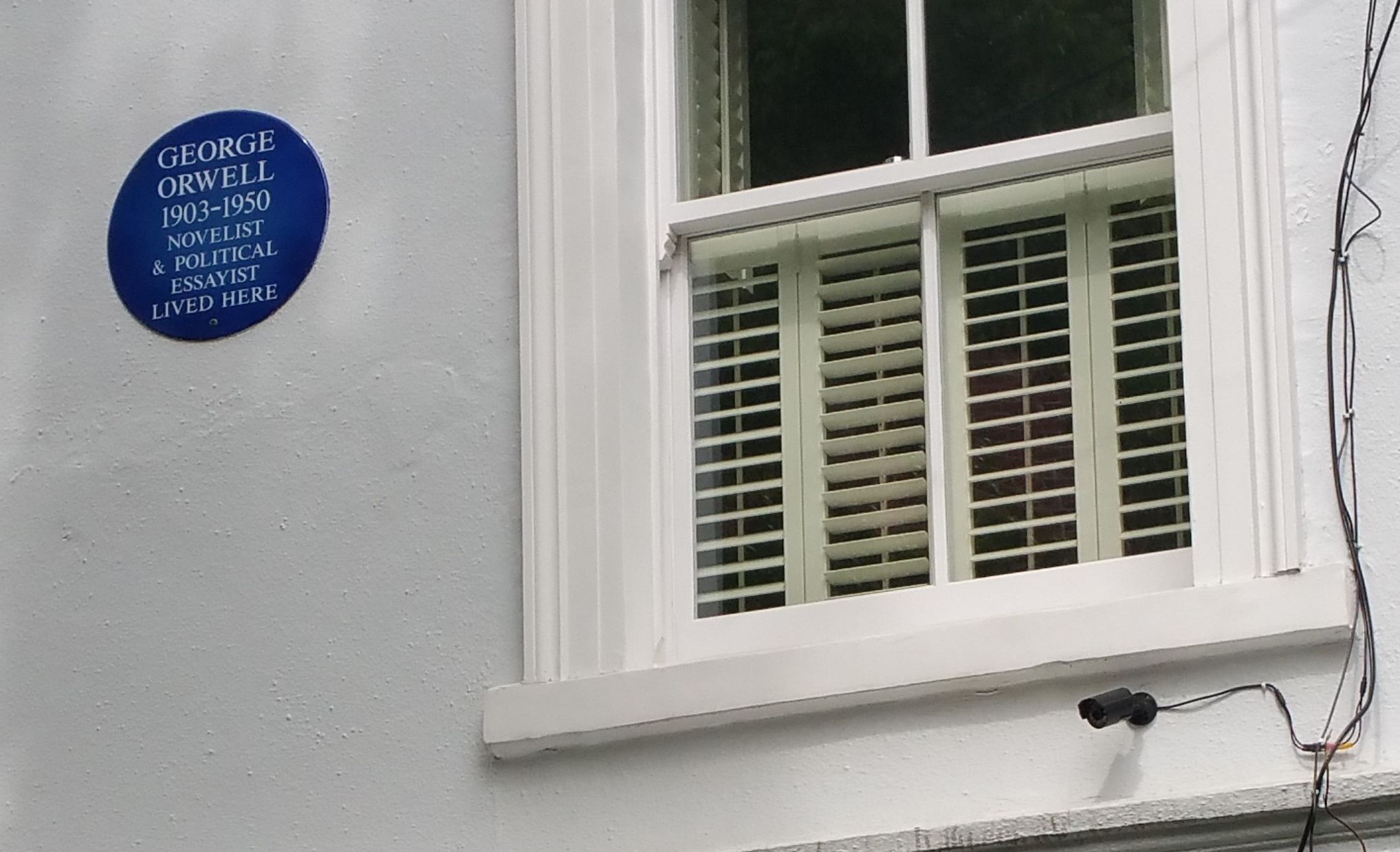
It is of course true that election fraud has existed in all eras; you can "lose" a box of marked paper ballots off the back of a truck, or redraw districts according to political allegiance, or "clean" people off the electoral rolls. But those types of fraud are harder to cover up entirely. A flawed count in an electronic machine run by software the vendor allows no one to inspect just vanishes down George Orwell's memory hole.

What I still can't figure out is why politicians are so enthusiastic about all this. Yes, secure machines with well-designer user interfaces might get rid of the problem of "spoiled" and therefore often uncounted ballots. But they can't really believe – can they? – that fancy voting technology will mean we're more likely to elect them? Can it?

Wendy M. Grossman’s Web site has an extensive archive of her books, articles, and music, and an archive of all the earlier columns in this series. Readers are welcome to post here, at net.wars home, at her personal blog, or by email to netwars@skeptic.demon.co.uk (but please turn off HTML).

December 29, 2006

Resolutions for 2007

A person can dream, right?

- Scrap the UK ID card. Last week's near-buried Strategic Action Plan for the National Identity Scheme (PDF) included two big surprises. First, that the idea of a new, clean, all-in-one National Identity Register is being scrapped in favor of using systems already in use in government departments; second, that foreign residents in the UK will be tapped for their biometrics as early as 2008. The other thing that's new: the bald, uncompromising statement that it is government policy to make the cards compulsory.

No2ID has pointed out the problems with the proposal to repurpose existing systems, chiefly that they were not built to do the security the legislation promised. The notion is still that everyone will be re-enrolled with a clean, new database record (at one of 69 offices around the country), but we still have no details of what information will be required from each person or how the background checks will be carried out. And yet, this is really the key to the whole plan: the project to conduct background checks on all 60 million people in the UK and record the results. I still prefer my idea from 2005: have the ID card if you want, but lose the database.

The Strategic Action Plan includes the list of purposes of the card; we're told it will prevent illegal immigration and identity fraud, become a key "defence against crime and terrorism", "enhance checks as part of safeguarding the vulnerable", and "improve customer service".

Recall that none of these things was the stated purpose of bringing in an identity card when all this started, back in 2002. Back then, first it was to combat terrorism, then it was an "entitlement card" and the claim was that it would cut benefit fraud. I know only a tiny mind criticizes when plans are adapted to changing circumstances, but don't you usually expect the purpose of the plans to be at least somewhat consistent? (Though this changing intent is characteristic of the history of ID card proposals going back to the World Wars. People in government want identity cards, and try to sell them with the hot-button issue of the day, whatever it is.

As far as customer service goes, William Heath has published some wonderful notes on the problem of trust in egovernment that are pertinent here. In brief: trust is in people, not databases, and users trust only systems they help create. But when did we become customers of government, anyway? Customers have a choice of supplier; we do not.

- Get some real usability into computing. In the last two days, I've had distressed communications from several people whose computers are, despite their reasonable and best efforts, virus-infected or simply non-functional. My favourite recent story, though, was the US Airways telesales guy who claimed that it was impossible to email me a ticket confirmation because according to the information in front of him it had already been sent automatically and bounced back, and they didn't keep a copy. I have to assume their software comes with a sign that says, "Do not press this button again."

Jakob Nielson published a fun piece this week, a list of top ten movie usability bloopers. Throughout movies, computers only crash when they're supposed to, there is no spam, on-screen messages are always easily readable by the camera, and time travellers have no trouble puzzling out long-dead computer systems. But of course the real reason computers are usable in movies isn't some marketing plot by the computer industry but the same reason William Goldman gave for the weird phenomenon that movie characters can always find parking spaces in front of their destination: it moves the plot along. Though if you want to see the ultimate in hilarious consumer struggles with technology, go back to the 1948 version of Unfaithfully Yours (out on DVD!) starring Rex Harrison as a conductor convinced his wife is having an affair. In one of the funniest scenes in cinema, ever, he tries to follow printed user instructions to record a message on an early gramophone.

- Lose the DRM. As Charlie Demerjian writes, the high-def wars are over: piracy wins. The more hostile the entertainment industries make their products to ordinary use, the greater the motivation to crack the protective locks and mass-distribute the results. It's been reasonably argued that Prohibition in the US paved the way for organized crime to take root because people saw bootleggers as performing a useful public service. Is that the future anyone wants for the Internet?

Losing the DRM might also help with the second item on this list, usability. If Peter Gutmann is to be believed, Vista will take a nosedive downwards in that direction because of embedded copy protection requirements.

- Converge my phones. Please. Preferably so people all use just the one phone number, but all routing is least-cost to both them and me.

- One battery format to rule them all. Wouldn't life be so much easier if there were just one battery size and specification, and to make a bigger battery you'd just snap a bunch of them together?

Happy New Year!

Wendy M. Grossman’s Web site has an extensive archive of her books, articles, and music, and an archive of all the earlier columns in this series. Readers are welcome to post here, at net.wars home, at her personal blog, or by email to netwars@skeptic.demon.co.uk (but please turn off HTML).

October 6, 2006

A different kind of poll tax

Elections have always had two parts: the election itself, and the dickering beforehand (and occasionally afterwards) over who gets to vote. The latest move in that direction: at the end of September the House of Representatives passed the Federal Election Integrity Act of 2006 (H.R. 4844), which from 2010 will prohibit election officials from giving anyone a ballot who can't present a government-issued photo ID whose issuing requirements included proof of US citizenship. (This lets out driver's licenses, which everyone has, though I guess it would allow passports, which relatively few have.)
These days, there is a third element: specifying the technology that will tabulate the votes. Democracy depends on the voters' being able to believe that what determines the election is the voters' choices rather than the latter two.

The last of these has been written about a great deal in technology circles over the last decade. Few security experts are satisfied with the idea that we should trust computers to do "black box voting" where they count up and just let us know the results. Even fewer security experts are happy with the idea that so many politicians around the world want to embrace: Internet (and mobile phone) voting.

The run-up to this year's mid-term US elections has seen many reports of glitches. My favorite recent report comes from a test in Maryland, where it turned out that the machines under test did not communicate with each other properly when the touch screens were in use. If they don't communicate correctly, voters might be able to vote more than once. Attaching mice to the machines solves the problem – but the incident is exactly the kind of wacky glitch that's familiar from everyday computing life and that can take absurd amounts of time to resolve. Why does anyone think that this is a sensible way to vote? (Internet voting has all the same risks of machine glitches, and then a whole lot more.)

The 2000 US Presidential election isn’t as famous for the removal from the electoral rolls in Florida of few hundred thousand voters as it is for hanging chad – but read or watch on the subject. Of course, wrangling over who gets to vote didn't start then. Gerrymandering districts, fighting over giving the right to vote to women, slaves, felons, expatriates…

The latest twist in this fine, old activity is the push in the US towards requiring Voter ID. Besides the federal bill mentioned above, a couple of dozen states have passed ID requirements since 2000, though state courts in Missouri, Kentucky, Arizona, and California are already striking them down. The target here seems to be that bogeyman of modern American life, illegal immigrants.

Voter ID isn't as obviously a poll tax. After all, this is just about authenticating voters, right? Every voter a legal voter. But although these bills generally include a requirement to supply a voter ID free of charge to people too poor to pay for one, the supporting documentation isn't free: try getting a free copy of your birth certificate, for example. The combination of the costs involved in that aspect, plus the effort involved in getting the ID are a burden that falls disproportionately on the usual already disadvantaged groups (the same ones stopped from voting in the past by road blocks, insufficient provision of voting machines in some precincts, and indiscriminate cleaning of the electoral rolls). Effectively, voter ID creates an additional barrier between the voter and the act of voting. It may not be the letter of a poll tax, but it is the spirit of one.

This is in fact the sort of point that opponents are making.

There are plenty of other logistical problems, of course, such as: what about absentee voters? I registered in Ithaca, New York, in 1972. A few months before federal primaries, the Board of Elections there mails me a registration form; returning it gets me absentee ballots for the Democratic primaries and the elections themselves. I've never known whether my vote is truly anonymous; nor whether it's actually counted. I take those things on trust, just as, I suppose, the Board of Elections trusts that the person sending back these papers is not some stray British person who's does my signature really well. To insert voter ID into that process would presumably require turning expatriate voters over to, say, the US Embassies, who are familiar with authentication and checking identity documents.

Given that most countries have few such outposts, the barriers to absentee voting would be substantially raised for many expatriates. Granted, we're a small portion of the problem. But there's a direct clash between the trend to embrace remote voting - the entire state of Oregon votes by mail – and the desire to authenticate everyone.
We can fix most of the voting technology problems by requiring voter-verifiable, auditable, paper trails, as Rebecca Mercuri began pushing for all those years ago (and most computer scientists now agree with), and there seem to be substantial moves in that direction as state electors test the electronic equipment and scientists find more and more serious potential problems. Twenty-seven states now have laws requiring paper trails. But how we control who votes is the much more difficult and less talked-about frontier.

Wendy M. Grossman’s Web site has an extensive archive of her books, articles, and music, and an archive of all the earlier columns in this series. Readers are welcome to post here, at net.wars home, at her personal blog, or by email to netwars@skeptic.demon.co.uk (but please turn off HTML).

May 12, 2006

Map quest

The other week, I drove through London with a musician friend who spent a lot of the trip telling me how much he loved his new dashboard-mounted GPS.

I could see his point. In my own folksinging days I averaged 50,000 miles a year across the US, and even with a box of maps in the back seat every day the moment invariably came when you discovered that the directions you'd been given were wrong, impenetrable, or missing. At that point one of two things would happen: either you would find the place after much trial and error and many wrong turns or you would get lost. Either way, you would arrive at the gig intemperate, irascible, and cranky, and they'd never hire you again. Me, that is. I'm sure you are sweet and kind and gentle and good and would never yell at someone you've just met for the first time that they miscounted and it's three traffic lights, not two.

By contrast, all my friend had to do was punch in the destination address, and after briefly communing with satellites the GPS directed us in a headmistressy English voice he called Agatha. Stuff like, "Turn left, 100 meters,"

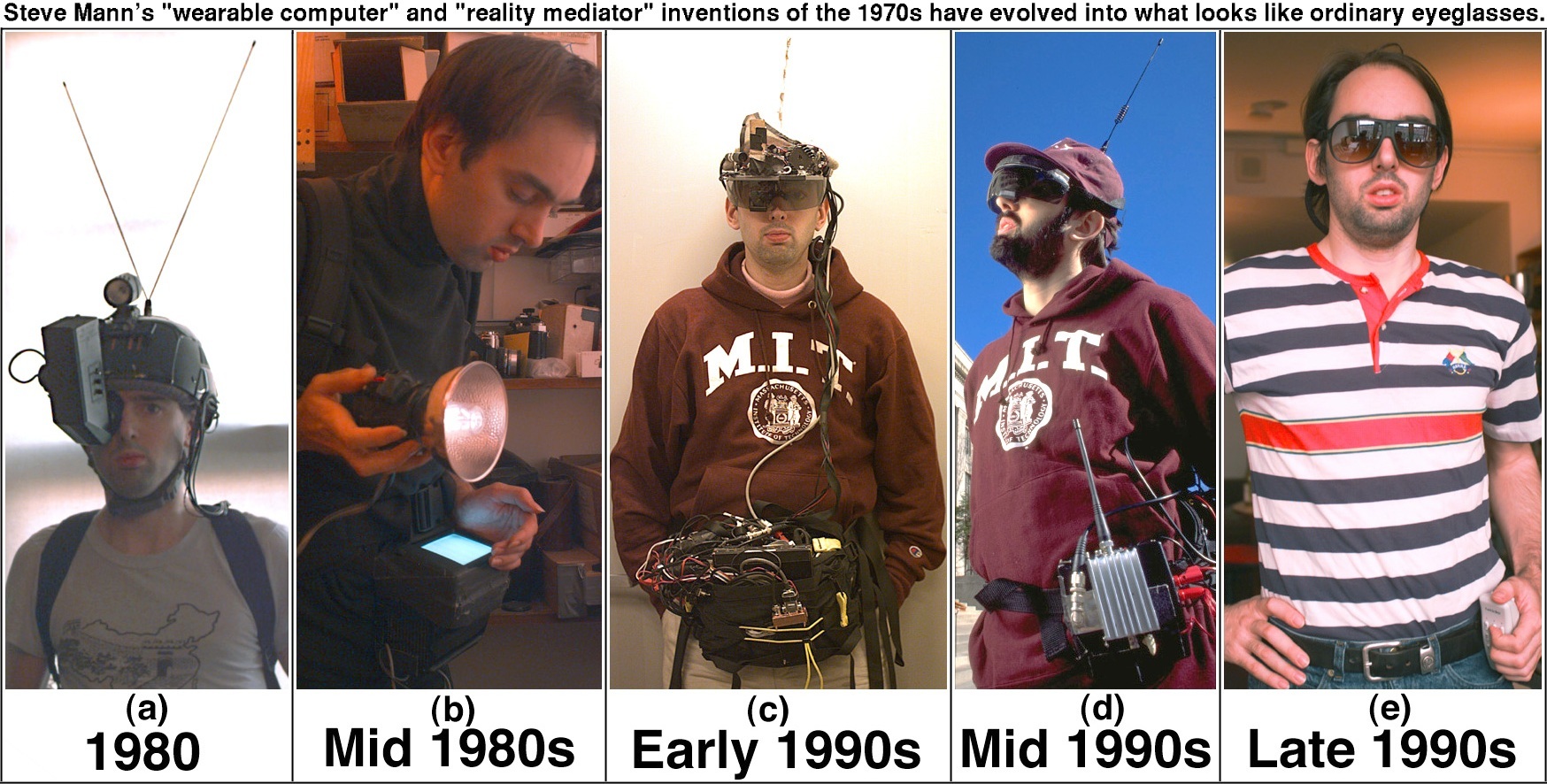
Of course, I don't actually have any sense of how far 100 meters is. I lean more toward "Turn left opposite that gas station up there." But Agatha doesn't know from landmarks or the things humans see. I imagine that will change as the resolution, graphics, and network connections improve. I don't, for example, see why eventually everyone shouldn't be equipped with a complete set of world maps and a display that can be set to show a customizable level of detail (up to full, real-time video) with a recognition program that would enable Agatha to say exactly that while recalculating routes using up-to-the-minute information about traffic jams and other impedimenta. (Doubtless some public-spirited hacker will create a speed trap avoidance add-on.) Today's kids, in fact, are so used to reading multiple screens with multiple scrolls of information on them that the GPS will probably migrate to lower-windshield with user-selectable information overlays. And glasses, watches, or clothing so that if, like the Prisoner, someone abducted you from your London flat you would be able to identify Your Village's location.

Back in today's world, Agatha is also not terribly bright about traffic. We were driving from Kew to Crouch End, and she routed us through…through…Central London. A brief digression. Back in 1972, before the M25 was built, although long after the North Circular Road was cobbled together out of existing streets, I remember a British folk band telling me that that you had to allow an extra two hours any time you had to go through London. I accordingly regard driving inside the M25 with horror and an immediate desire to escape to a train. Yet Agatha was routing us down Marylebone Road.

You cannot tell me she knew it was Good Friday and that the streets would therefore be comparatively empty.

The received wisdom among people who know North London is that the most efficient way from K to C is to take the North Circular Road to Finchley (I think it was) and then do something complicated with London streets. On the way back, we tried a comparative test by turning off the GPS, getting directions to the NCR from the club organizer, and following the signs from there. (You would have to be as navigationally challenged as a blind woodpecker not to be able to find Kew from the NCR, and anyway I knew the way.) It was a quiet, peaceful way to drive and talk, without Agatha's constant interruptions. Or it would have been, except that my friend kept worrying whether we were on the right road, going the right way, speculating it was longer than the other way…

The problem is, of course, that GPS does not teach you geography, any more than the tube map does. Following the serial sequence of instructions never adds up to understanding how the pieces connect. Wherever you go, as the saying is, there you are.

To lament the loss of geographical understanding (to say nothing of the box of maps in the back seat) is, I suppose, not much different from lamenting that people other than Scrabble players can no longer do mental arithmetic because everyone has calculators or whining that no one has the mental capacity to recite The Odyssey any more. Technology changes, and we gladly hand over yet another task. Soon, knowing where Manhattan is in relation to Philadelphia or Finchley Road is in relation to Wembley will seem as quaint as knowing how to load an 8mm projector.

The world will look very different then: no one will ever be lost, since you will always be able to punch in a destination and recalculate. On the other hand, you'll never be really found, either, since pretty much all geography will be in offline storage. We folk travelers used to talk about how the whole country was our back yard. In the GPS world, your own back yard might as well be Minnesota.


Wendy M. Grossman’s Web site has an extensive archive of her books, articles, and music, and an archive of all the earlier columns in this series. Readers are welcome to post here, at net.wars home, at her | | Comments (0) | TrackBacks (0)