Main

September 26, 2008

Wimsey's whimsy

One of the things about living in a foreign country is this: every so often the actual England I live in collides unexpectedly with the fictional England I grew up with. Fictional England had small, friendly villages with murders in them. It had lowering, thick fogs and grim, fantastical crimes solvable by observation and thought. It had mathematical puzzles before breakfast in a chess game. The England I live in has Sir Arthur Conan Doyle's vehement support for spiritualism, traffic jams, overcrowding, and four million people who read The Sun.

This week, at the GikIII Workshop, in a break between Internet futures, I wandered out onto a quadrangle of grass so brilliantly and perfectly green that it could have been an animated background in a virtual world. Overlooking it were beautiful, stolid, very old buildings. It had a sign: Balliol College. I was standing on the quad where, "One never failed to find Wimsey of Balliol planted in the center of the quad and laying down the law with exquisite insolence to somebody." I know now that many real people came out of Balliol (three kings, three British prime ministers, Aldous Huxley, Robertson Davies, Richard Dawkins, and Graham Greene) and that those old buildings date to 1263. Impressive. But much more startling to be standing in a place I first read about at 12 in a Dorothy Sayers novel. It's as if I spent my teenaged years fighting alongside Angel avatars and then met David Boreanaz.

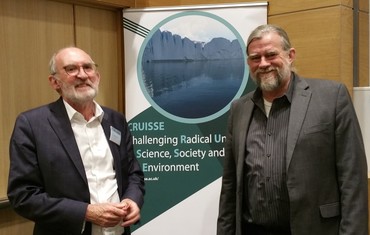
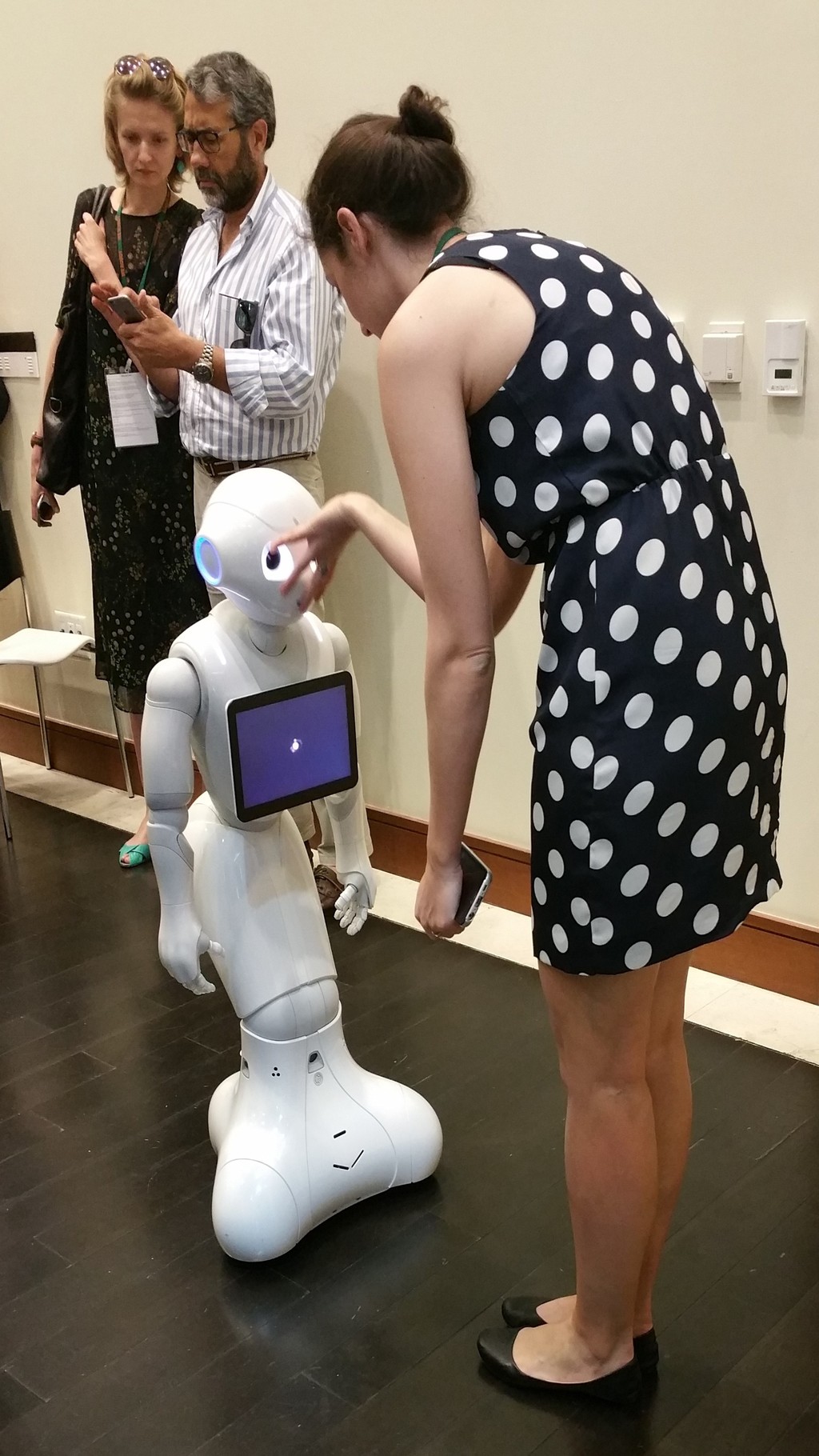
Organised jointly by Ian Brown at the Oxford Internet Institute and the University of Edinburgh's Script-ed folks, GikIII (prounounced "geeky") is a small, quirky gathering that studies serious issues by approaching them with a screw loose. For example: could we control intelligent agents with the legal structure the Ancient Romans used for slaves (Andrew Katz)? How sentient is a robot sex toy? Should it be legal to marry one? And if my sexbot rapes someone, are we talking lawsuit, deactivation, or prison sentence (Fernando Barrio)? Are RoadRunner cartoons all patent applications for devices thought up by Wile E. Coyote (Caroline Wilson)? Why is The Hound of the Baskervilles a metaphor for cloud computing (Miranda Mowbray)?

It's one of the characteristics of modern life that although questions like these sound as practically irrelevant as "how many angels, infinitely large, can fit on the head of a pin, infinitely small?", which may (or may not) have been debated here seven and a half centuries ago, they matter. Understanding the issues they raise matters in trying to prepare for the net.wars of the future.

In fact, Sherlock Holmes's pursuit of the beast is metaphorical; Mowbray was pointing out the miasma of legal issues for cloud computing. So far, two very different legal directions seem likely as models: the increasingly restrictive EULAs common to the software industry, and the service-level agreements common to network outsourcing. What happens if the cloud computing company you buy from doesn't pay its subcontractors and your data gets locked up in a legal battle between them? The terms and conditions in effect for Salesforce.com warn that the service has 30 days to hand back your data if you terminate, a long time in business. Mowbray suggests that the most likely outcome is EULAs for the masses and SLAs at greater expense for those willing to pay for them.

On social networks, of course, there are only EULAs, and the question is whether interoperability is a good thing or not. If the data people put on social networks ("shouldn't there be a separate disability category for stupid people?" someone asked) can be easily transferred from service to service, won't that make malicious gossip even more global and permanent? A lot of the issues Judith Rauhofer raised in discussing the impact of global gossip are not new to Facebook: we have a generation of 35-year-olds coping with the globally searchable history of their youthful indiscretions on Usenet. (And WELL users saw the newly appointed CEO of a large tech company delete every posting he made in his younger, more drug-addled 1980s.) The most likely solution to that particular problem is time. People arrested as protesters and marijuana smokers in the 1960s can be bank presidents now; in a few years the work force will be full of people with Facebook/MySpace/Bebo misdeeds and no one will care except as something laugh at drunkenly late out in the pub.

But what Lilian Edwards wants to know is this: if we have or can gradually create the technology to make "every ad a wanted ad" - well, why not? Should we stop it? Online marketing is at £2.5 billion a year according to Ofcom, and a quarter of the UK's children spend 22 hours a week playing computer games, where there is no regulation of industry ads and where Web 2.0 is funded entirely by advertising. When TV and the Internet roll together, when in-game is in-TV and your social network merges with megamedia, and MTV is fully immersive, every detail can be personalized product placement. If I grew up five years from now, my fictional Balliol might feature Angel driving across the quad in a Nissan Prairie past a billboard advertising airline tickets.

Wendy M. Grossman's Web site has an extensive archive of her books, articles, and music, and an archive of all the earlier columns in this series. Readers are welcome to post here, at net.wars home, at her personal blog, or by email to netwars@skeptic.demon.co.uk (but please turn off HTML).

September 5, 2008

Return of the browser wars

It was quiet, too quiet. For so long it's just been Firefox/Mozilla/Netscape, Internet Explorer, and sometimes Opera that it seemed like that was how it was always going to be. In fact, things were so quiet that it seemed vaguely surprising that Firefox had released a major update and even long-stagnant Internet Explorer has version 8 out in beta. So along comes Chrome to shake things up.

The last time there were as many as four browsers to choose among, road-testing a Web browser didn't require much technical knowledge. You loaded the thing up, pointed it at some pages, and if you liked the interface and nothing seemed hideously broken, that was it.

This time round, things are rather different. To really review Chrome you need to know your AJAX from your JavaScript. You need to be able to test for security holes, and then discover more security vulnerabilities. And the consequences when these things are wrong are so much greater now.

For various reasons, Chrome probably isn't for me, quite aside from its copy-and-paste EULA oops. Yes, it's blazingly fast and I appreciate that because it separates each tab or window into its own process it crashes more gracefully than its competitors. But the switching cost lies less in those characteristics than in the amount of mental retraining it takes to adapt your way of working to new quirks. And, admittedly based on very short acquaintance, Chrome isn't worth it now that I've reformatted Firefox 3's address bar into a semblance of the one in Firefox 2. Perhaps when Chrome is a little older and has replaced a few more of Firefox's most useful add-ons (or when I eventually discover that Chrome's design means it doesn't need them).

Chrome does not do for browsers what Google did for search engines. In 1998, Google's ultra-clean, quick-loading front page and search results quickly saw off competing, ultra-cluttered, wait-for-it portals like Altavista because it was such a vast improvement. (Ironically, Google now has all those features and more, but it's smart enough to keep them off the front page.)

Chrome does some cool things, of course, as anything coming out of Google always has. But its biggest innovation seems to be more completely merging local and global search, a direction in which Firefox 3 is also moving, although with fewer unfortunate consequences. And, as against that, despite the "incognito" mode (similar to IE8) there is the issue of what data goes back to Google for its coffers.

It would be nice to think that Chrome might herald a new round of browser innovation and that we might start seeing browsers that answer different needs than are currently catered for. For example: as a researcher I'd like a browser to pay better attention to archiving issues: a button to push to store pages with meaningful metadata as well as date and time, the URL the material was retrieved from, whether it's been updated since and if so how, and so on. There are a few offline browsers that sort of do this kind of thing, but patchily.

The other big question hovering over Chrome is standards: Chrome is possible because the World Wide Web Consortium has done its work well. Standards and the existence of several competing browsers with significant market share has prevented any one company from seizing control and turning the Web into the kind of proprietary system Tim Berners-Lee resisted from the beginning. Chrome will be judged on how well it renders third-party Web pages, but Google can certainly tailor its many free services to work best with Chrome - not so different a proposition from the way Microsoft has controlled the desktop.

Because: the big thing Chrome does is bring Google out of the shadows as a competitor to Microsoft. In 1995, Business Week ran a cover story predicting that Java (write once, run on anything) and the Web (a unified interface) could "rewrite the rules of the software industry". Most of the predictions in that article have not really come true - yet - in the 13 years since it was published; or if they have it's only in modest ways. Windows is still the dominant operating system, and Larry Ellison's thin clients never made a dent in the market. The other big half of the challenge to Microsoft, GNU/Linux and the open-source movement, was still too small and unfinished.

Google is now in a position to deliver on those ideas. Not only are the enabling technologies in place but it's now a big enough company with reliable enough servers to make software as a Net service dependable. You can collaboratively process your words using Google Docs, coordinate your schedules with Google Calendar, and phone across the Net with Google Talk. I don't for one minute think this is the death of Microsoft or that desktop computing is going to vanish from the Earth. For one thing, despite the best-laid cables and best-deployed radios of telcos and men, we are still a long way off of continuous online connectivity. But the battle between the two different paradigms of computing - desktop and cloud - is now very clearly ready for prime time.

Wendy M. Grossman's Web site hasn extensive archive of her books, articles, and music, and an archive of all the earlier columns in this series. Readers are welcome to post here, at net.wars home, at her personal blog, or by email to netwars@skeptic.demon.co.uk (but please turn off HTML).

June 6, 2008

The Digital Revolution turns 15

"CIX will change your life," someone said to me in 1991 when I got a commission to review a bunch of online systems and got my first modem. At the time, I was spending most or all of every day sitting alone in my house putting words in a row for money.

The Net, Louis Rossetto predicted in 1993, when he founded Wired, would change everybody's lives. He compared it to a Bengali typhoon. And that was modest compared to others of the day, who compared it favorably to the discovery of fire.

Today, I spend most or all of every day sitting alone in my house putting words in a row for money.

But yes: my profession is under threat, on the one hand from shrinkage of the revenues necessary to support newspapers and magazines - which is indeed partly fuelled by competition from the Internet - and on the other hand from megacorporate publishers who routinely demand ownership of the copyrights freelances used to resell for additional income - a practice that the Internet was likely to largely kill off anyway. Few have ever gotten rich from journalism, but freelance rates haven't budged in years; staff journalists get very modest raises and for those they are required to work more hours a week and produce more words.

That embarrassingly solipsistic view aside, more broadly, we're seeing the Internet begin to reshape the entertainment, telecommunications, retail, and software industries. We're seeing it provide new ways for people to organize politically and challenge the control of information. And we're seeing it and natural laziness kill off our history: writers and students alike rely on online resources at the expense of offline archives.

Wired was, of course, founded to chronicle the grandly capitalized Digital Revolution, and this month, 15 years on, Rossetto looked back to assess the magazine's successes and failures.

Rossetto listed three failures and three successes. The three failures: history has not ended; Old Media are not dead (yet); and governments and politics still thrive. The three successful predictions: the long boom; the One Machine, a man/machine planetary consciousness; that technology would change the way we relate to each other and cause us to reinvent social institutions.

I had expected to see the long boom in the list of failures, and not just because it was so widely laughed at when it was published. Rossetto is fair to say that the original 1997 feature was not invalidated by the 2000 stock market bust. It wasn't about that (although one couldn't resist snickering about it as the NASDAQ tanked). Instead, what the piece predicted was a global economic boom covering the period 1980 to 2020.

Wrote Peter Schwartz and Peter Leyden, "We are riding the early waves of a 25-year run of a greatly expanding economy that will do much to solve seemingly intractable problems like poverty and to ease tensions throughout the world. And we'll do it without blowing the lid off the environment."

Rossetto, assessing it now, says, " There's a lot of noise in the media about how the world is going to hell. Remember, the truth is out there, and it's not necessarily what the politicians, priests, or pundits are telling you."

I think: 1) the time to assess the accuracy of an article outlining the future to 2020 is probably around 2050; 2) the writers themselves called it a scenario that might guide people through traumatic upheavals to a genuinely better world rather than a prediction; 3) that nonetheless, it's clear that the US economy, which they saw as leading the way has suffered badly in the 2000s with the spiralling deficit and rising consumer debt; 4) that media alarm about the environment, consumer debt, government deficits, and poverty is hardly a conspiracy to tell us lies; and 5) that they signally underestimated the extent to which existing institutions would adapt to cyberspace (the underlying flaw in Rossetto's assumption that governments would be disbanding by now).

For example, while timing technologies is about as futile as timing the stock market, it's worth noting that they expected electronic cash to gain acceptance in 1998 and to be the key technology to enable electronic commerce, which they guessed would hit $10 billion by 2000. Last year it was close to $200 billion. Writing around the same time, I predicted (here) that ecommerce would plateau at about 10 percent of retail; I assumed this was wrong, but it seems that it hasn't even reached 4 perecent yet, though it's obvious that, particularly in the copyright industries, the influence of online commerce is punching well above its statistical weight.

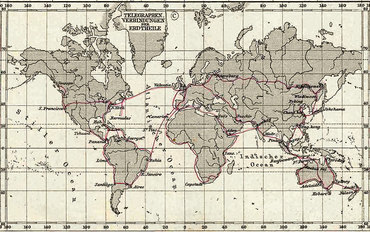
No one ever writes modestly about the future. What sells - and gets people talking - are extravagant predictions, whether optimistic or pessimistic. Fifteen years is a tiny portion even of human history, itself a blip on the planet. Tom Standage, writing in his 1998 book The Victorian Internet, noted that the telegraph was a far more radically profound change for the society of its day than the Internet is for ours. A century from now, the Internet may be just as obsolete. Rossetto, like the rest of us, will have to wait until he's dead to find out if his ideas have lasting value.

Wendy M. Grossman's Web site has an extensive archive of her books, articles, and music, and an archive of all the earlier columns in this series. Readers are welcome to post here, at net.wars home, at her personal blog, or by email to netwars@skeptic.demon.co.uk (but please turn off HTML).

January 11, 2008

Beyond biology

"Will we have enough food?"

Last Saturday (for an article in progress for the Guardian), I attended the monthly board meeting at Alcor, probably the largest of the several cryonics organizations. Cryonics: preserving a newly deceased person's body in the hope that medical technology will improve to the point where that person can be warmed up, revived, and cured.

I was the last to arrive at what I understand was an unusually crowded meeting: fifteen, including board members, staffers, and visitors. Hence the chair's anxious question.

The conference room has a window at one end that looks into a mostly empty concrete space at a line of giant cylinders, some gleaming steel, some dull aluminum. These "dewars" are essentially giant Thermos bottles, and they are the vessels in which cryopreserved patients are held. Each dewar can hold up to nine patients – four whole bodies, head down, and five neuro patients in a column down the middle.

There is a good reason to call these cryopreserved Alcor members "patients". If the cryonics dream ever comes to fruition, they will not have been dead now. And in any case, calling them patients has the same function as naming your sourdough starter: it reminds you that here is something that cannot survive without your responsible care.

To Alcor's board and staff, these are often personal friends. A number have their framed pictures on the board room wall, with the dates of their birth and cryopreservation. It was therefore a little eerie to realize that those visible dewars were, mostly, occupied.

I think the first time I ever heard of anything like cryonics was Woody Allen's movie Sleeper. Reading about it as a serious proposition came nearly 20 years later, in Ed Regis's 1992 book Great Mambo Chicken and the Transhuman Condition. Regis's book, which I reviewed for New Scientist, was a vivid ramble through the outer fringes of science, which he dubbed "fin-de-siècle hubris".

My view hasn't changed: since cremation and burial both carry a chance of revival of zero, cryonics has to do hardly anything to offer better odds, no matter how slight. But it remains a contentious idea. Isaac Asimov, for example, was against it, at least for himself. The science fiction I read as a teenager was filled with overpopulated earths covered in giant blocks of one-room apartments and people who lived on synthetic food because there was no longer the space or ability to grow enough of the real stuff. And we're going to add long-dead people as well?

That kind of issue comes up when you mention cryonics. Isn't it selfish? Or expensive? Or an imposition on future generations? What would the revived person would live on, given their outdated skills. Supposing you wake up a slave?

Many of these issues have been considered, if not by cryonicists themselves for purely practical reasons then by sf writers. Robert A. Heinlein's 1957 book The Door Into Summer had its protagonist involuntarily frozen and deposited into the future with no assets and no employment prospects, given that his engineering background was 30 years out of date. Larry Niven's 1991 short story "Rammer" had its hero revived into the blanked body of a criminal and sent out as a spaceship pilot by a society that would have calmly vaped his personality and replaced it with the next one if he were found unsuitable (Niven was also, by the way, the writer who coined the descriptor "corpsicle" for the cryopreserved). Even Woody Allen's Miles Monroe woke up in danger.

The thing is, those aren't reasons for cryonicists not to try to make their dream a reality. They are arguments for careful thought on the part of the cryonics organizations who are offering cryopreservation and possible revival as services. And they do think about it, in part because the people running those organizations expect to be cryopreserved themselves The scientist and Alcor board member Ralph Merkle, in an interview last year, pointed out that the current board chooses its successors with great care, "Because our lives will depend on selecting a good group to continue the core values."

Many of them are also bad aarguments. Most people, given their health, want their lives to continue; if they didn't, we'd be awash in suicides. If overpopulation is the problem, having children is just as selfish a way of securing immortality as wanting longer life for oneself. If burdening future generations is the problem, doing so by being there is hardly worse than using up all the planet's resources in our lifetime, leaving our descendants to suffer the consequences unaided. Nor is being uncertain of the consequences a reason: human history is filled with technologies we've developed on the basis that we'd deal with the consequences as they arose. Some consequences were good, some bad; most technologies have a mix of the two.

After the board meeting ended, several of those present and I went on talking about just these issues over lunch.

"We won't be harder to deal with than a baby," one of them said. True, but there is a much bigger biological urge to reproduce than there is to revive someone who was pronounced dead a century or two ago.

"We are kind of going around biology," he admitted.

Only up to a point: there was enough food.

Wendy M. Grossman’s Web site has an extensive archive of her books, articles, and music, and an archive of all the earlier columns in this series. Readers are welcome to post here, at net.wars home, at her personal blog, or by email to netwars@skeptic.demon.co.uk (but please turn off HTML).