Main

June 27, 2008

Mistakes were made

This week we got the detail on what went wrong at Her Majesty's Revenue and Customs that led to the loss of those two CDs full of the personal details of 25 million British households last year with the release of the Poynter Review (PDF). We also got a hint of how and whether the future might be different with the publication yesterday of Data Handling: Proecures in Government (PDF), written by Sir Gus O'Donnell and commissioned by the Prime Minister after the HMRC loss. The most obvious message of both reports: government needs to secure data better.

The nicest thing the Poynter review said was that HMRC has already made changes in response to its criticisms. Otherwise, it was pretty much a surgical demonstration of "institutional deficiencies".

The chief points:


- Security was not HMRC's top priority.

- HMRC in fact had the technical ability to send only the selection of data that NAO actually needed, but the staff involved didn't know it.

- There was no designated single point of contact between HMRC and NAO.

- HMRC used insecure methods for data storage and transfer.

- The decision to send the CDs to the NAO was taken by junior staff without consulting senior managers - which under HMRC's own rules they should have done.

- The reason HMRC's junior staff did not consult managers was that they believed (wrongly) that NAO had absolute authority to access any and all information HMRC had.

- The HMRC staffer who dispatched the discs incorrectly believed the TNT Post service was secure and traceable, as required by HMRC policy. A different TNT service that met those requirements was in fact available.

- HMRC policies regarding information security and the release of data were not communicated sufficiently through the organization and were not sufficiently detailed.

- HMRC failed on accountability, governance, information security...you name it.

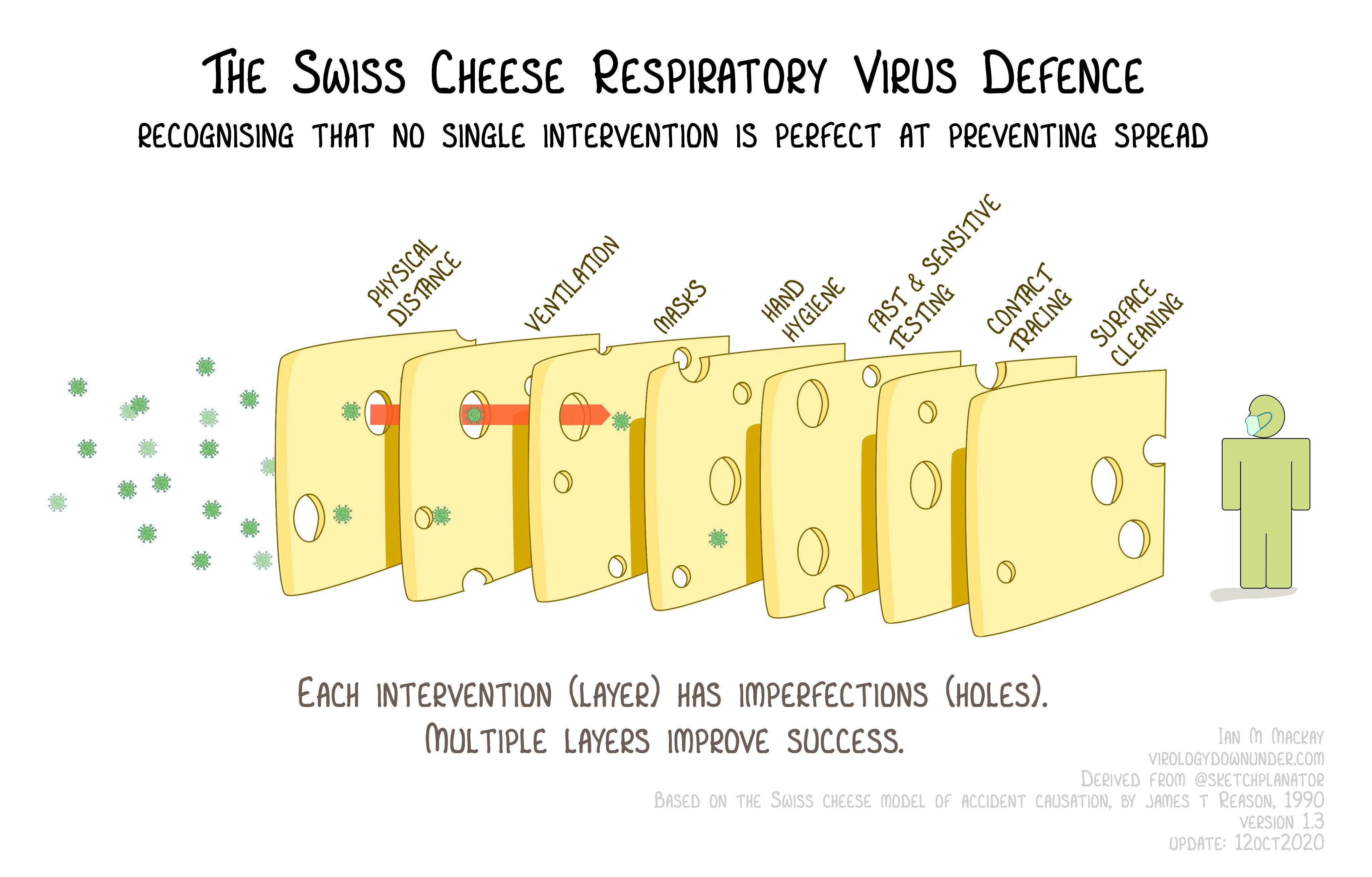
The real problem, though, isn't any single one of these things. If junior staff had consulted senior staff, it might not have mattered that they didn't know what the policies were. If HMRC used proper information security and secure methods for data storage (that is, encryption rather than simple password protection), they wouldn't have had access to send the discs. If they'd understood TNT's services correctly, the discs wouldn't have gotten lost - or at least been traceable if they had.

The real problem was the interlocking effect of all these factors. That, as Nassim Nicholas Taleb might say, was the black swan.

For those who haven't read Taleb's The Black Swan: The Impact of the Highly Improbable, the black swan stands for the event that is completely unpredictable - because, like black swans until one was spotted in Australia, no such thing has ever been seen - until it happens. Of course, data loss is pretty much a white swan; we've seen lots of data breaches. The black swan, really, is the perfectly secure system that is still sufficiently open for the people who need to use it.

That challenge is what O'Donnell's report on data handling is about and, as he notes, it's going to get harder rather than easier. He recommends a complete rearrangement of how departments manage information as well as improving the systems within individual departments. He also recommends greater openness about how the government secures data.

"No organisation can guarantee it will never lose data," he writes, "and the Government is no exception." O'Donnell goes on to consider how data should be protected and managed, not whether it should be collected or shared in the first place. That job is being left for yet another report in progress, due soon.

It's good to read that some good is coming out of the HMRC data loss: all departments are, according to the O'Donnell report, reviewing their data practices and beginning the process of cultural change. That can only be a good thing.

But the underlying problem is outside the scope of these reports, and it's this government's fondness for creating giant databases: the National Identity Register, ContactPoint, the DNA database, and so on. If the government really accepted the principle that it is impossible to guarantee complete data security, what would they do? Logically, they ought to start by cancelling the data behemoths on the understanding that it's a bad idea to base public policy on the idea that you can will a black swan into existence.

It would make more sense to create a design for government use of data that assumes there will be data breaches and attempts to limit the adverse consequences for the individuals whose data is lost. If my privacy is compromised alongside 50 million other people's and I am the victim of identity theft does it help me that the government department that lost the data knows which staff member to blame?

As Agatha Christie said long ago in one of her 80-plus books, "I know to err is human, but human error is nothing compared to what a computer can do if it tries." The man-machine combination is even worse. We should stop trying to breed black swans and instead devise systems that don't create so many white ones.

Wendy M. Grossman's Web site has an extensive archive of her books, articles, and music, and an archive of all the earlier columns in this series. Readers are welcome to post here, at net.wars home, at her personal blog, or by email to netwars@skeptic.demon.co.uk (but please turn off HTML).

May 30, 2008

Ten

It's easy to found an organization; it's hard to keep one alive even for as long as ten years. This week, the Foundation for Information Policy Research celebrated its tenth birthday. Ten years is a long time in Internet terms, and even longer when you're trying to get government to pay attention to expertise in a subject as difficult as technology policy.

My notes from the launch contain this quote from FIPR's first director, Caspar Bowden, which shows you just how difficult FIPR's role was going to be: "An educational charity has a responsibility to speak the truth, whether it's pleasant or unpleasant." FIPR was intended to avoid the narrow product focus of corporate laboratory research and retain the traditional freedoms of an academic lab.

My notes also show the following list of topics FIPR intended to research: the regulation of electronic commerce; consumer protection; data protection and privacy; copyright; law enforcement; evidence and archiving; electronic interaction between government, businesses, and individuals; the risks of computer and communications systems; and the extent to which information technologies discriminate against the less advantaged in society. Its first concern was intended to be researching the underpinnings of electronic commerce, including the then recent directive launched for public consultation by the European Commission.

In fact, the biggest issue of FIPR's early years was the crypto wars leading up to and culminating in the passage of the Regulation of Investigatory Powers Act (2000). It's safe to say that RIPA would have been a lot worse without the time and energy Bowden spent listening to Parliamentary debates, decoding consultation papers, and explaining what it all meant to journalists, politicians, civil servants, and anyone else who would listen.

Not that RIPA is a fountain of democratic behavior even as things are. In the last couple of weeks we've seen the perfect example of the kind of creeping functionalism that FIPR and Privacy International warned about at the time: the Poole council using the access rules in RIPA to spy on families to determine whether or not they really lived in the right catchment area for the schools their children attend.

That use of the RIPA rules, Bowden said at at FIPR's half-day anniversary conference last Wednesday, sets a precedent for accessing traffic data for much lower level purposes than the government originally claimed it was collecting the data for. He went on to call the recent suggestion that the government may be considering a giant database, updated in real time, of the nation's communications data "a truly Orwellian nightmare of data mining, all in one place."

Ross Anderson, FIPR's founding and current chair and a well-known security engineer at Cambridge, noted that the same risks adhere to the NHS database. A clinic that owns its own data will tell police asking for the names of all its patients under 16 to go away. "If," said Anderson, "it had all been in the NHS database and they'd gone in to see the manager of BT, would he have been told to go and jump in the river? The mistake engineers make too much is to think only technology matters."

That point was part of a larger one that Anderson made: that hopes that the giant databases under construction will collapse under their own weight are forlorn. Think of developing Hulk-Hogan databases and the algorithms for mining them as an arms race, just like spam and anti-spam. The same principle that holds that today's cryptography, no matter how strong, will eventually be routinely crackable means that today's overload of data will eventually, long after we can remember anything we actually said or did ourselves, be manageable.

The most interesting question is: what of the next ten years? Nigel Hickson, now with the Department of Business, Enterprise, and Regulatory Reform, gave some hints. On the European and international agenda, he listed the returning dominance of the large telephone companies on the excuse that they need to invest in fiber. We will be hearing about quality of service and network neutrality. Watch Brussels on spectrum rights. Watch for large debates on the liability of ISPs. Digital signatures, another battle of the late 1990s, are also back on the agenda, with draft EU proposals to mandate them for the public sector and other services. RFID, the "Internet for things" and the ubiquitous Internet will spark a new round of privacy arguments.

Most fundamentally, said Anderson, we need to think about what it means to live in a world that is ever more connected through evolving socio-technological systems. Government can help when markets fail; though governments themselves seem to fail most notoriously with large projects.

FIPR started by getting engineers, later engineers and economists, to talk through problems. "The next growth point may be engineers and psychologists," he said. "We have to progressively involve more and more people from more and more backgrounds and discussions."

Probably few people feel that their single vote in any given election really makes a difference. Groups like FIPR, PI, No2ID, and ARCH remind us that even a small number of people can have a significant effect. Happy birthday.


Wendy M. Grossman's Web site has an extensive archive of her books, articles, and music, and an archive of all the earlier columns in this series. Readers are welcome to post here, at net.wars home, at her personal blog, or by email to netwars@skeptic.demon.co.uk (but please turn off HTML).


May 23, 2008

The haystack conundrum

Early this week the news broke that the Home Office wants to create a giant database in which will be stored details of all communications sent in Britain. In other words, instead of data retention, in which ISPs, telephone companies, and other service providers would hang onto communications data for a year or seven in case the Home Office wanted it, everything would stream to a Home Office data center in real time. We'll call it data swallowing.

Those with long memories - who seem few and far between in the national media covering this sort of subject - will remember that in about 1999 or 2000 there was a similar rumor. In the resulting outraged media coverage it was more or less thoroughly denied and nothing had been heard of it since, though privacy advocates continued to suspect that somewhere in the back of a drawer the scheme lurked, dormant, like one of those just-add-water Martians you find in the old Bugs Bunny cartoons. And now here it is again in another leak that the suspicious veteran watcher of Yes, Minister might think was an attempt to test public opinion. The fact that it's been mooted before makes it seem so much more likely that they're actually serious.

This proposal is not only expensive, complicated, slow, and controversial/courageous (Yes, Minister's Fab Four deterrents), but risk-laden, badly conceived, disproportionate, and foolish. Such a database will not catch terrorists, because given the volume of data involved trying to use it to spot any one would-be evil-doer will be the rough equivalent of searching for an iron filing in a haystack the size of a planet. It will, however, make it possible for anyone trawling the database to make any given individual's life thoroughly miserable. That's so disproportionate it's a divide-by-zero error.

The risks ought to be obvious: this is a government that can't keep track of the personal details of 25 million households, which fit on a couple of CDs. Devise all the rules and processes you want, the bigger the database the harder it will be to secure. Besides personal information, the giant communications database would include businesses' communication information, much of likely to be commercially sensitive. It's pretty good going to come up with a proposal that equally offends civil liberties activists and businesses.

In a short summary of the proposed legislation, we find this justification: "Unless the legislation is updated to reflect these changes, the ability of public authorities to carry out their crime prevention and public safety duties and to counter these threats will be undermined."

Sound familiar? It should. It's the exact same justification we heard in the late 1990s for requiring key escrow as part of the nascent Regulation of Investigatory Powers Act. The idea there was that if the use of strong cryptography to protect communications became widespread law enforcement and security services would be unable to read the content of the messages and phone calls they intercepted. This argument was fiercely rejected at the time, and key escrow was eventually dropped in favor of requiring the subjects of investigation to hand over their keys under specified circumstances.

There is much, much less logic to claiming that police can't do their jobs without real-time copies of all communications. Here we have real analogies: postal mail, which has been with us since 1660. Do we require copies of all letters that pass through the post office to be deposited with the security services? Do we require the Royal Mail's automated sorting equipment to log all address data?

Sanity has never intervened in this government's plans to create more and more tools for surveillance. Take CCTV. Recent studies show that despite the millions of pounds spent on deploying thousands of cameras all over the UK, they don't cut crime, and, more important, the images help solve crime in only 3 percent of cases. But you know the response to this news will not be to remove the cameras or stop adding to their number. No, the thinking will be like the scheme I once heard for selling harmless but ineffective alternative medical treatments, in which the answer to all outcomes is more treatment. (Patient gets better - treatment did it. Patient stays the same - treatment has halted the downward course of the disease. Patient gets worse - treatment came too late.)

This week at Computers, Freedom, and Privacy, I heard about the Electronic Privacy Information Center's work on fusion centers, relatively new US government efforts to mine many commercial and public sources of data. EPIC is trying to establish the role of federal agencies in funding and controlling these centers, but it's hard going.

What do these governments imagine they're going to be able to do with all this data? Is the fantasy that agents will be able to sit in a control room somewhere and survey it all on some kind of giant map on which criminals will pop up in red, ready to be caught? They had data before 9/11 and failed to collate and interpret it.

Iron filing; haystack; lack of a really good magnet.

Wendy M. Grossman's Web site has an extensive archive of her books, articles, and music, and an archive of all the earlier columns in this series. Readers are welcome to post here, at net.wars home, at her personal blog, or by email to netwars@skeptic.demon.co.uk (but please turn off HTML).

April 18, 2008

Like a Virgin

Back in November 2005 the CEO of AT&T, Ed Whitacre, told Business Week that he was tired of big Internet sites like Google and Yahoo! using "my pipes" "for free". With those words he launched the issue of network neutrality onto the front pages and into the public consciousness. At the time, it seemed like what one of my editors used to grandly dismiss as an "American issue". (One such issue, it's entertaining to remember now, was spam. That was in 1997.) The only company dominant enough and possessed of sufficient infrastructure to impose carriage charges on content providers in the UK was BT - and if BT had tried anything like that Ofcom would - probably - have stomped all over it.

But what starts in America usually winds up here a few years later, and this week, the CEO of Virgin Media, Neil Berkett, threatened that video providers who don't pay for faster service may find their traffic being delivered in slow "bus lanes". Network neutrality, he said, was "a load of bollocks".

His PR people recanted - er, clarified a day or two later. We find it hard to see how a comment as direct as "a load of bollocks" could be taken out of context. However. Let's say he was briefly possessed by the spirt of Whitacre, who most certainly meant what he said.

The recharacterization of Berkett's comments: the company isn't really going to deliberately slow down YouTube and the BBC's iPlayer. Instead, it "could offer content providers deals to upgrade their provisioning." I thought this sounded like the wheeze where you're not charged more for using a credit card, you're given a discount for paying cash. But no: what they say they have in mind is direct peering, in which no money changes hands, which they admit could be viewed as a "non-neutral" solution.

But, says Keith Mitchell, a fellow member of the Open Rights Group advisory board, "They are in for a swift education in the way the global transit/peering market works if they try this." Virgin seems huge in the context of the UK, where its ownership of the former ntl/Telewest combine gives it a lock on the consumer cable market - but in the overall scheme of things it's "a very small fish in the pond compared to the Tier 1 transit providers, and the idea that they can buck this model single-handedly is laughable."

Worse, he says, "If Virgin attempts to cost recover for interconnects off content providers on anything other than a sender-keeps-all/non-settlement basis, they'll quickly find themselves in competition with the transit providers, whose significantly larger economies of scale put them in a position to provide a rather cheaper path from the content providers."

What fun. In other words, if you're, say, the BBC, and you're faced with paying extra in some form to get your content out to the Net you'd choose to pay the big trucking company with access to all the best and fastest roads and the international infrastructure rather than the man-with-a-van who roams your local neighborhood.

ISPs versus the iPlayer seems likely to run and run. It's clear, for example, that streaming is growing at a hefty clip. Obviously, within the UK the iPlayer is the biggest single contributor to this; viewers are watching a million programs a week online, sopping up 3 to 5 percent of all Internet traffic in Britain.

We've seen exactly this sort of argument before: file-sharing (music, not video!), online gaming, binary Usenet newsgroups. Why (ancient creaking voice) I remember when the big threat was the advent of the graphical Web, which nearly did kill the Net (/ancient creaking voice). The difference this time is that there is a single organization with nice, deep, taxpayer-funded pockets to dig into. Unlike the voracious spider that was Usenet, the centipede that is file-sharing, or the millipedes who were putting up Web sites, YouTube and the BBC make up an easily manageable number of easily distinguished targets for a protection racket. At the same time, the consolidation of the consumer broadband market from hundreds of dial-up providers into a few very large broadband providers means competition is increasingly mythical.

But the iPlayer is only one small piece of the puzzle. Over the next few years we're going to see many more organizations offering streaming video across the Net. For example, a few weeks ago I signed up for an annual pass for the streaming TV service for the nine biggest men's tennis tournaments of the year. The economics make sense: $70 a year versus £20 a month for Sky Sports - and I have no interest in any of Sky's other offerings - or pay nothing and "watch" really terrible low-resolution video over a free Chinese player offering rebroadcasts of uncertain legality.

The real problem, as several industry insiders have said to me lately, is pricing. "You have a product," said one incredulously, "that people want more and more of, and you can't make any money selling it?" When companies like O2 are offering broadband for £7.50 a month as a loss-leading add-on to mobile phone connections, consumers don't see why they should pay any more than that. Jerky streaming might be just the motivator to fix that.

Wendy M. Grossman's Web site has an extensive archive of her books, articles, and music, and an archive of all the earlier columns in this series. Readers are welcome to post here, at net.wars home, at her personal blog, or by email to netwars@skeptic.demon.co.uk (but please turn off HTML).

April 11, 2008

My IP address, my self

Some years back when I was writing about the data protection directive, Simon Davies, director of Privacy International, predicted a trade war between the US and Europe over privacy laws. It didn't happen, or at least it hasn't happened yet.

The key element to this prediction was the rule in the EU's data protection laws that prohibited sending data on for processing to countries whose legal regimes aren't as protective as those of the EU. Of course, since then we've seen the EU sell out on supplying airline passenger data to the US. Even so, this week the Article 29 Data Protection Working Party made recommendations about how search engines save and process personal data that could drive another wedge between the US and Europe.

The Article 29 group is one of those arcane EU phenomena that you probably don't know much about unless you're a privacy advocate or paid to find out. The short version: it's a sort of think tank of data protection commissioners from all over Europe. The UK's Information Commissioner, Richard Thomas, is a member, as are his equivalents in countries from France to Lithuania.

The Working Party (as it calls itself) advises and recommends policies based on the data protection principles enshrined in the EU Data Protection Directive. It cannot make law, but both its advice to the European Commission and the Commission's action (or lack thereof) are publicly reported. It's arguable that in a country like the UK, where the Information Commissioner operates with few legal teeth to bite with, the existence of such a group may help strengthen the Commissioner's hand.

(Few legal teeth, at least in respect of government activities: the Information Commissioner has issued an opinion about Phorm indicating that the service must be opt-in only. As Phorm and the ISPs involved are private companies, if they persisted with a service that contravened data protection law, the Information Commissioner could issue legal sanctions. But while the Information Commissioner can, for example, rule that for an ISP to retain users' traffic data for seven years is disproportionate, if the government passes a law saying the ISP must do so then within the UK's legal system the Information Commissioner can do nothing about it. Similarly, the Information Commissioner can say, as he has, that he is "concerned" about the extent of the information the government proposes to collect and keep on every British resident, but he can't actually stop the system from being built.)

The group's key recommendation: search engines should not keep personally identifiable search histories for longer than six months, and it specifically includes search engines whose headquarters are based outside the EU. The group does not say which search engines it studied, but it was reported to be studying Google as long ago as last May. The report doesn't look at requirements to keep traffic data under the Data Retention Directive, as it does not apply to search engines.

Google's shortening the life of its cookies and anonymizing its search history logs after 18 months turns out to have a significance I didn't appreciate when, at the time, I dismissed it as insultingly trivial (which it was): it showed the Article 29 working group that the company doesn't really need to keep all that data for so long. In

One of the key items the Article 29 group had to decide in writing its report on data protection issues related to search engines (PDF) is this: are IP addresses personal information? It sounds like one of those bits of medieval sophistry, like asking how many angels can dance on the head of a pin. In the dial-up days, it might not have mattered, at least in Britain, where local phone charges forced limited usage, so users were assigned a different IP address every time they logged in. But in the world of broadband, where even the supposedly dynamic IP addresses issued by cable suppliers may remain with a single subscriber for years on end. Being able to track your IP address's activities is increasingly like being able to track your library card, your credit card, and your mobile phone all at the same time. Fortunately, the average ISP doesn't have the time to be that interested in most of its users.

The fact is that any single piece of information that identifies your activities over a long period and can be mapped to your real-life identity has to be considered personal information or the data protection laws make no sense. The libertarian view, of course, would be that there are other search engines. You do not actually have to use Google, Gmail, or even YouTube. But if all search engines adopted Google's habits the choice would be more apparent than real. Time was when the US was the world's policeman. With respect to data, it seems that the EU has taken on this role. It will be interesting to see whether this decision has any impact on Google's business model and practices. If it does, that trade war could finally be upon us. If not, then Google was building up a vast data store just because we can.

Wendy M. Grossman's Web site has an extensive archive of her books, articles, and music, and an archive of all the earlier columns in this series. Readers are welcome to post here, at net.wars home, at her personal blog, or by email to netwars@skeptic.demon.co.uk (but please turn off HTML).

March 7, 2008

Techitics

This year, 2008, may go down in history as the year geeks got politics. At etech this week I caught a few disparaging references to hippies' efforts to change politics. Which, you know, seemed kind of unfair, for two reasons. First: the 1960s generation did change an awful lot of things, though not nearly as many as they hoped. Second: a lot of those hippies are geeks now.

But still. Give a geek something that's broken and he'll itch to fix it. And one thing leads to another. Which is why on Wednesday night Lawrence Lessig explained in an hour-long keynote that got a standing ovation how he plans to fix what's wrong with Congress.

No, he's not going to run. Some 4,500 people on Facebook were trying to push him into it, and he thought about it, but preliminary research showed that his chances of beating popular Silicon Valley favorite, Jackie Speier, were approximately zero.

"I wasn't afraid of losing," he said, noting ruefully that in ten years of copyfighting he's gotten good at it. Instead, the problem was that Silicon Valley insiders would have known that no one was going to beat Jackie Speier. But outsiders would have pointed, laughed, and said, "See? The idea of Congressional reform has no legs." And on to business as usual. So, he said, counterproductive to run.

Instead, he's launching Change Congress. "Obama has taught us that it's possible to imagine many people contributing to real change."

The point, he said, will be to provide a "signalling function". Like Creative Commongs, Change Congress will give candidates an easy way to show what level of reform they're willing to commit tto. The system will start with three options: 1) refusing money from lobbyists and political action committees (private funding groups); 2) ban earmarks (money allocated to special projects in politicians' home states); 3) commit to public financing for campaigns. Candidates can then display the badge generated from those choices on their campaign materials.

From there, said Lessig, layer something like Emily's List on top, to help people identify candidates they're willing to suppot with monthly donations, thereby subsidizing reform.

Money, he admitted, isn't the entire problem. But, like drinking for an alcoholic, it's the first problem you must solve to be able to tackle any of the others with any hope of success.

In a related but not entirely similar vein, the guys who brought us They Work For You nearly four years ago are back with UN democracy, an attempt to provide a signalling function to the United Nations> by making it easy to find out how your national representatives are voting in UN meetings. The driving force behind UNdemocracy.com is Liverpool's Julian Todd, who took the UN's URL obscurantism as a personal challenge. Since he doesn't fly, presenting the new service were Tom Loosemore, Stefan Mogdalinski, and Danny O'Brien, who pointed out that when you start looking at the decisions and debates you start to see strange patterns: what do the US and Israel have in common with Palau and Micronesia?

The US Congress and the British Parliament are all, they said, now well accustomed to being televised, and their behaviour has adapted to the cameras. At the UN, "They don't think they're being watched at all, so you see horse trading in a fairly raw form."

The meta-version they believe can be usefully and widely applied: 1) identify broken civic institution; 2) liberate data from said institution. There were three more ingredients, but they vanished the slide too quickly. But Mogdalinski noted that where in the past they have said "Ask forgiveness, not permission", alluding to the fact that most institutions if approached will behave as though they own the data. He's less inclined to apologise now. After all, isn't it *our* data that's being released in the public interest?

Data isn't everything. But the Net community has come a long way since the early days, when the prevailing attitude was that technological superiority would wash away politics-as-usual by simply making an end run around any laws governments tried to pass. Yes, technology can change the equation a whole lot. For example, once PGP escaped laws limiting the availability of strong encryption were pretty much doomed to fail (though not without a lot of back-and-forth before it became official). Similarly, in the copyright wars it's clear that copyrighted material will continue to leak out no matter how hard they try to protect it.

But those are pretty limited bits of politics. Technology can't make such an easy end run around laws that keep shrinking the public domain. Nor can it by itself solve policies that deny the reality of global climate change or that, in one of Lessig's examples, back government recommendations off from a daily caloric intake of 10 percent sugar to one of 25 percent. Or that, in another of his examples, kept then Vice-President Al Gore from succeeding with a seventh part to the 1996 Communications Act deregulating ADSL and cable because without anything to regulate what would Congressmen do without the funds those lobbyists were sending their way? Hence, the new approach.

"Technology," Lessig said, "doesn't solve any problems. But it is the only tool we have to leverage power to effect change."

Wendy M. Grossman's Web site has an extensive archive of her books, articles, and music, and an archive of all the earlier columns in this series. Readers are welcome to post here, at net.wars home, at her | | Comments (0) | TrackBacks (0)

February 22, 2008

Strikeout

There is a certain kind of mentality that is actually proud of not understanding computers, as if there were something honorable about saying grandly, "Oh, I leave all that to my children."

Outside of computing, only television gets so many people boasting of their ignorance. Do we boast how few books we read? Do we trumpet our ignorance of other practical skills, like balancing a cheque book, cooking, or choosing wine? When someone suggests we get dressed in the morning do we say proudly, "I don't know how"?

There is so much insanity coming out of the British government on the Internet/computing front at the moment that the only possible conclusion is that the government is made up entirely of people who are engaged in a sort of reverse pissing contest with each other: I can compute less than you can, and see? here's a really dumb proposal to prove it.

How else can we explain yesterday's news that the government is determined to proceed with Contactpoint even though the report it commissioned and paid for from Deloitte warns that the risk of storing the personal details of every British child under 16 can only be managed, not eliminated? Lately, it seems that there's news of a major data breach every week. But the present government is like a batch of 20-year-olds who think that mortality can't happen to them.

Or today's news that the Department of Culture, Media, and Sport has launched its proposals for "Creative Britain", and among them is a very clear diktat to ISPs: deal with file-sharing voluntarily or we'll make you do it. By April 2009. This bit of extortion nestles in the middle of a bunch of other stuff about educating schoolchildren about the value of intellectual property. Dare we say: if there were one thing you could possibly do to ensure that kids sneer at IP, it would be to teach them about it in school.

The proposals are vague in the extreme about what kind of regulation the DCMS would accept as sufficient. Despite the leaks of last week, culture secretary Andy Burnham has told the Financial Times that the "three strikes" idea was never in the paper. As outlined by Open Rights Group executive director Becky Hogge in New Statesman, "three strikes" would mean that all Internet users would be tracked by IP address and warned by letter if they are caught uploading copyrighted content. After three letters, they would be disconnected. As Hogge says (disclosure: I am on the ORG advisory board), the punishment will fall equally on innocent bystanders who happen to share the same house. Worse, it turns ISPs into a squad of private police for a historically rapacious industry.

Charles Arthur, writing in yesterday's Guardian, presented the British Phonographic Institute's case about why the three strikes idea isn't necessarily completely awful: it's better than being sued. (These are our choices?) ISPs, of course, hate the idea: this is an industry with nanoscale margins. Who bears the liability if someone is disconnected and starts to complain? What if they sue?

We'll say it again: if the entertainment industries really want to stop file-sharing, they need to negotiate changed business models and create a legitimate market. Many people would be willing to pay a reasonable price to download TV shows and music if they could get in return reliable, fast, advertising-free, DRM-free downloads at or soon after the time of the initial release. The longer the present situation continues the more entrenched the habit of unauthorized file-sharing will become and the harder it will be to divert people to the legitimate market that eventually must be established.

But the key damning bit in Arthur's article (disclosure: he is my editor at the paper) is the BPI's admission that they cannot actually say that ending file-sharing would make sales grow. The best the BPI spokesman could come up with is, "It would send out the message that copyright is to be respected, that creative industries are to be respected and paid for."

Actually, what would really do that is a more balanced copyright law. Right now, the law is so far from what most people expect it to be - or rationally think it should be - that it is breeding contempt for itself. And it is about to get worse: term extension is back on the agenda. The 2006 Gowers Review recommended against it, but on February 14, Irish EU Commissioner Charlie McCreevy (previously: champion of software patents) has announced his intention to propose extending performers' copyright in sound recordings from the current 50-year term to 95 years. The plan seems to go something like this: whisk it past the Commission in the next two months. Then the French presidency starts and whee! new law! The UK can then say its hands are tied.

That change makes no difference to British ISPs, however, who are now under the gun to come up with some scheme to keep the government from clomping all over them. Or to the kids who are going to be tracked from cradle to alcopop by unique identity number. Maybe the first target of the government computing literacy programs should be...the government.


Wendy M. Grossman's Web site has an extensive archive of her books, articles, and music, and an archive of all the earlier columns in this series. Readers are welcome to post here, at net.wars home, at her personal blog, or by email to netwars@skeptic.demon.co.uk (but please turn off HTML).

February 8, 2008

If you have ID cards, drink alcohol


One of the key identifiers of an addiction is that indulgence in it persists long after all the reasons for doing it have turned from good to bad.

A sobered-up Scottish alcoholic once told me the following examplar of alcoholic thinking. A professor is lecturing to a class of alcoholics on the evils of drinking. To make his point, he takes two glasses, one filled with water, the other with alcohol. Into each glass he drops a live worm. The worm in the glass of water lives; the worm in the glass of alcohol dies.

"What," the professor asks, "can we learn from this?"

One of the alcoholics raises his hand. "If you have worms, drink alcohol."

In alcoholic thinking, of course, there is no circumstance in which the answer isn't "Drink alcohol."

So, too, with the ID card. The purpose as mooted between 2001 and 2004 was preventing benefit fraud and making life more convenient for UK citizens and residents. The plan promised perfect identification via the combination of a clean database (the National Identity Register) and biometrics (fingerprints and iris scans). The consultation document made a show of suggesting the cheaper alternative of a paper card with minimal data collection, but it was clear what they really wanted: the big, fancy stuff that would make them the envy of other major governments.

Opponents warned of the UK's poor track record with large IT projects, the privacy-invasiveness, and the huge amount such a system was likely to cost. Government estimates, now at £5.4 billion, have been slowly rising to meet Privacy International's original estimate of £6 billion.

By 2006, when the necessary legislation was passed, the government had abandoned the friendly "entitlement card" language and was calling it a national ID card. By then, also, the case had changed: less entitlement, more crime prevention.

It's 2008, and the wheels seem to be coming off. The government's original contention that the population really wanted ID cards has been shredded by the leaked documents of the last few weeks. In these, it's clear that the government knows the only way it will get people to adopt the ID card is by coercion, starting with the groups who are least able to protest by refusal: young people and foreigners.

Almost every element deemed important in the original proposal is now gone - the clean database populated through interviews and careful documentation (now the repurposed Department of Work and Pensions database); the iris scans (discarded); probably the fingerprints (too expensive except for foreigners). The one element that for sure remains is the one the government denied from the start: compulsion.

The government was always open about its intention for non-registration to become increasingly uncomfortable and eventually to make registration compulsory. But if the card is coming at least two years later than they intended, compulsion is ahead of schedule.

Of course, we've always maintained that the key to the project is the database, not the card. It's an indicator of just how much of a mess the project is that the Register, the heart of the system, was first to be scaled back because of its infeasibility. (I mean, really, guys. Interview and background-check the documentation of every one of 60 million people in any sort of reasonable time scale?)

The project is even fading in popularity with the very vendors who want to make money supplying the IT for it. How can you specify a system whose stated goals keep changing?

The late humorist and playwright Jean Kerr (probably now best known for her collection of pieces about raising five boys with her drama critic husband in a wacky old house in Larchmont, NY, Please Don't Eat the Daisies) once wrote a piece about the trials and tribulations of slogging through the out-of-town openings of one of her plays. In these pre-Broadway trial runs, lines get cut and revised; performances get reshaped and tightened. If the play is in trouble, the playwright gets no sleep for weeks. And then, she wrote, one day you look up at the stage, and, yes, the play is much better, and the performances are much better, and the audience seems to be having a good time. And yet - the play you're seeing on the stage isn't the play you had in mind at all.

It's one thing to reach that point in a project and retain enough perspective to be honest about it. It may be bad - but it isn't insane - to say, "Well, this play isn't what I had in mind, but you know, the audience is having a good time, and it will pay me enough to go away and try again."

But if you reach the point where the project you're pushing ahead clearly isn't any more the project you had in mind and sold hard, and yet you continue to pretend to yourself and everyone else that it is - then you have the kind of insanity problem where you're eating worms in order to prove you're not an alcoholic.

The honorable thing for the British government to do now is say, "Well, folks, we were wrong. Our opponents were right: the system we had in mind is too complicated, too expensive, and too unpopular because of its privacy-invasiveness. We will think again." Apparently they're so far gone that eating worms looks more sensible.

Wendy M. Grossman's Web site has an extensive archive of her books, articles, and music, and an archive of all the earlier columns in this series. Readers are welcome to post here, at net.wars home, at her personal blog, or by email to netwars@skeptic.demon.co.uk (but please turn off HTML).

November 23, 2007

Road block

There are many ways for a computer system to fail. This week's disclosure that Her Majesty's Revenue and Customs has played lost-in-the-post with two CDs holding the nation's Child Benefit data is one of the stranger ones. The Child Benefit database includes names, addresses, identifying numbers, and often bank details, on all the UK's 25 million families with a child under 16. The National Audit Office requested a subset for its routine audit; the HMRC sent the entire database off by TNT post.

There are so many things wrong with this picture that it would take a village of late-night talk show hosts to make fun of them all. But the bottom line is this: when the system was developed no one included privacy or security in the specification or thought about the fundamental change in the nature of information when paper-based records are transmogrified into electronic data. The access limitations inherent in physical storage media must be painstakingly recreated in computer systems or they do not exist. The problem with security is it tends to be inconvenient.

With paper records, the more data you provide the more expensive and time-consuming it is. With computer records, the more data you provide the cheaper and quicker it is. The NAO's file of email relating to the incident (PDF) makes this clear. What the NAO wanted (so it could check that the right people got the right benefit payments): national insurance numbers, names, and benefit numbers. What it got: everything. If the discs hadn't gotten lost, we would never have known.

Ironically enough, this week in London also saw at least three conferences on various aspects of managing digital identity: Digital Identity Forum, A Fine Balance, and Identity Matters. All these events featured the kinds of experts the UK government has been ignoring in its mad rush to create and collect more and more data. The workshop on road pricing and transport systems at the second of them, however, was particularly instructive. Led by science advisor Brian Collins, the most notable thing about this workshop is that the 15 or 20 participants couldn't agree on a single aspect of such a system.

Would it run on GPS or GSM/GPRS? Who or what is charged, the car or the driver? Do all roads cost the same or do we use differential pricing to push traffic onto less crowded routes? Most important, is the goal to raise revenue, reduce congestion, protect the environment, or rebalance the cost of motoring so the people who drive the most pay the most? The more purposes the system is intended to serve, the more complicated and expensive it will become, and the less likely it is to answer any of those goals successfully. This point has of course also been made about the National ID card by the same sort of people who have warned about the security issues inherent in large databases such as the Child Benefit database. But it's clearer when you start talking about something as limited as road charging.

For example: if you want to tag the car you would probably choose a dashboard-top box that uses GPS data to track the car's location. It will have to store and communicate location data to some kind of central server, which will use it to create a bill. The data will have to be stored for at least a few billing cycles in case of disputes. Security services and insurers alike would love to have copies. On the other hand, if you want to tag the driver it might be simpler just to tie the whole thing to a mobile phone. The phone networks are already set up to do hand-off between nodes, and tracking the driver might also let you charge passengers, or might let you give full cars a discount.

The problem is that the discussion is coming from the wrong angle. We should not be saying, "Here is a clever technological idea. Oh, look, it makes data! What shall we do with it?" We should be defining the problem and considering alternative solutions. The people who drive most already pay most via the fuel pump. If we want people to drive less, maybe we should improve public transport instead. If we're trying to reduce congestion, getting employers to be more flexible about working hours and telecommuting would be cheaper, provide greater returns, and, crucially for this discussion, not create a large database system that can be used to track the population's movements.

(Besides, said one of the workshop's participants: "We live with the congestion and are hugely productive. So why tamper with it?")

It is characteristic of our age that the favored solution is the one that creates the most data and the biggest privacy risk. No one in the cluster of organisations opposing the ID card - No2ID, Privacy International, Foundation for Information Policy Research, or Open Rights Group - wanted an incident like this week's to happen. But it is exactly what they have been warning about: large data stores carry large risks that are poorly understood, and it is not enough for politicians to wave their hands and say we can trust them. Information may want to be free, but data want to leak.

Wendy M. Grossman’s Web site has an extensive archive of her books, articles, and music, and an archive of all the earlier columns in this series. Readers are welcome to post here, at net.wars home, at her personal blog, or by email to netwars@skeptic.demon.co.uk (but please turn off HTML).

November 9, 2007

Watching you watching me

A few months ago, a neighbour phoned me and asked if I'd be willing to position a camera on my windowsill. I live at the end of a small dead-end street (or cul-de-sac), that ends in a wall about shoulder height. The railway runs along the far side of the wall, and parallel to it and further away is a long street with a row of houses facing the railway. The owners of those houses get upset because graffiti keeps appearing alongside the railway where they can see it and covers flat surfaces such as the side wall of my house. The theory is that kids jump over the wall at the end of my street, just below my office window, either to access the railway and spray paint or to escape after having done so. Therefore, the camera: point it at the wall and watch to see what happens.

The often-quoted number of times the average Londoner is caught on camera per day is scary: 200. (And that was a few years ago; it's probably gone up.) My street is actually one of those few that doesn't have cameras on it. I don't really care about the graffiti; I do, however, prefer to be on good terms with neighbours, even if they're all the way across the tracks. I also do see that it makes sense at least to try to establish whether the wall downstairs is being used as a hurdle in the getaway process. What is the right, privacy-conscious response to make?

I was reminded of this a few days ago when I was handed a copy of Privacy in Camera Networks: A Technical Perspective, a paper published at the end of July. (We at net.wars are nothing if not up-to-date.)

Given the amount of money being spent on CCTV systems, it's absurd how little research there is covering their efficacy, their social impact, or the privacy issues they raise. In this paper, the quartet of authors – Marci Lenore Meingast (UC Berkeley), Sameer Pai (Cornell), Stephen Wicker (Cornell), and Shankar Sastry (UC Berkeley) – are primarily concerned with privacy. They ask a question every democratic government deploying these things should have asked in the first place: how can the camera networks be designed to preserve privacy? For the purposes of preventing crime or terrorism, you don't need to know the identity of the person in the picture. All you want to know is whether that person is pulling out a gun or planting a bomb. For solving crimes after the fact, of course, you want to be able to identify people – but most people would vastly prefer that crimes were prevented, not solved.

The paper cites model legislation (PDF) drawn up by the Constitution Project. Reading it is depressing: so many of the principles in it are such logical, even obvious, derivatives of the principles that democratic governments are supposed to espouse. And yet I can't remember any public discussion of the idea that, for example, all CCTV systems should be accompanied by identification of and contact information for the owner. "These premises are protected by CCTV" signs are everywhere; but they are all anonymous.

Even more depressing is the suggestion that the proposals for all public video surveillance systems should specify what legitimate law enforcement purpose they are intended to achieve and provide a privacy impact assessment. I can't ever remember seeing any of those either. In my own local area, installing CCTV is something politicians boast about when they're seeking (re)election. Look! More cameras! The assumption is that more cameras equals more safety, but evidence to support this presumption is never provided and no one, neither opposing politicians nor local journalists, ever mounts a challenge. I guess we're supposed to think that they care about us because they're spending the money.
The main intention of Meingast, Pai, et al, however, is to look at the technical ways such networks can be built to preserve privacy. They suggest, for example, collecting public input via the Internet (using codes to identify the respondents on whom the cameras will have the greatest impact). They propose an auditing system whereby these systems and their usage is reviewed. As the video streams become digital, they suggest using layers of abstraction of the resulting data to limit what can be identified in a given image. "Information not pertinent to the task in hand," they write hopefully, "can be abstracted out leaving only the necessary information in the image." They go on into more detail about this, along with a lengthy discussion of facial recognition.

The most depressing thing of all: none of this will ever happen, and for two reasons. First, no government seems to have the slightest qualm of conscience about installing surveillance systems. Second, the mass populace don't seem to care enough to demand these sorts of protections. If these protections are to be put in place at all, it must be done by technologists. They must design these systems so that it's easier to use them in privacy-protecting ways than to use them in privacy-invasive ways. What are the odds?

As for the camera on my windowsill, I told my neighbour after some thought that they could have it there for a maximum of a couple of weeks to establish whether the end of my street was actually being used as an escape route. She said something about getting back to me when something or other happened. Never heard any more about it. As far as I am aware, my street is still unsurveilled.

Wendy M. Grossman’s Web site has an extensive archive of her books, articles, and music, and an archive of all the earlier columns in this series. Readers are welcome to post here, at net.wars home, at her personal blog, or by email to netwars@skeptic.demon.co.uk (but please turn off HTML).

October 12, 2007

The permission-based society

It was Edward Hasbrouck who drew my attention to a bit of rulemaking being proposed by the Transportation Security Agency. Under current rules, if you want to travel on a plane out of, around, into, or over the US you buy a ticket and show up at the airport, where the airline compares your name and other corroborative details to the no-fly list the TSA maintains. Assuming you're allowed onto the flight, unbeknownst to you, all this information has to be sent to the TSA within 15 minutes of takeoff (before, if it's a US flight, after if it's an international flight heading for the US).

Under the new rules, the information will have to arrive at the TSA 72 hours before the flight takes off – after all, most people have finalised their travel plans by that time, and only 7 to 10 percent of itineraries change after that – and the TSA has to send back an OK to the airline before you can be issued a boarding pass.

There's a whole lot more detail in the Notice of Proposed Rulemaking, but that's the gist. (They'll be accepting comments until October 22, if you would like to say anything about these proposals before they're finalised.)

There are lots of negative things to say about these proposals – the logistical difficulties for the travel industry, the inadequacy of the mathematical model behind this (which at the public hearing the ACLU's Barry Steinhardt compared to trying to find a needle in a haystack by pouring more hay on the stack), and the privacy invasiveness inherent in having the airlines collect the many pieces of data the government wants and, not unnaturally, retaining copies while forwarding it on to the TSA. But let's concentrate on one: the profound alteration such a scheme will make to American society at large. The default answer to the question of whether you had the right to travel anywhere, certainly within the confines of the US, has always been "Yes". These rules will change it to "No".

(The right to travel overseas has, at times, been more fraught. The folk scene, for example, can cite several examples of musicians who were denied passports by the US State Department in the 1950s and early 1960s because of their left-wing political beliefs. It's not really clear to me why the US wanted to keep people whose views it disapproved of within its borders but some rather hasty marriages took place in order to solve some of these immigration problems, though everyone's friends again now and it's fresh passports all round.)

Hasbrouck, Steinhardt, and EFF founder John Gilmore, who sued the government over the right to travel anonymously within the US, have all argued that the key issue here is the right to assemble guaranteed in the First Amendment. If you can't travel, you can't assemble. And if you have to ask permission to travel, your right of assembly is subject to disruption at any time. The secrecy with which the TSA surrounds its decision-making doesn't help.

Nor does the amount of personal data the TSA is collecting from airline passenger name records. The Identity Project's recent report on the subject highlights that these records may include considerable detail: what books the passenger is carrying, what answer you give when asked where you've been or are going, names and phone numbers given as emergency contacts, and so on. Despite the data protection laws, it isn't always easy to find out what information is being stored; when I made such a request of US Airways last year, the company refused to show me my PNR from a recent flight and gave as the reason: "Security." Civilisation as we know it is at risk if I find out what they think they know about me? We really are in trouble.

In Britain, the chief objections to the ID card and, more important, the underlying database, have of course been legion, but they have generally focused on the logistical problems of implementing it (huge cost, complex IT project, bound to fail) and its general privacy-invasiveness. But another thing the ID card – especially the high-tech, biometric, all-singing, all-dancing kind – will do is create a framework that could support a permission-based society in which the ID card's interaction with systems is what determines what you're allowed to do, where you're allowed to go, and what purchases you're allowed to make. There was a novel that depicted a society like this: Ira Levin's This Perfect Day, in which these functions were all controlled by scanner bracelets and scanners everywhere that lit up green to allow or red to deny permission. The inhabitants of that society were kept drugged, so they wouldn't protest the ubiquitous controls. We seem to be accepting the beginnings of this kind of life stone, cold sober.

American children play a schoolyard game called "Mother, May I?" It's one of those games suitable for any number of kids, and it involves a ritual of asking permission before executing a command. It's a fine game, but surely it isn't how we want to live.


Wendy M. Grossman’s Web site has an extensive archive of her books, articles, and music, and an archive of all the earlier columns in this series. Readers are welcome to post here, at net.wars home, at her personal blog, or by email to netwars@skeptic.demon.co.uk (but please turn off HTML).

September 28, 2007

Anything worth having is worth cheating for

How can you tell if someone is lying? The American civil rights lawyer Alan Dershowitz said during the OJ Simpson trial that even though we all want to believe we can, most people can't. That, he said, is why we must always look at the evidence.

I was thinking about this last week, when the cyclist Floyd Landis was stripped of his 2006 Tour de France title after an arbitration panel ruled two to one to uphold a two-year suspension after testing positive for synthetic testosterone. In his book, Positively False, Landis does a better job than you might expect of casting doubt on the test's validity. But the ritual public shaming will proceed unabated.

These morality plays cover no one with glory, least of all Dick Pound, the self-righteous, moralizing head of the World Anti-Doping Agency who sees all things in black and white.

Take, for example, his comment in the case of tennis player Mariano Puerta, the 2005 French Open finalist: ""You're dealing with somebody who's tested positive twice in less than two years and clearly doesn't think the rules apply to him."

Puerta's second positive test, which got him a two-year suspension and forfeiture of the money and ranking points he won at that French Open, was for traces of etilefrine so slight that the tribunal hearing the case agreed there was no performance-enhancing benefit he could have derived from it. The tribunal was slightly skeptical of Puerta's story, which was that etilefrine is a component of a medication his wife takes for low blood pressure and they must have switched glasses. But there was enough doubt to reduce his suspension from eight years to two.

Puerta's first positive test was for clenbuterol, administered for an asthma attack. The tribunal agreed that the only performance-enhancing benefit he derived from it was not being dead. Under the rules they had no choice but to suspend him. They made it as short and painless as possible, given the circumstances. Pound's attitude does nothing to win hearts and minds.

There's no question that a lot of lethal stuff is going on: this week the Drug Enforcement Administration mounted a comprehensive steroids raid that shut down 26 underground labs, made more than 50 arrests, and identified major suppliers in China. Surely high-profile top athletes with million-dollar endorsements are not buying their steroids online via hot tips from strangers on MySpace. The military and police that Pound, in his book Inside Dope pegs as heavy users also surely have better sources. It's worse: these steroids are (or were) being sold over the Internet to amateur bodybuilders and high school kids.

But it is arguable that this underground distribution network is a logical by-product of the anti-doping empire that has been built up since Ben Johnson's 1988 disqualification from the Seoul Olympics, just as Prohibition created the Mafia in the form of friendly bootleggers. The steroid message boards now are filled with warnings not to buy anything for a while.

Landis has, I think legitimately, pointed out flaws in the anti-doping system as it's presently constituted. For one thing, its courts are not governed by the due process and civil liberties that normally apply. The testing regime is privacy-invasive: urine or blood samples may be demanded at any time, without notice, and a missed test is treated as a positive test. In the case of a positive test, athletes can only call on assistance from experts who are not part of the WADA system – which means almost all the experts on the subject. Finally, the system is set up to presume guilt.

Based on experience, that may seem reasonable. There's no doubt cycling has a serious drug problem: Reading the former soigneur Willy Voet's 2000 Breaking the Chain is sufficient to show that. If you need more, read David Walsh's From Lance to Landis, Paul Kimmage's Rough Ride, or Werner Reiterer's Positive. Baseball player Jose Canseco's Juiced makes it clear that underneath many sports welcome the results. In baseball, club owners have shrunk the size of parks to increase the rate of home runs – more excitement, more paying fans. Steroids do this, too, by as much as 50 to 100 percent, according to this calculation.

Professionalism in sports has brought with it early entry, better training methods, and better nutrition, plus the freedom from other work that allows full-time effort. But American team sports like football, baseball, and hockey have been professional for a long time, and yet the change in body shapes in the last decade or two is striking.

Even so: in other areas of law enforcement it isn't enough to *know* someone is guilty, and the technicalities of how the law is applied do matter. Every year WADA expands its reach, into new sports, into new tests, into new areas of sport, including amateur competitions. We are creating the framework for an international legal system in which any legal issues to do with an ever-changing list of drugs and doping techniques are controlled by a single non-democratic organisation with multinational government funding that makes and administers its own laws. Is this what people mean by "clean sport"?

Wendy M. Grossman’s Web site has an extensive archive of her books, articles, and music, and an archive of all the earlier columns in this series. Readers are welcome to post here, at net.wars home, at her personal blog, or by email to netwars@skeptic.demon.co.uk (but please turn off HTML).

September 21, 2007

The summer of lost hats

I seem to have spent the summer dodging in and out of science fiction novels featuring four general topics: energy, security, virtual worlds, and what someone at the last conference called "GRAIN" technologies (genetic engineering, robotics, AI, and nanotechnology). So the summer started with doom and gloom and got progressively more optimistic. Along the way, I have mysteriously lost a lot of hats. The phenomena may not be related.

I lost the first hat in June, a Toyota Motor Racing hat (someone else's joke; don't ask) while I was reading the first of many very gloomy books about the end of the world as we know it. Of course, TEOTWAWKI has been oft-predicted, and there is, as Damian Thompson, the Telegraph's former religious correspondent, commented when I was writing about Y2K – a "wonderful and gleeful attention to detail" in these grand warnings. Y2K was a perfect example: a timetable posted to comp.software.year-2000 had the financial system collapsing around April 1999 and the cities starting to burn in October…

Energy books can be logically divided into three categories. One, apocalyptics: fossil fuels are going to run out (and sooner than you think), the world will continue to heat up, billions will die, and the few of us who survive will return to hunting, gathering, and dying young. Two, deniers: fossil fuels aren't going to run out, don't be silly, and we can tackle global warming by cleaning them up a bit. Here. Have some clean coal. Three, optimists: fossil fuels are running out, but technology will help us solve both that and global warming. Have some clean coal and a side order of photovoltaic panels.

I tend, when not wracked with guilt for having read 15 books and written 30,000 words on the energy/climate crisis and then spent the rest of the summer flying approximately 33,000 miles, toward optimism. People can change – and faster than you think. Ten years ago, you'd have been laughed off the British isles for suggesting that in 2007 everyone would be drinking bottled water. Given the will, ten years from now everyone could have a solar collector on their roof.

The difficulty is that at least two of those takes on the future of energy encourage greater consumption. If we're all going to die anyway and the planet is going inevitably to revert to the Stone Age, why not enjoy it while we still can? All kinds of travel will become hideously expensive and difficult; go now! If, on the other hand, you believe that there isn't a problem, well, why change anything? The one group who might be inclined toward caution and saving energy is the optimists – technology may be able to save us, but we need time to create create and deploy it. The more careful we are now, the longer we'll have to do that.

Unfortunately, that's cautious optimism. While technology companies, who have to foot the huge bills for their energy consumption, are frantically trying to go green for the soundest of business reasons, individual technologists don't seem to me to have the same outlook. At Black Hat and Defcon, for example (lost hats number two and three: a red Canada hat and a black Black Hat hat), among all the many security risks that were presented, no one talked about energy as a problem. I mean, yes, we have all those off-site backups. But you can take out a border control system as easily with an electrical power outage as you can by swiping an infected RFID passport across a reader to corrupt the database. What happens if all the lights go out, we can't get them back on again, and everything was online?

Reading all those energy books changes the lens through which you view technical developments somewhat. Singapore's virtual worlds are a case in point (lost hat: a navy-and-tan Las Vegas job): everyone is talking about what kinds of laws should apply to selling magic swords or buying virtual property, and all the time in the back of your mind is the blog posting that calculated that the average Second Life avatar consumes as much energy as the average Brazilian. And emits as much carbon as driving an SUV for 2,000 miles. Bear in mind that most SL avatars aren't figured up that often, and the suggestion that we could curb energy consumption by having virtual conferences instead of physical ones seems less realistic. (Though we could, at least, avoid airport security.) In this, as in so much else, the science fiction writer Vernor Vinge seems to have gotten there first: his book Marooned in Real Time looks at the plight of a bunch of post-Singularity augmented humans knowing their technology is going to run out.

It was left to the most science fictional of the conferences, last week's Center for Responsible Nanotechnology conference (my overview is here) to talk about energy. In wildly optimistic terms: technology will not only save us but make us all rich as well.

This was the one time all summer I didn't lose any hats (red Swiss everyone thought was Red Cross, and a turquoise Arizona I bought just in case). If you can keep your hat while all around you everyone is losing theirs…

Wendy M. Grossman’s Web site has an extensive archive of her books, articles, and music, and an archive of all the earlier columns in this series. Readers are welcome to post here, at net.wars home, at her personal blog, or by email to netwars@skeptic.demon.co.uk (but please turn off HTML).

August 31, 2007

Snouting for bandwidth

Our old non-friend Comcast has been under fire again, this time for turning off Internet access to users it deems to have used too much bandwidth. The kicker? Comcast won't tell those users how much is too much.

Of course, neither bandwidth caps nor secrecy over what constitutes heavy usage is anything new, at least in Britain. ntl brought in a 1Gb per day bandwidth cap as long ago as 2003. BT began capping users in 2004. And Virgin Media, which now owns ntl and apparently every other cable company in the UK, is doing it, too.

As for the secrecy, a few years ago when "unlimited" music download services were the big thing, it wasn't uncommon to hear heavy users complain that they'd been blocked for downloading so much that the service owner concluded they were sharing the account. (Or, maybe hoarding music to play later, I don't know.) That was frustrating enough, but the bigger complaint was that they could never find out how much was too much. They would, they said, play by the rules – if only someone would tell them what those rules were.

This is the game Comcast is now playing. It is actually disconnecting exceptionally heavy users – and then refusing to tell them what usage is safe. Internet service, as provided by Franz Kafka. The problem is that in a fair number of areas of the US consumers have no alternative if they want broadband. Comcast owns the cable market, and DSL provision is patchy. The UK is slightly better off: Virgin Media now owns the cable market, but DSL is widespread, and it's not only sold by BT directly but also by smaller third parties under a variety of arrangements with BT's wholesale department.

I am surprised to find I have some – not a lot, but some – sympathy with Comcast here. I do see that publishing the cap might lead to the entire industry competing on how much you can download a month – which might in turn lead to everyone posting the "unlimited" tag again and having to stick with it. On the other hand, as this Slashdot comment says, subscribers don't have any reliable way of seeing how much they actually are downloading. There is no way to compare your records with the company's equivalent to balancing your check book. But at least you can change banks if the bank keeps making mistakes or your account is being hacked. As already noted, this isn't so much of an option for Comcast subscribers.

This type of issue is resurfacing in the UK as a network neutrality dispute with the advent of the BBC's iPlayer. Several large ISPs want the BBC to pay for bandwidth costs, perhaps especially because its design makes it prospectively a bandwidth hog. It's an outrageous claim when you consider that both consumers and the BBC already pay for their bandwidth.

Except…we don't, quite. The fact is that the economics of ISPs have barely changed since they were all losing money a decade ago. In the early days of the UK online industry, when the men were men, the women were (mostly) men, and Demon was the top-dog ISP, ISPs could afford to offer unlimited use of their dial-up connections for one very simple reason. They knew that the phone bills would throw users offline: British users paid by the minute for local calls in those days. ISPs could, therefore, budget their modem racks and leased lines based on the realistic assessment that most of their users would be offline at any given time.

Cut to today. Sure, users are online all the time with broadband. But most of them go out to work (or, if they're businesses, go home at night), and heavy round-the-clock usage is rare. ISPs know this, and budget accordingly. Pipes from BT are expensive, and their size is, logically, enough, specified based on average use. There isn't a single ISP whose service wouldn't fall over if all its users saturated all their bandwidth 24/7. And at today's market rates, there isn't a single ISP who could afford to provide a service that wouldn't fall over under that level of usage. If an entire nation switches even a sizable minority of its viewing habits to the iPlayer ISPs could legitimately have a problem. Today's bandwidth hogs are a tiny percentage of Internet users, easily controlled. Tomorrow's could be all of us. Well, all of us and the FBI.

Still, there really has to be a middle ground. The best seems to be the ideas in the Slashdot posting linked about: subscribers should be able to monitor the usage on their accounts. Certainly, there are advantages to both sides in having flexible rules rather than rigid ones. But the ultimate sanction really can't be to cut subscribers off for a year, especially if they have no choice of supplier. If that's how Comcast wants to behave, it could at least support plans for municipal wireless. Let the burden of the most prolific users of the Internet, like those of health care, fall on the public purse. Why not?


Wendy M. Grossman’s Web site has an extensive archive of her books, articles, and music, and an archive of all the earlier columns in this series. Readers are welcome to post here, at net.wars home, at her personal blog, or by email to netwars@skeptic.demon.co.uk (but please turn off HTML).

July 27, 2007

There ain't no such thing as a free Benidorm

This has been the week for reminders that the border between real life and cyberspace is a permeable blood-brain barrier.

On Wednesday, Linden Labs announced that it was banning gambling in Second Life. The resentment expressed by some of SL residents is understandable but naive. We're not at the beginning of the online world any more; Second Life is going through the same reformation to take account of national laws as Usenet and the Web did before it.

Second, this week MySpace deleted the profiles of 29,000 American users identified as sex offenders. That sounds like a lot, but it's a tiny percentage of MySpace's 180 million profiles. None of them, be it noted, are Canadian.

There's no question that gambling in Second Life spills over into the real world. Linden dollars, the currency used in-world, have active exchange rates, like any other currency, currently running about L$270 to the US dollar. (When I was writing about a virtual technology show, one of my interviewees was horrified that my avatar didn't have any distinctive clothing; she was and is dressed in the free outfit you are issued when you join. He insisted on giving me L$1,000 to take her shopping. I solemnly reported the incident to my commissioning editor, who felt this wasn't sufficiently corrupt to worry about: US$3.75! In-world, however, that could buy her several cars.) Therefore: the fact that the wagering takes place online in a simulated casino with pretty animated decorations changes nothing. There is no meaningful difference between craps on an island in Second Life and poker on an official Web-based betting site. If both sites offer betting on real-life sporting events, there's even less difference.

But the Web site will, these days, have gone through considerable time and money to set up its business. Gaming, even outside the US, is quite difficult to get into: licenses are hard to get, and without one banks won't touch you. Compared to that, the $3,800 and 12 to 14 hours a day Brighton's Anthony Smith told Information Week he'd invested in building his SL Casino World is risibly small. You have to conclude that there are only two possibilities. Either Smith knew nothing about the gaming business - if he did, he know that the US has repeatedly cracked down on online gambling over the last ten years and that ultimately US companies will be forced to decide to live within US law. He'd also have known how hard and how expensive it is to set up an online gambling operation even in Europe. Or, he did know all those things and thought he'd found a loophole he could exploit to avoid all the red tape and regulation and build a gaming business on the cheap.

I have no personal interest in gaming; risking real money on the chance draw of a card or throw of dice seems to me a ridiculous waste of the time it took to earn it. But any time you have a service that involves real money, whether that service is selling an experience (gaming), a service, or a retail product, when the money you handle reaches a certain amount governments are going to be interested. Not only that, but people want them involved; people want protection from rip-off artists.

The MySpace decision, however, is completely different. Child abuse is, rightly, illegal everywhere. Child pornography is, more controversially, illegal just about everywhere. But I am not aware of any laws that ban sex offenders from using Web sites, even if those Web sites are social networks. Of course, in the moral panic following the MySpace announcement, someone is proposing such a law. The MySpace announcement sounds more like corporate fear (since the site is now owned by News International) than rational response. There is a legitimate subject for public and legislative debate here: how much do we want to cut convicted sex offenders out of normal social interaction? And a question for scientists: will greater isolation and alienation be effective strategies to keep them from reoffending? And, I suppose, a question for database experts: how likely is it that those 29,000 profiles all belonged to correctly identified, previously convicted sex offenders? But those questions have not been discussed. Still, this problem, at least in regards to MySpace, may solve itself: if parents become better able to track their kids' MySpace activities, all but the youngest kids will surely abandon it in favour of sites that afford them greater latitude and privacy.

A dozen years ago, John Perry Barlow (in)famously argued that national governments had no place in cyberspace. It was the most hyperbolic demonstration of what I call the "Benidorm syndrome": every summer thousands of holidaymakers descend on Benidorm, in Spain, and behave in outrageous and sometimes lawless ways that they would never dare indulge in at home in the belief that since they are far away from their normal lives there are no consequences. (Rinse and repeat for many other tourist locations worldwide, I'm sure.) It seems to me only logical that existing laws apply to behaviour in cyberspace. What we have to guard against is deforming cyberspace to conform to laws that don't exist.


Wendy M. Grossman’s Web site has an extensive archive of her books, articles, and music, and an archive of all the earlier columns in this series. Readers are welcome to post here, at net.wars home, at her personal blog, or by email to netwars@skeptic.demon.co.uk (but please turn off HTML).

July 13, 2007

Constitutional convention

One of the things that surprises outsiders most about Britain is that there is no written constitution. I can only judge what that discovery is like for an American, and in the US in particular our written constitution is regarded with such reverence that the notion of not having one is kind of shocking.

There have been various efforts to change this situation. The best known in the time I've been hanging around Britain is, or was, Charter 88. Founded (logically enough) in 1988, the group seemed to fizzle out in the 1990s, though apparently not entirely. The ideas didn't die, in any case, and the dear departed Blair had been making constitutional noises, and now his replacement, Gordon Brown, has made a commitment to constitutional reform.

Wednesday, July 18, therefore, sees the first of what will doubtless be a series of events at the LSE, organized by Fellows Simon Davies and Gus Hosein and featuring a raft of interesting speakers: Exploring options for the process of constitutional change. The project, known as Future Britain, will launch its Web site on Monday, July 16.

It was only after I'd been living in Britain for a while that it occurred to me that the unwritten constitution is that most quintessentially British thing, a gentleman's agreement. The principles by which Britain is governed have accreted over nine centuries, and for much of that time the people in charge of making decisions based on those principles were in fact gentlemen. I always had the sense that Britons regarded our constant American perusal of the Constitution's text as rather childish, a petty, dogmatic insistence on the exact terms of our written contract. Grown-ups trust each other.

Things are of course different now. The country is no longer so homoegeneous; you can't count on the people in charge of making laws to be gentlemen. It was, I think, no coincidence that Charter 88 started up during Margaret Thatcher's years as Prime Minister. She did things that would simply not be possible under the American Constitution, mostly notably abolishing the Greater London Council and several other local governments. That was the moment when I understood just how centralized British government is. It was, or had been, inconceivable to me that in an old and famous democracy a properly elected leader could be deposed in such a way. What was even more amazing was that despite a few protests, these actions were accepted and the country went on as usual. There is no local government if it can be abruptly terminated in that single-handed way, only delegated authority. Britain, I learned from that, is an elected dictatorship.

Writing down a constitution is not the same as reforming one. A constitution is not a blueprint; it has to be flexible enough and general enough in its principles to be adaptable to changing conditions. One of the significant failures of the US Constitution in today's world is that the Founding Fathers left no room for controlling large, multinational corporations. It would not have mattered that there were no such things in the 18th century if they had simply allowed for the possibility of third-party private interests of economic power. But they thought they had it covered when they put in the clause to separate church and state, since at the time the church was the only multinational corporation in town.
Brown's list of desired reforms does not make the kind of deep-rooted change that Charter 88 was calling for. The case for that is made on Open Democracy, by Neal Ascherson, who argues that this is really just an English problem.

The US Constitution, when I read it now, seems to me to be focused on prohibiting the kinds of abuses its drafters had experienced. Separating church and state, limiting the power of government to interfere in individuals' lives, guaranteeing freedom of speech and of assembly – these all speak of bitter experience. Ascherson's argument seems to suggest that something similar happ