Main

May 30, 2008

Ten

It's easy to found an organization; it's hard to keep one alive even for as long as ten years. This week, the Foundation for Information Policy Research celebrated its tenth birthday. Ten years is a long time in Internet terms, and even longer when you're trying to get government to pay attention to expertise in a subject as difficult as technology policy.

My notes from the launch contain this quote from FIPR's first director, Caspar Bowden, which shows you just how difficult FIPR's role was going to be: "An educational charity has a responsibility to speak the truth, whether it's pleasant or unpleasant." FIPR was intended to avoid the narrow product focus of corporate laboratory research and retain the traditional freedoms of an academic lab.

My notes also show the following list of topics FIPR intended to research: the regulation of electronic commerce; consumer protection; data protection and privacy; copyright; law enforcement; evidence and archiving; electronic interaction between government, businesses, and individuals; the risks of computer and communications systems; and the extent to which information technologies discriminate against the less advantaged in society. Its first concern was intended to be researching the underpinnings of electronic commerce, including the then recent directive launched for public consultation by the European Commission.

In fact, the biggest issue of FIPR's early years was the crypto wars leading up to and culminating in the passage of the Regulation of Investigatory Powers Act (2000). It's safe to say that RIPA would have been a lot worse without the time and energy Bowden spent listening to Parliamentary debates, decoding consultation papers, and explaining what it all meant to journalists, politicians, civil servants, and anyone else who would listen.

Not that RIPA is a fountain of democratic behavior even as things are. In the last couple of weeks we've seen the perfect example of the kind of creeping functionalism that FIPR and Privacy International warned about at the time: the Poole council using the access rules in RIPA to spy on families to determine whether or not they really lived in the right catchment area for the schools their children attend.

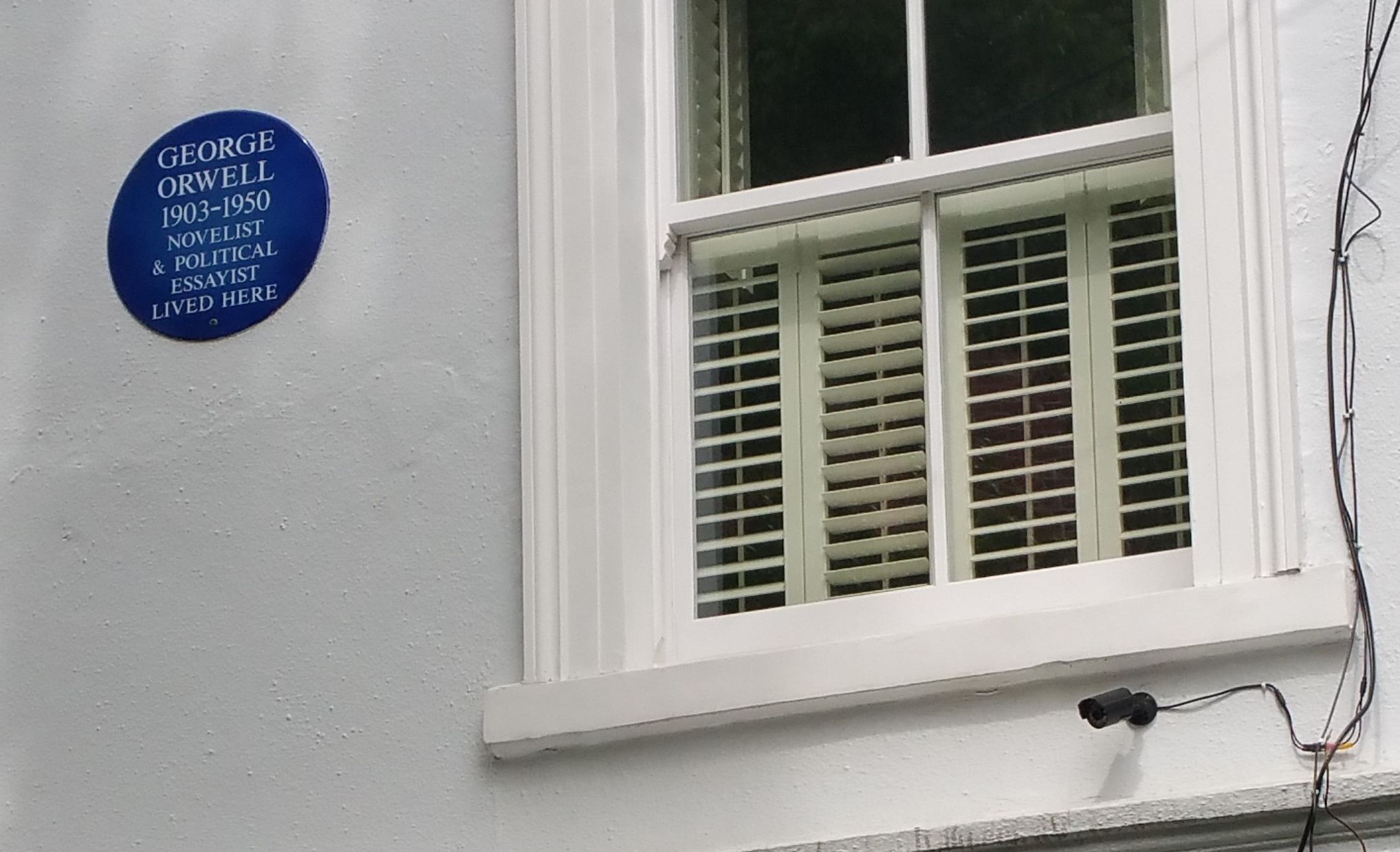
That use of the RIPA rules, Bowden said at at FIPR's half-day anniversary conference last Wednesday, sets a precedent for accessing traffic data for much lower level purposes than the government originally claimed it was collecting the data for. He went on to call the recent suggestion that the government may be considering a giant database, updated in real time, of the nation's communications data "a truly Orwellian nightmare of data mining, all in one place."

Ross Anderson, FIPR's founding and current chair and a well-known security engineer at Cambridge, noted that the same risks adhere to the NHS database. A clinic that owns its own data will tell police asking for the names of all its patients under 16 to go away. "If," said Anderson, "it had all been in the NHS database and they'd gone in to see the manager of BT, would he have been told to go and jump in the river? The mistake engineers make too much is to think only technology matters."

That point was part of a larger one that Anderson made: that hopes that the giant databases under construction will collapse under their own weight are forlorn. Think of developing Hulk-Hogan databases and the algorithms for mining them as an arms race, just like spam and anti-spam. The same principle that holds that today's cryptography, no matter how strong, will eventually be routinely crackable means that today's overload of data will eventually, long after we can remember anything we actually said or did ourselves, be manageable.

The most interesting question is: what of the next ten years? Nigel Hickson, now with the Department of Business, Enterprise, and Regulatory Reform, gave some hints. On the European and international agenda, he listed the returning dominance of the large telephone companies on the excuse that they need to invest in fiber. We will be hearing about quality of service and network neutrality. Watch Brussels on spectrum rights. Watch for large debates on the liability of ISPs. Digital signatures, another battle of the late 1990s, are also back on the agenda, with draft EU proposals to mandate them for the public sector and other services. RFID, the "Internet for things" and the ubiquitous Internet will spark a new round of privacy arguments.

Most fundamentally, said Anderson, we need to think about what it means to live in a world that is ever more connected through evolving socio-technological systems. Government can help when markets fail; though governments themselves seem to fail most notoriously with large projects.

FIPR started by getting engineers, later engineers and economists, to talk through problems. "The next growth point may be engineers and psychologists," he said. "We have to progressively involve more and more people from more and more backgrounds and discussions."

Probably few people feel that their single vote in any given election really makes a difference. Groups like FIPR, PI, No2ID, and ARCH remind us that even a small number of people can have a significant effect. Happy birthday.


Wendy M. Grossman's Web site has an extensive archive of her books, articles, and music, and an archive of all the earlier columns in this series. Readers are welcome to post here, at net.wars home, at her personal blog, or by email to netwars@skeptic.demon.co.uk (but please turn off HTML).


November 9, 2007

Watching you watching me

A few months ago, a neighbour phoned me and asked if I'd be willing to position a camera on my windowsill. I live at the end of a small dead-end street (or cul-de-sac), that ends in a wall about shoulder height. The railway runs along the far side of the wall, and parallel to it and further away is a long street with a row of houses facing the railway. The owners of those houses get upset because graffiti keeps appearing alongside the railway where they can see it and covers flat surfaces such as the side wall of my house. The theory is that kids jump over the wall at the end of my street, just below my office window, either to access the railway and spray paint or to escape after having done so. Therefore, the camera: point it at the wall and watch to see what happens.

The often-quoted number of times the average Londoner is caught on camera per day is scary: 200. (And that was a few years ago; it's probably gone up.) My street is actually one of those few that doesn't have cameras on it. I don't really care about the graffiti; I do, however, prefer to be on good terms with neighbours, even if they're all the way across the tracks. I also do see that it makes sense at least to try to establish whether the wall downstairs is being used as a hurdle in the getaway process. What is the right, privacy-conscious response to make?

I was reminded of this a few days ago when I was handed a copy of Privacy in Camera Networks: A Technical Perspective, a paper published at the end of July. (We at net.wars are nothing if not up-to-date.)

Given the amount of money being spent on CCTV systems, it's absurd how little research there is covering their efficacy, their social impact, or the privacy issues they raise. In this paper, the quartet of authors – Marci Lenore Meingast (UC Berkeley), Sameer Pai (Cornell), Stephen Wicker (Cornell), and Shankar Sastry (UC Berkeley) – are primarily concerned with privacy. They ask a question every democratic government deploying these things should have asked in the first place: how can the camera networks be designed to preserve privacy? For the purposes of preventing crime or terrorism, you don't need to know the identity of the person in the picture. All you want to know is whether that person is pulling out a gun or planting a bomb. For solving crimes after the fact, of course, you want to be able to identify people – but most people would vastly prefer that crimes were prevented, not solved.

The paper cites model legislation (PDF) drawn up by the Constitution Project. Reading it is depressing: so many of the principles in it are such logical, even obvious, derivatives of the principles that democratic governments are supposed to espouse. And yet I can't remember any public discussion of the idea that, for example, all CCTV systems should be accompanied by identification of and contact information for the owner. "These premises are protected by CCTV" signs are everywhere; but they are all anonymous.

Even more depressing is the suggestion that the proposals for all public video surveillance systems should specify what legitimate law enforcement purpose they are intended to achieve and provide a privacy impact assessment. I can't ever remember seeing any of those either. In my own local area, installing CCTV is something politicians boast about when they're seeking (re)election. Look! More cameras! The assumption is that more cameras equals more safety, but evidence to support this presumption is never provided and no one, neither opposing politicians nor local journalists, ever mounts a challenge. I guess we're supposed to think that they care about us because they're spending the money.
The main intention of Meingast, Pai, et al, however, is to look at the technical ways such networks can be built to preserve privacy. They suggest, for example, collecting public input via the Internet (using codes to identify the respondents on whom the cameras will have the greatest impact). They propose an auditing system whereby these systems and their usage is reviewed. As the video streams become digital, they suggest using layers of abstraction of the resulting data to limit what can be identified in a given image. "Information not pertinent to the task in hand," they write hopefully, "can be abstracted out leaving only the necessary information in the image." They go on into more detail about this, along with a lengthy discussion of facial recognition.

The most depressing thing of all: none of this will ever happen, and for two reasons. First, no government seems to have the slightest qualm of conscience about installing surveillance systems. Second, the mass populace don't seem to care enough to demand these sorts of protections. If these protections are to be put in place at all, it must be done by technologists. They must design these systems so that it's easier to use them in privacy-protecting ways than to use them in privacy-invasive ways. What are the odds?

As for the camera on my windowsill, I told my neighbour after some thought that they could have it there for a maximum of a couple of weeks to establish whether the end of my street was actually being used as an escape route. She said something about getting back to me when something or other happened. Never heard any more about it. As far as I am aware, my street is still unsurveilled.

Wendy M. Grossman’s Web site has an extensive archive of her books, articles, and music, and an archive of all the earlier columns in this series. Readers are welcome to post here, at net.wars home, at her personal blog, or by email to netwars@skeptic.demon.co.uk (but please turn off HTML).

September 21, 2007

The summer of lost hats

I seem to have spent the summer dodging in and out of science fiction novels featuring four general topics: energy, security, virtual worlds, and what someone at the last conference called "GRAIN" technologies (genetic engineering, robotics, AI, and nanotechnology). So the summer started with doom and gloom and got progressively more optimistic. Along the way, I have mysteriously lost a lot of hats. The phenomena may not be related.

I lost the first hat in June, a Toyota Motor Racing hat (someone else's joke; don't ask) while I was reading the first of many very gloomy books about the end of the world as we know it. Of course, TEOTWAWKI has been oft-predicted, and there is, as Damian Thompson, the Telegraph's former religious correspondent, commented when I was writing about Y2K – a "wonderful and gleeful attention to detail" in these grand warnings. Y2K was a perfect example: a timetable posted to comp.software.year-2000 had the financial system collapsing around April 1999 and the cities starting to burn in October…

Energy books can be logically divided into three categories. One, apocalyptics: fossil fuels are going to run out (and sooner than you think), the world will continue to heat up, billions will die, and the few of us who survive will return to hunting, gathering, and dying young. Two, deniers: fossil fuels aren't going to run out, don't be silly, and we can tackle global warming by cleaning them up a bit. Here. Have some clean coal. Three, optimists: fossil fuels are running out, but technology will help us solve both that and global warming. Have some clean coal and a side order of photovoltaic panels.

I tend, when not wracked with guilt for having read 15 books and written 30,000 words on the energy/climate crisis and then spent the rest of the summer flying approximately 33,000 miles, toward optimism. People can change – and faster than you think. Ten years ago, you'd have been laughed off the British isles for suggesting that in 2007 everyone would be drinking bottled water. Given the will, ten years from now everyone could have a solar collector on their roof.

The difficulty is that at least two of those takes on the future of energy encourage greater consumption. If we're all going to die anyway and the planet is going inevitably to revert to the Stone Age, why not enjoy it while we still can? All kinds of travel will become hideously expensive and difficult; go now! If, on the other hand, you believe that there isn't a problem, well, why change anything? The one group who might be inclined toward caution and saving energy is the optimists – technology may be able to save us, but we need time to create create and deploy it. The more careful we are now, the longer we'll have to do that.

Unfortunately, that's cautious optimism. While technology companies, who have to foot the huge bills for their energy consumption, are frantically trying to go green for the soundest of business reasons, individual technologists don't seem to me to have the same outlook. At Black Hat and Defcon, for example (lost hats number two and three: a red Canada hat and a black Black Hat hat), among all the many security risks that were presented, no one talked about energy as a problem. I mean, yes, we have all those off-site backups. But you can take out a border control system as easily with an electrical power outage as you can by swiping an infected RFID passport across a reader to corrupt the database. What happens if all the lights go out, we can't get them back on again, and everything was online?

Reading all those energy books changes the lens through which you view technical developments somewhat. Singapore's virtual worlds are a case in point (lost hat: a navy-and-tan Las Vegas job): everyone is talking about what kinds of laws should apply to selling magic swords or buying virtual property, and all the time in the back of your mind is the blog posting that calculated that the average Second Life avatar consumes as much energy as the average Brazilian. And emits as much carbon as driving an SUV for 2,000 miles. Bear in mind that most SL avatars aren't figured up that often, and the suggestion that we could curb energy consumption by having virtual conferences instead of physical ones seems less realistic. (Though we could, at least, avoid airport security.) In this, as in so much else, the science fiction writer Vernor Vinge seems to have gotten there first: his book Marooned in Real Time looks at the plight of a bunch of post-Singularity augmented humans knowing their technology is going to run out.

It was left to the most science fictional of the conferences, last week's Center for Responsible Nanotechnology conference (my overview is here) to talk about energy. In wildly optimistic terms: technology will not only save us but make us all rich as well.

This was the one time all summer I didn't lose any hats (red Swiss everyone thought was Red Cross, and a turquoise Arizona I bought just in case). If you can keep your hat while all around you everyone is losing theirs…

Wendy M. Grossman’s Web site has an extensive archive of her books, articles, and music, and an archive of all the earlier columns in this series. Readers are welcome to post here, at net.wars home, at her personal blog, or by email to netwars@skeptic.demon.co.uk (but please turn off HTML).

June 29, 2007

In search of the very, very small

I spent three days last week in Basel being taken around to see various pieces of research the research outfits around there are doing into nanoscience, courtesy of the European Union of Scientice Journalists' Associations (my affiliation is with the Association of British Science Writers). All very interesting stuff, and difficult to summarize intelligently in a few hundred words, though I made a stab at some of the medical stuff. The thing that most struck me immediately, though, was how different it all was from the image of nanotechnology I'd half-formed from odds and ends I'd read or heard about in the media.

I probably just don't read enough.

The first time I ever heard of nanotechnology, though I'm not sure they used the name, was in a three-part 1988 documentaryTV series called What is Truth?: Seeing is Not Knowing. It was produced by the distinguished science producer and writer Karl Sabbagh, and looked at how we know what we know about things we can't examine directly, such as the contents of memory, the very large (space) and the very small (molecules). Two enduring images stick with me all these years later: a guy riding a bicycle through the CERN particle accelerator to cover the distance to the bit that needed repairs, and their mock-up of what a nanofactory might be like. By then people were already talking about the idea that we could have machines in our homes into which you put ingredients and instructions and out of which you later take whole devices or whatever. The machine was played by a dishwasher and the emerging device by a boom box, and the whole thing looked pretty hokey, but still: molecular manufacturing.

But that's not what the people in Basel were doing at all; at no point in the three days did anyone talk about building consumer devices or the grey goo that belongs in a horror movie. Instead, what kept reappearing was various types of microscopes - atomic force, scanning probe, even a synchrotron. From those, we saw a lot of highly detailed images of really tiny things, such as collagen fibers waiting to cause havoc in the human bloodstream and three-dimensional images of rat brains.

I think everyone's favourite presentation was that of Marc Creus, from the Institut de Microtechnique in Neuchâtel, who said cheerfully he was there to talk about a hole. Actually, a nanopore, 25 nanometers in diameter. The idea is to build on a technique created by the engineer Wallace H. Coulter, who created a simple device – essentially, a box with two chambers divided by a membrane (in its first prototype, the cellophane off a pack of cigarettes) with a small hole in it (originally, melted with the heated point of a sewing needle) – to count microscopic particles suspended in a fluid. A solution passes through the hole simultaneously with an electric current; when a particle goes through, the current shows a change proportional to the size of the particle. The particle, in other words, briefly partially blocks the hole.

The way Creus told it, Coulter had been experimenting with paint, but one night left the paint open. The next night, finding it had dried out, he looked around for another liquid – and wound up using blood. The Coulter Principle, as it's now known, is used all over the world for analyzing blood samples ("complete blood cell" counts). He had trouble getting a patent on it, by the way; the examiner thought it was too simple, and anyway you can't patent a hole. He eventually got his patent in 1953 and became quite wealthy from his device.

Creus is trying to shrink the Coulter Principle with the idea of exploring the nanoscale: nanopores should make it possible to count protein molecules. You could, for example, test for the presence of a particular protein by adding them to a device that already contains its antibodies. The protein bound to the antibody will be a bigger molecule than either on its own.

Even weirder, Urs Staufer, from the same institute, is using nanoscience to explore…Mars. There's something very strange about the notion of using something tiny to study something really large. But the deal is that one of these scanning proble microscopes, specially adapted, will be on the first Mars Scout mission, due to launch in August. A robot arm will go along scooping up samples of…what do you call it when it's Mars? It can't be earth, can it? Anyway, the robot arm pours the sample on a wheel that rotates in front of the microscope, and the images are sent to Tucson and everyone has four hours to decide if they want to look at it more closely and compile the commands to send for the next go-round. The hope is that they'll find ice underneath the surface and will be able to dig down and investigate it.

I suppose all this makes sense. You can't really manufacture anything, at any scale, until you understand how it all works, just as you can't colonize anywhere until you've explored it. If they get down the nanoscale far enough, will they plant a tiny Swiss flag?

Wendy M. Grossman’s Web site has an extensive archive of her books, articles, and music, and an archive of all the earlier columns in this series. Readers are welcome to post here, at net.wars home, at her personal blog, or by email to netwars@skeptic.demon.co.uk (but please turn off HTML).