Main

September 12, 2008

Slow news

It took a confluence of several different factors for a six-year-old news story to knock 75 percent off the price of United Airlines shares in under an hour earlier this week. The story said that United Airlines was filing for bankruptcy, and of course was true - in 2002. Several media owners are still squabbling about whose fault it was. Trading was halted after that first hour by the systems put in place after the 1987 crash, but even so the company's shares closed 10 percent down on the day. Long-term it shouldn't matter in this case, but given a little more organization and professionalism that sort of drop provides plenty of opportunities for securities fraud.

The factor the companies involved can't sue: human psychology. Any time you encounter a story online you make a quick assessment of its credibility by considering: 1) the source; 2) its likelihood; 3) how many other outlets are saying the same thing. The paranormal investigator and magician James Randi likes to sum this up by saying that if you claimed you had a horse in your back yard he might want a neighbor's confirmation for proof, but if you said you had a unicorn in your back yard he'd also want video footage, samples of the horn, close-up photographs, and so on. The more extraordinary the claim, the more extraordinary the necessary proof. The converse is also true: the less extraordinary the claim and the better the source, the more likely we are to take the story on faith and not bother to check.

Like a lot of other people, I saw the United story on Google News on Monday. There's nothing particularly shocking these days about an airline filing for bankruptcy protection, so the reaction was limited to "What? Again? I thought they were doing better now" and a glance underneath the headline to check the source. Bloomberg. Must be true. Back to reading about the final in prospect between Andy Murray and Roger Federer at the US Open.

That was a perfectly fine approach in the days when all content was screened by humans and media were slow to publish. Even then there were mistakes, like the famous 1993 incident when a shift worker at Sky News saw an internal rehearsal for the Queen Mother's death on a monitor and mentioned it on the phone to his mother in Australia, who in turn passed it on to the media, which took it up and ran with it.

But now in the time that thought process takes daytraders have clicked in and out of positions and automated media systems have begun republishing the story. It was the interaction of several independently owned automated systems made what ought to have been a small mistake into one that hit a real company's real financial standing - with that effect, too, compounded by automated systems. Logically, we should expect to see many more such incidents, because all over the Web 2.0 we are building systems that talk to each other without human intervention or oversight.

A lot of the Net's display choices are based on automated popularity contests: on-the-fly generated lists of the current top ten most viewed stories, Amazon book rankings, Google's page rank algorithm that bumps to the top sites with the most inbound links for a given set of search terms. That's no different from other media: Jacqueline Kennedy and Princess Diana were beloved of magazine covers for the most obvious sale-boosting reasons. What's different is that on the Net these measurements are made and acted upon instantaneously, and sometimes from very small samples, which is why in a very slow news hour on a small site a single click on a 2002 story seems to have bumped it up to the top, where Google spotted it and automatically inserted it into its feed.

The big issue, really - leaving aside the squabble between the Tribune and Google over whether Google should have been crawling its site at all - is the lack of reliable dates. It's always a wonder to me how many Web sites fail to anchor their information in time: the date a story is posted or a page is last updated should always be present. (I long, in fact, for a browser feature that would display at the top of a page the last date a page's main content was modified.)

Because there's another phenomenon that's insufficiently remarked upon: on the Internet, nothing ever fully dies. Every hour someone discovers an old piece of information for the first time and thinks it's new. Most of the time, it doesn't matter: Dave Barry's exploding whale is hilariously entertaining no matter how many times you've read it or seen the TV clip. But Web 2.0 will make new money for endless recycling part of our infrastructure rather than a rare occurrence.

In 1998 I wrote that crude hacker defacement of Web sites was nothing to worry about compared to the prospect of the subtle poisoning of the world's information supply that might become possible as hackers became more sophisticated. This danger is still with us, and the only remedy is to do what journalists used to be paid to do: check your facts. Twice. How do we automate that?


Wendy M. Grossman's Web site has an extensive archive of her books, articles, and music, and an archive of all the earlier columns in this series. Readers are welcome to post here, at net.wars home, at her personal blog, or by email to netwars@skeptic.demon.co.uk (but please turn off HTML).

August 1, 2008

All paid up

"His checks keep bouncing because his signature varies," says a CIA operative (Sam Waterston) admiringly of the movie's retired spy hero Miles Kendig (Walter Matthau) in the 1980 movie Hopscotch. "He's a class act."

These days, Kendig would be using credit cards. And he'd be having the same problem: the part of his signature would be played by his usage patterns as seen by the credit card company's computers.

This would be doubly true if he used Amazon's Marketplace sellers. It seems - or so Barclaycard tells me every time they block my card - that putting through several purchases through Amazon Marketplace and then, a few days later, buying something larger like a plane ticket or a digital recorder exactly fits one of the fraud patterns their computers are programmed to look for.

Buy a dozen items in a day on eBay (go on, I dare you), and your statement will show a dozen transactions - but they'll all be from Paypal. Buy a dozen items in a single shopping basket on Amazon, and you'll get a dozen transactions all from different unknown sellers. To the computer what seems to you to be a single Amazon purchase looks exactly like someone testing the card with a dozen small transactions to see if it's a) live and b) possessed of available credit. Then, y'see, when the card has passed the test, the fraudster goes for the big one - that airplane ticket or digital recorder.

It's not clear to me why Barclaycard's computer doesn't recognize this pattern as typical after the first outing or two. (I fly one route, but my Barclaycard will not buy me a plane ticket.) Nor is it clear to me why it doesn't occur to the Barclaycard computer that as frauds go buying a digital recorder or a plane ticket for delivery to the cardholder's name and address ranks as fairly incompetent. Why doesn't it check that point before causing trouble?

You might ask a similar question of one of my US cards, which trips the fraud meter any time it's used outside the US. Even though they know I live in...London.

This week Amazon announced that it's offering its payment system, including One-Click, to third party sellers as one of its Web services offerings.

Much of the early press coverage of Amazon's decision seems to be characterizing Amazon Checkout, along with Google Checkout, as a competitor to Paypal. In fact, things are more complicated than that. Paypal, before it was bought by eBay, was one of the oldest businesses on the Net. Its roots, which still show every time you go through the intricate procedure of opting to use a credit card instead of a bank transfer, are in making it possible for anyone to send cash to anyone with an email address. Its first competitor was Western Union; its long tail business opportunity was online sellers who couldn't get credit card authorizations because they were too small. For eBay, buying Paypal meant being able to integrate payments into its ecology with some additional control over fraud while making extra money off each transaction.

Paypal is being adopted as an alternative payment method by all sorts of third parties, and as much of a pain as Paypal is (it can't cope with multinational people and you cannot opt out of giving it a bank account to verify) this is useful for consumers. Its security is generally well regarded by both banks and credit card companies and surely it's better to store financial details with one known company than with dozens of less familiar ones you may only trade with once. Given the choice, I'd far rather that single account were with the much-pleasanter-to-use Amazon. It's clear, though, that if you're offering a platform for others to build businesses on, as Amazon is, payment services are an obvious tool you want to include. Most likely, just as many stores now display multiple credit and debit card logos, many Web sellers will offer users a choice among multiple payment aggregators. Who wants to call the whole thing off because you say Google and I say Paypal?

Unfortunately, none of this solves my actual problem, those damn fraud-detecting algorithms. If Amazon actually aggregated payments into a single transaction - which is actually what you imagine it's doing the first time you buy from Marketplace - and spit the money back out to the intended destinations, there'd be no problem. For you: for Amazon, of course, it would raise a host of questions about whether it's a financial service, and how much responsibility it should assume for fraud. Those are, of course, very much the reasons why Paypal is so unpleasant - and yet also why it offers eBay buyers insurance.

What is clear is that this is yet another step that brings Amazon and eBay into closer competiton with each other: they are increasingly alike. Amazon's recent quarterly statement notes that about 30 percent of its revenues come from Marketplace sellers - and that the profitability of a sale is roughly the same whether it's direct or indirect. On eBay 42 percent of items now are straightforward sales, not auctions, and the changes it's made that favor its biggest sellers are making it more Wal-Mart than flea market.


Wendy M. Grossman's Web site has an extensive archive of her books, articles, and music, and an archive of all the earlier columns in this series. Readers are welcome to post here, at net.wars home, at her personal blog, or by email to netwars@skeptic.demon.co.uk (but please turn off HTML).

May 2, 2008

Bet and sue

Most net.wars are not new. Today's debates about free speech and censorship, copyright and control, nationality and disappearing borders were all presaged by the same discussions in the 1980s even as the Internet protocols were being invented. The rare exception: online gambling. Certainly, there were debates about whether states should regulate gambling, but a quick Usenet search does not seem to throw up any discussions about the impact the Internet was going to have on this particular pastime. Just sex, drugs, and rock 'n' roll.

The story started in March, when the French Tennis Federation (FFT - Fédération Française de Tennis) filed suit in Belgium against Betfair, Bwin, and Ladbrokes to prevent them from accepting bets on matches played at the upcoming French Open tennis championships, which start on May 25. The FFT's arguments are rather peculiar: that online betting stains the French Open's reputation; that only the FFT has the right to exploit the French Open; that the online betting companies are parasites using the French Open to make money; and that online betting corrupts the sport. Bwin countersued for slander.

On Tuesday of this week, the Liège court ruled comprehensively against the FFT and awarded the betting companies costs.

The FFT will still, of course, control the things it can: fans will be banned from using laptops and mobile phones in the stands. The convergence of wireless telephony, smart phones, and online sites means that in the second or two between the end of a point and the electronic scoreboard updating, there's a tiny window in which people could bet on a sure thing. Why this slightly improbable scenario concerns the FFT isn't clear; that's a problem for the betting companies. What should concern the FFT is ensuring a lack of corruption within the sport. That means the players and their entourages.

The latter issue has been a touchy subject in the tennis world ever since last August, when Russian player Nikolay Davydenko, currently fourth in the world rankings, retired in the third and final set of a match in Poland against 87th ranked Marin Vassallo Arguello, citing a foot injury. Davydenko was accused of match-fixing; the investigation still drags on. In the resulting publicity, several other players admitted being approached to fix matches. As part of subsequent rule-tightening by the Association of Tennis Professionals, the governing body of men's professional tennis, three Italian players were suspended briefly late last year for betting on other players' matches.

Probably the most surprising thing is that tennis, along with soccer and horse racing, is actually among the most popular sports for betting. A minority sport like tennis? Yet according to USA Today, the 2007 Paris Masters event saw $750 million to $1.5 billion in bets. I can only assume that the inverted pyramid of matches every week involving individual players fits well with what bettors like to do.

Fixing matches seems even more unlikely. The best payouts come from correctly picking upsets, the bigger the better. But top players are highly unlikely to throw matches to order. Most of them play a relatively modest number of events (Davydenko is admittedly the exception) and need all the match wins and points from those events to sustain their rankings. Plus, they're just too damn rich.

In 2007, Roger Federer, the ultra-dominant number one player since the end of 2003, earned upwards of $10 million in prize money alone; Davydenko picked up over $2 million (and has already won another $1 million in 2008). All of the top 12 earned over $1 million. Add in endorsements, and even after you subtract agents' fees, tax, and travel costs for self and entourage, you're still looking at wealthy guys. They might tank matches at events where they're being paid appearance fees (which are legal on the men's tour at all but the top 14 events, but proving they've done so is exceptionally difficult. Fixing matches, which could cost them in lost endorsements on top of the tour's own sanctions, surely can't be worth it.

There are several ironies about the FFT's action. First of all (something most of the journalists covering this story don't mention, probably because they don't spend a lot of time watching tennis on TV), Bwin has been an important advertiser sponsoring tennis on Eurosport. It's absolutely typical of the counter-productive and intricately incestuous politics that characterize the tennis world that one part of the sport would sue someone who pays money into another part of the sport.

Second of all, as Betfair and Bwin pointed out, all three of these companies are highly regulated European licensed operations. Ruling them out of action would mean shift online betting to less well regulated offshore companies. They also pointed out the absurdity of the parasites claim: how could they accept bets on an event without using its name? Betfair in particular documented its careful agreements with tennis's many governing bodies.

Third of all, the only reason match-fixing is an issue in the tennis world right now is that Betfair spotted some unusual betting patterns during that Polish Davydenko match, cancelled all the bets, and went public with the news. Without that, Davydenko would have avoided the fight over his family's phone records. Come to think of it, making the issue public probably explains the FFT's behavior: it's revenge.


Wendy M. Grossman's Web site has an extensive archive of her books, articles, and music, and an archive of all the earlier columns in this series. Readers are welcome to post here, at net.wars home, at her personal blog, or by email to netwars@skeptic.demon.co.uk (but please turn off HTML).

March 28, 2008

Leaving Las Vegas

Las Vegas shouldn't exist. Who drops a sprawling display of electric lights with huge fountains and luxury hotels that into the best desert scenery on the planet during an energy crisis? Indoors, it's Britain in mid-winter; outdoors you're standing in a giant exhaust fan. The out-of-proportion scale means that everything is four times as far away as you think, including the jackpot you're not going to win at one of its casinos. It's a great place to visit if you enjoy wallowing in self-righteous disapproval.

This all makes it the stuff of song, story, and legend and explains why Jeff Jonas's presentation at etech was packed.

The way Jonas tells it in his blog and at his presentation, he got into the gaming industry by driving through Las Vegas in 1989 idly wondering what was going on behind the scenes at the casinos. A year later he got the tiny beginnings of an answer when he picked up a used couch he'd found in the newspaper classified ads (boy, that dates it, doesn't it?) and found that its former owner played blackjack "for a living". Jonas began consulting to the gaming industry in 1991, helping to open Treasure Island, Bellagio, and Wynn.

"Possibly half the casinos in the world use technology we created," he said at etech.

Gaming revenues are now less than half of total revenues, he said, and despite the apparent financial win they might represent problem gamblers are in fact bad for business. The goal is for people to have fun. And because of that, he said, a place like the Bellagio is "optimized for consumer experience over interference. They don't want to spend money on surveillance."

Jonas began with a slide listing some common ideas about how Las Vegas works, culled from movies like Ocean's 11 and the TV show Las Vegas. Does the Bellagio have a vault? (No.) Do casinos perform background checks on guests based on public records? (No.) Is there a gaming industry watch list you can put yourself on but not take yourself off? (Yes, for people who know they have a gambling addiction.) Do casinos deliberately hire ex-felons? (Yes, to rehabilitate them.) Do they really send private jets for high rollers? (Cue story.)

There was, he said, a casino high roller who had won some $18 million. A win like that is going to show up in a casino's quarterly earnings. So, yes, they sent a private jet to his town and parked a limo in front of his house for the weekend. If you've got the bug, we're here for you, that kind of thing. He took the bait, and lost $22 million.

Do they help you create cover stories? (Yes.) "What happens in Vegas stays in Vegas" is an important part of ensuring that people can have fun that does not come back to bite them when they go home. The casinos' problem is with identity, not disguises, because they are required by anti-money laundering rules to report it any time someone crosses the $10,000 threshold for cash transactions. So if you play at several different tables, then go upstairs and change disguises, and come back and play some more, they have to be able to track you through all that. ID, therefore, is extremely important. Disguises are welcome; fake ID is not.

Do they use facial recognition to monitor the doors to spot cheaters on arrival? (Well...)

Of course technology-that-is-indistinguishable-from-magic-because-it-actually-is-magic appears on every crime-solving TV show these days. You know, the stuff where Our Heroes start with a fuzzy CCTV image and they punch in on a tiny piece of it and blow it up. And then someone says, "Can you enhance that?" and someone else says, "Oh, yes, we have new software," and a second later a line goes down the picture filling in detail. And a second after that you can read the brand on the face of a wrist watch (Numb3rs or the manufacturer's coding on a couple of pills (Las Vegas. Or they have a perfect matching system that can take a partial fingerprint lifted off a strand of hair or something and bang! the database can find not only the person's identity but their current home address and phone number (Bones). And who can ever forget the first episode of 24, when Jack Bauer, alarmed at the disappearance of his daughter, tosses his phone number to an underling and barks, "Find me all the Internet passwords associated with this phone number."

And yet...a surprising number of what ought to be the technically best-educated audience on the planet thought facial recognition was in operation to catch cheaters. Folks, it doesn't work in airports, either.

Which is the most interesting thing Jonas said: he now works for IBM (which bought his company) on privacy and civil liberties issues, including work on software to help the US government spot terrorists without invading privacy. It's an interesting concept, partly because security at airports and other locations is now so invasive. But also because if Las Vegas can find a way to deploy surveillance such that only the egregious problems are caught and everyone else just has a good time...why can't governments?

Wendy M. Grossman's Web site has an extensive archive of her books, articles, and music, and an archive of all the earlier columns in this series. Readers are welcome to post here, at net.wars home, at her personal blog, or by email to netwars@skeptic.demon.co.uk (but please turn off HTML).

March 7, 2008

Techitics

This year, 2008, may go down in history as the year geeks got politics. At etech this week I caught a few disparaging references to hippies' efforts to change politics. Which, you know, seemed kind of unfair, for two reasons. First: the 1960s generation did change an awful lot of things, though not nearly as many as they hoped. Second: a lot of those hippies are geeks now.

But still. Give a geek something that's broken and he'll itch to fix it. And one thing leads to another. Which is why on Wednesday night Lawrence Lessig explained in an hour-long keynote that got a standing ovation how he plans to fix what's wrong with Congress.

No, he's not going to run. Some 4,500 people on Facebook were trying to push him into it, and he thought about it, but preliminary research showed that his chances of beating popular Silicon Valley favorite, Jackie Speier, were approximately zero.

"I wasn't afraid of losing," he said, noting ruefully that in ten years of copyfighting he's gotten good at it. Instead, the problem was that Silicon Valley insiders would have known that no one was going to beat Jackie Speier. But outsiders would have pointed, laughed, and said, "See? The idea of Congressional reform has no legs." And on to business as usual. So, he said, counterproductive to run.

Instead, he's launching Change Congress. "Obama has taught us that it's possible to imagine many people contributing to real change."

The point, he said, will be to provide a "signalling function". Like Creative Commongs, Change Congress will give candidates an easy way to show what level of reform they're willing to commit tto. The system will start with three options: 1) refusing money from lobbyists and political action committees (private funding groups); 2) ban earmarks (money allocated to special projects in politicians' home states); 3) commit to public financing for campaigns. Candidates can then display the badge generated from those choices on their campaign materials.

From there, said Lessig, layer something like Emily's List on top, to help people identify candidates they're willing to suppot with monthly donations, thereby subsidizing reform.

Money, he admitted, isn't the entire problem. But, like drinking for an alcoholic, it's the first problem you must solve to be able to tackle any of the others with any hope of success.

In a related but not entirely similar vein, the guys who brought us They Work For You nearly four years ago are back with UN democracy, an attempt to provide a signalling function to the United Nations> by making it easy to find out how your national representatives are voting in UN meetings. The driving force behind UNdemocracy.com is Liverpool's Julian Todd, who took the UN's URL obscurantism as a personal challenge. Since he doesn't fly, presenting the new service were Tom Loosemore, Stefan Mogdalinski, and Danny O'Brien, who pointed out that when you start looking at the decisions and debates you start to see strange patterns: what do the US and Israel have in common with Palau and Micronesia?

The US Congress and the British Parliament are all, they said, now well accustomed to being televised, and their behaviour has adapted to the cameras. At the UN, "They don't think they're being watched at all, so you see horse trading in a fairly raw form."

The meta-version they believe can be usefully and widely applied: 1) identify broken civic institution; 2) liberate data from said institution. There were three more ingredients, but they vanished the slide too quickly. But Mogdalinski noted that where in the past they have said "Ask forgiveness, not permission", alluding to the fact that most institutions if approached will behave as though they own the data. He's less inclined to apologise now. After all, isn't it *our* data that's being released in the public interest?

Data isn't everything. But the Net community has come a long way since the early days, when the prevailing attitude was that technological superiority would wash away politics-as-usual by simply making an end run around any laws governments tried to pass. Yes, technology can change the equation a whole lot. For example, once PGP escaped laws limiting the availability of strong encryption were pretty much doomed to fail (though not without a lot of back-and-forth before it became official). Similarly, in the copyright wars it's clear that copyrighted material will continue to leak out no matter how hard they try to protect it.

But those are pretty limited bits of politics. Technology can't make such an easy end run around laws that keep shrinking the public domain. Nor can it by itself solve policies that deny the reality of global climate change or that, in one of Lessig's examples, back government recommendations off from a daily caloric intake of 10 percent sugar to one of 25 percent. Or that, in another of his examples, kept then Vice-President Al Gore from succeeding with a seventh part to the 1996 Communications Act deregulating ADSL and cable because without anything to regulate what would Congressmen do without the funds those lobbyists were sending their way? Hence, the new approach.

"Technology," Lessig said, "doesn't solve any problems. But it is the only tool we have to leverage power to effect change."

Wendy M. Grossman's Web site has an extensive archive of her books, articles, and music, and an archive of all the earlier columns in this series. Readers are welcome to post here, at net.wars home, at her | | Comments (0) | TrackBacks (0)

February 29, 2008

Phormal ware

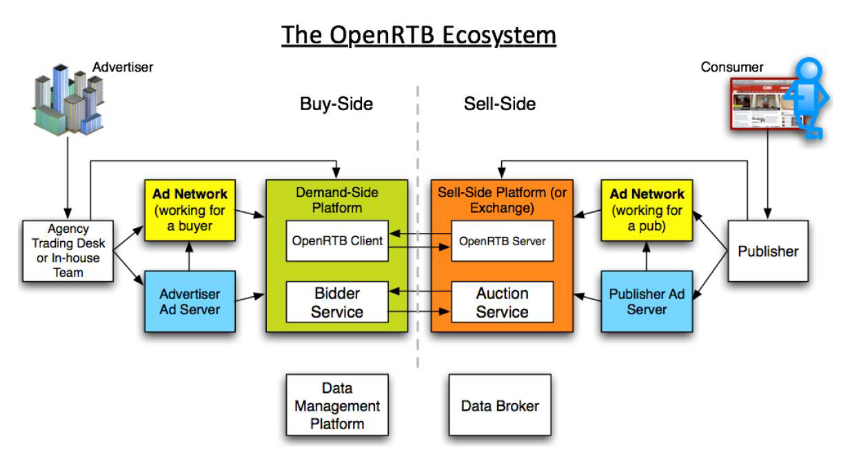
In the last ten days or so a stormlet has broken out about the announcement that BT, Carphone Warehouse, and TalkTalk, who jointly cover about 70 percent of British Internet subscribers, have signed up for a new advertising service. The supplier, Phorm (previously, 121Media), has developed Open Internet Exchange (OIX), a platform to serve up "relevant" ads to ISPs' customers. Ad agencies and Web sites also sign up to the service which, according to Phorm's FAQ, can serve up ads to any Web site "in the regular places the website shows ads". Partners include most British national newspapers, iVillage, and MGM OMD.

A brief chat with BT revealed that the service, known to consumers as Webwise, will apply only to BT's retail customers, not its wholesale division. Consumers will be able to opt out, and BT is planning an educational exercise to explain the service.

Obviously all concerned hope Webwise will be acceptable to consumers, but to make it a little more palatable, not signing out of it gets you warnings if you land on suspected phishing sites. I don't think improved security should, ethically, be tied to a person's ad-friendliness, but this is the world we live in.

"We've done extensive research with our customer base," says BT's spokesman, "and it's very clear that when customers know what is happening they're overwhelmingly in favor of it, particularly in terms of added security."

But the Net folk are suspicious folk, and words like "spyware" and "adware" are circling, partly because Phorm's precursor, 121Media, was blocked by Symantec and F-Secure as spyware. Plus, The Register discovered that BT had been sharing data with Phorm as long ag as last summer, and, apparently, lying about it.

Phorm's PR did not reply to a request for an interview, but a spokeswoman contacted briefly last week defended the company. "We are absolutely not and in no way an adware product at all."

The overlooked aspect: Phorm called in Privacy International's new commercial arm, 80/20, to examine its system.

PI's executive director, Simon Davies, one of the examiners, says, "Phorm has done its very best to eliminate and minimise the use of personal information and build privacy into the core of the technology. In that sense, it's a privacy-friendly technology, but that does not get us away from the intrusion aspect." In general, the principle is that ads shouldn't be served on an opt-out basis; users should have to opt in to receive them.

Tailoring advertising to the clickstream of user interests is of course endemic online now; it's how Google does AdSense, and it's why that company bought DoubleClick, which more or less invented the business of building up user profiles to create personalized ads. Phorm's service, however, does not build user profiles.

A cookie with a unique ID is stored on the user's system - but does not associate that ID with an individual or the computer it's stored on. Say you're browsing car sites like Ford and Nissan. The ISP does not give Phorm personally identifiable information like IP addresses, but does share the information that the computer this cookie is on is looking at car sites right now. OIX serves up car ads. The service ignores niche sites, secure sites (HTTPS), and low-traffic sites. Firewalling between Phorm and the ISP means that the ISP doesn't know and can't deduce the information that the OIX platform knows about what ads are being served. Nothing is stored to create a profile. Phorm instead offers advertisers instead is the knowledge that they are serving ads that reflect users' interests in real time.

The difference to Davies is that Google, which came last in Privacy International's privacy rankings, stores search histories and browsing data and ties them to personal identifiers, primarily login IDs and IP addresses. (Next month, the Article 29 Group will report its opinion as to whether IP addresses are personal information, so we will know better then which way the cookie crumbles.)

"The potential to develop a profile covertly is extremely limited, if not eliminated," says Davies.

Phorm itself says, "We really think what our stuff does dispells the myth that in order to provide relevance you have to store data."

I hate advertising as much as the next six people. But most ISPs are operating on razor-thin margins if they make money at all, and they're looking at continuously increasing demand for bandwidth. That demand can only get worse as consumers flock to the iPlayer and other sources of streaming video. The pressure on pricing is steadily downward with people like TalkTalk and O2 offering free or extremely cheap broadband as an add-on to mobile phone accounts. Meanwhile, the advertising revenues go to everyone but them. Is it surprising that they'd leap at this? Analysts estimate that BT will pick up £85 million in the first year. Nice if you can get it.

We all want low-cost broadband and free content. None of us wants ads. How exactly do we propose all this free stuff is going to be paid for?

As for Phorm, it's going to take a lot to make some users trust them. I'd say, though, that the jury is still out. Sometimes people do learn from past mistakes.

Wendy M. Grossman's Web site has an extensive archive of her books, articles, and music, and an archive of all the earlier columns in this series. Readers are welcome to post here, at net.wars home, at her personal blog, or by email to netwars@skeptic.demon.co.uk (but please turn off HTML).

February 1, 2008

Microhoo!

Large numbers are always fun, and $44.6 billion is a particularly large number. That's how much Microsoft has offered to pay, half cash, half stock, for Yahoo!

Before we get too impressed, we should remember two things: first, half of it is stock, which isn't an immediate drain on Microsoft's resources. Second, of course, is that money doesn't mean the same thing to Microsoft as it does to everyone else. As of last night, Microsoft had $19.09 billion in a nice cash heap, with more coming in all the time. (We digress to fantasise that somewhere inside Microsoft there's a heavily guarded room where the cash is kept, and where Microsoft employees who've done something particularly clever are allowed to roll naked as a reward.)

Even so, the bid is, shall we say, generous. As of last night, Yahoo!'s market cap was $25.63 billion. Yahoo!'s stock has dropped more than 32 percent in the last year, way outpacing the drop of the broader market. When issued, Microsoft's bid of $31 a share represented a 62 percent premium. That generosity tells us two things. First, since the bid was, in the polite market term, "unsolicited", that Microsoft thought it needed to pay that much to get Yahoo!'s board and biggest shareholders to agree. Second, that Microsoft is serious: it really wants Yahoo! and it doesn't want to have to fight off other contenders.

In some cases – most notably Google's acquisition of YouTube – you get the sense that the acquisition is as much about keeping the acquired company out of the hands of competitors as it is about actually wanting to own that company. If Google wanted a slice of whatever advertising market eventually develops around online video clips, it had to have YouTube. Google Video was too little, too late, and if anyone else had bought YouTube Google would never have been able to catch up.

There's an element of that here, in that MSN seems to have no immediate prospect of catching up with Google in the online advertising market. Last May, when a Microsoft-Yahoo! merger was first mooted, CNN noted that even combined MSN and Yahoo! would trail Google in the search market by a noticeable margin. Google has more than 55 percent of the search market; Yahoo! trails distantly with 17 percent and MSN is even further behind with 13 percent. Better, you can hear Microsoft thinking, to trail with 30 percent of the market than 13 percent; unlike most proposals to merge the numbers two and three players in a market, this merger would create a real competitor to the number one player.

In addition, despite the fact that Yahoo!'s profits dropped by 4.6 percent in the last quarter (year on year), its revenues grew in the same period by 11.8 percent. If Microsoft thought about it like a retail investor (or Warren Buffett), it would note two things: the drop in Yahoo!'s share prices make it a much more attractive buy than it was last May; and Yahoo!'s steady stream of revenues makes a nice return on Microsoft's investment all by itself. One analyst on CNBC estimated that return at 5 percent annually – not bad given today's interest rates.

Back in 2000, at the height of the bubble, when AOL merged with Time-Warner (a marriage both have lived to regret), I did a bit of fantasy matchmaking that regrettably has vanished off the Telegraph's site, pairing dot-coms and old-world companies for mergers. In that round, Amazon.com got Wal-Mart (or, more realistically, K-Mart), E*Trade passed up Dow-Jones, publisher of the Wall Street Journal (and may I just say how preferable that would have been to Rupert Murdoch's having bought it) in favor of greater irony with the lottery operator G-Tech, Microsoft got Disney (to split up the ducks), and Yahoo! was sent off to buy Rupert Murdoch's News International.

Google wasn't in the list; at the time, it was still a privately held geeks' favorite, out of the mainstream. (And, of course, some companies that were in the list – notably eToys and QXL – don't exist any more.) The piece shows off rather clearly, however, the idea of the time, which was that online companies could use their ridiculously inflated stock valuations to score themselves real businesses and real revenues. That was before Google showed the way to crack online advertising and turn visitor numbers into revenues.

It's often said that the hardest thing for a new technology company is to develop a second product. Microsoft is one of the few who succeeded in that. But the history of personal computing is still extremely short, and history may come to look at DOS, Windows, and Office as all one product: commercial software. Microsoft has seen off its commercial competitors, but open-source is a genuine threat to drive the price of commodity software to zero, much like the revenues from long distance telephone calls. Looked at that way, there is no doubt that Microsoft's long-term survival as a major player depends on finding a new approach. It has kept pitching for the right online approach: information service, portal, player/DRM, now search/advertising. And now we get to find out whether Google, like very few companies before it, really can compete with Microsoft. Game on.


Wendy M. Grossman’s Web site has an extensive archive of her books, articles, and music, and an archive of all the earlier columns in this series. Readers are welcome to post here, at net.wars home, at her personal blog, or by email to netwars@skeptic.demon.co.uk (but please turn off HTML).